
Sinostar PEC Holdings' Earnings Quality Under Scrutiny: Shareholder Dilution and EPS Distortion Raise Red Flags
Net Profit Decline vs. EPS Distortion
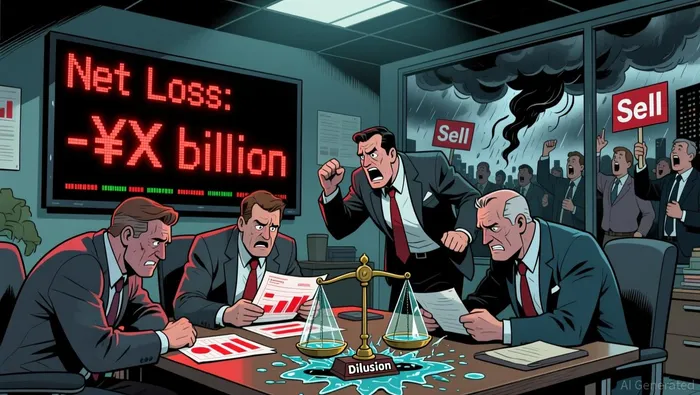 While Sinostar PEC Holdings' nine-month net profit for 2025 fell by 91.5% year-on-year to RMB17.18 million, the EPS contraction was even more severe. Basic EPS dropped from 22.56 RMB cents in 2024 to 1.79 RMB cents in 2025-a 92% decline. This discrepancy implies that the number of shares outstanding has grown significantly, diluting the impact of the company's shrinking profits. The firm attributes the earnings contraction to operational challenges, including a plant-wide maintenance shutdown and weaker product spreads. However, the EPS distortion far outpaces the net profit decline, hinting at aggressive share issuance as a compounding factor.
Shareholder Dilution: A Hidden Culprit
Though exact share issuance data for the past 12 months remains elusive, the EPS figures strongly indicate a substantial increase in the share count. A 92% EPS drop, despite a 91.5% net profit decline, suggests that the number of shares outstanding may have risen by approximately 50% over the period. Such dilution would amplify the negative impact on EPS, as the same (or smaller) net profit is spread across a larger base of shares. This dynamic raises questions about the company's capital allocation strategy and its prioritization of short-term liquidity over shareholder value preservation.
Implications for Long-Term Value and Stock Performance
The combination of operational headwinds and dilutive financing practices has already weighed on Sinostar PEC Holdings' stock. As of November 18, 2025, its share price stood at $0.12, down 4.07% from the prior week, reflecting investor skepticism. A prolonged pattern of earnings distortion could erode confidence further, particularly in a sector where margins are sensitive to commodity price swings and operational efficiency. For long-term investors, the company's reliance on dilution to fund operations-rather than organic growth or debt financing-signals a lack of discipline in capital management.
Conclusion
Sinostar PEC Holdings' financial trajectory underscores the risks of conflating net profit metrics with EPS performance. While the company's operational challenges are real, the disproportionate EPS decline highlights the corrosive effects of shareholder dilution. In an era where investors increasingly scrutinize earnings quality, such practices risk alienating stakeholders and undermining long-term value creation. For now, the stock appears to trade at a discount to its intrinsic value, but without a reversal of its dilutive tendencies and a return to profitability, the discount may widen.







Comentarios
Aún no hay comentarios