
Singtel's Strategic Asset Reallocation and Its Implications for Bharti Airtel and STT GDC
Bharti Airtel: A Strategic Exit and Its Financial Implications
. This move, part of a broader trend of selling Airtel shares since 2022, , according to a Livemint report. For Bharti Airtel, the reduced ownership by Singtel may signal a shift in its capital structure. Analysts suggest the company could leverage this liquidity to accelerate 5G rollouts or expand its African operations, where it has seen robust EBITDA growth, as reported by an Economic Times article.
Notably, , per the same Economic Times article. With a projected tariff hike in December 2025, , further insulating it from the dilutive effects of Singtel's exit, as noted in the Economic Times article.
STT GDC: A Strategic Bet on AI-Driven Infrastructure
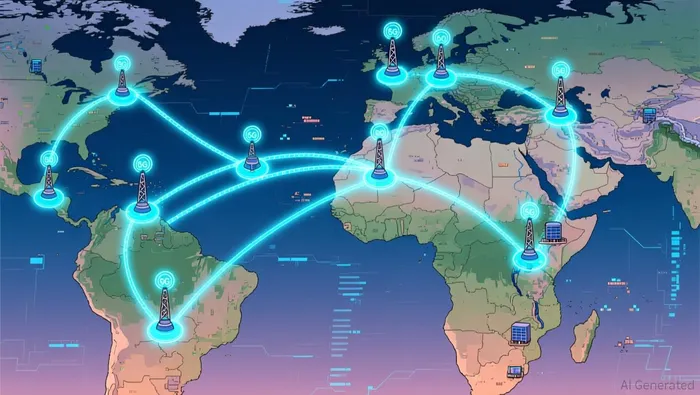
Singtel's acquisition of over 80% of STT GDC, in partnership with KKR, , reflects a calculated pivot toward AI infrastructure. As global demand for compute power surges, STT GDC's 100+ facilities across 20 markets-including Singapore, India, and Europe-position it as a critical player in the data center ecosystem, according to a Cryptopolitan report. The acquisition aligns with Singtel's vision to capitalize on the "utility phase" of AI, where infrastructure like land, power, and server racks becomes indispensable, as reported in the Cryptopolitan report.
Post-acquisition, STT GDC's operational metrics have strengthened. By 2025, , spanning 11 geographies, according to a Data Center Dynamics report. A pending $5 billion acquisition by KKR, , could further accelerate expansion, particularly in Southeast Asia, where STT GDC's interconnection hubs serve as gateways for cloud providers and network operators, as noted in an STT GDC press release.
Shareholder Value Creation: Singtel's ST28 Plan in Action
Singtel's strategic reallocation is not merely about asset turnover but about driving shareholder value through disciplined capital allocation. Under its ST28 plan, the company aims to return both its Singapore and international divisions to revenue and EBITDA growth by 2028. Singapore's core operations, , are set to lead this charge through AI-driven hyper-personalization and network optimization, as reported in a Yahoo Finance report.
Meanwhile, the Australian division-Optus-has delivered strong results, , per the Yahoo Finance report. These gains are underpinned by a focus on enterprise services and a consumer network that leverages 5G and AI analytics. By channeling proceeds from Airtel divestments into core operations and STT GDC, Singtel is balancing short-term liquidity with long-term growth.
Conclusion: A Model for Cross-Border Capital Efficiency
Singtel's dual strategy of divesting non-core telecom assets and acquiring high-growth infrastructure aligns with broader industry trends. For Bharti Airtel, the reduced stake sale provides flexibility to pursue premiumisation strategies, while STT GDC's expansion underscores the economic potential of AI-driven compute infrastructure. By prioritizing capital efficiency and cross-border synergies, Singtel is not only enhancing shareholder value but also setting a benchmark for strategic agility in the telecom sector.







Comentarios
Aún no hay comentarios