
Singapore's STI Plunge: Business Leaders Weigh In
Generado por agente de IACyrus Cole
lunes, 7 de abril de 2025, 9:20 pm ET2 min de lectura
The Straits Times Index (STI) plummeted 8.58% on April 7, 2025, marking its steepest single-day decline since the 2008 global financial crisis. The dramatic drop, triggered by President Donald Trump’s sweeping tariffs, has left business leaders in Singapore grappling with uncertainty and scrambling to mitigate the risks to their investments and operations.
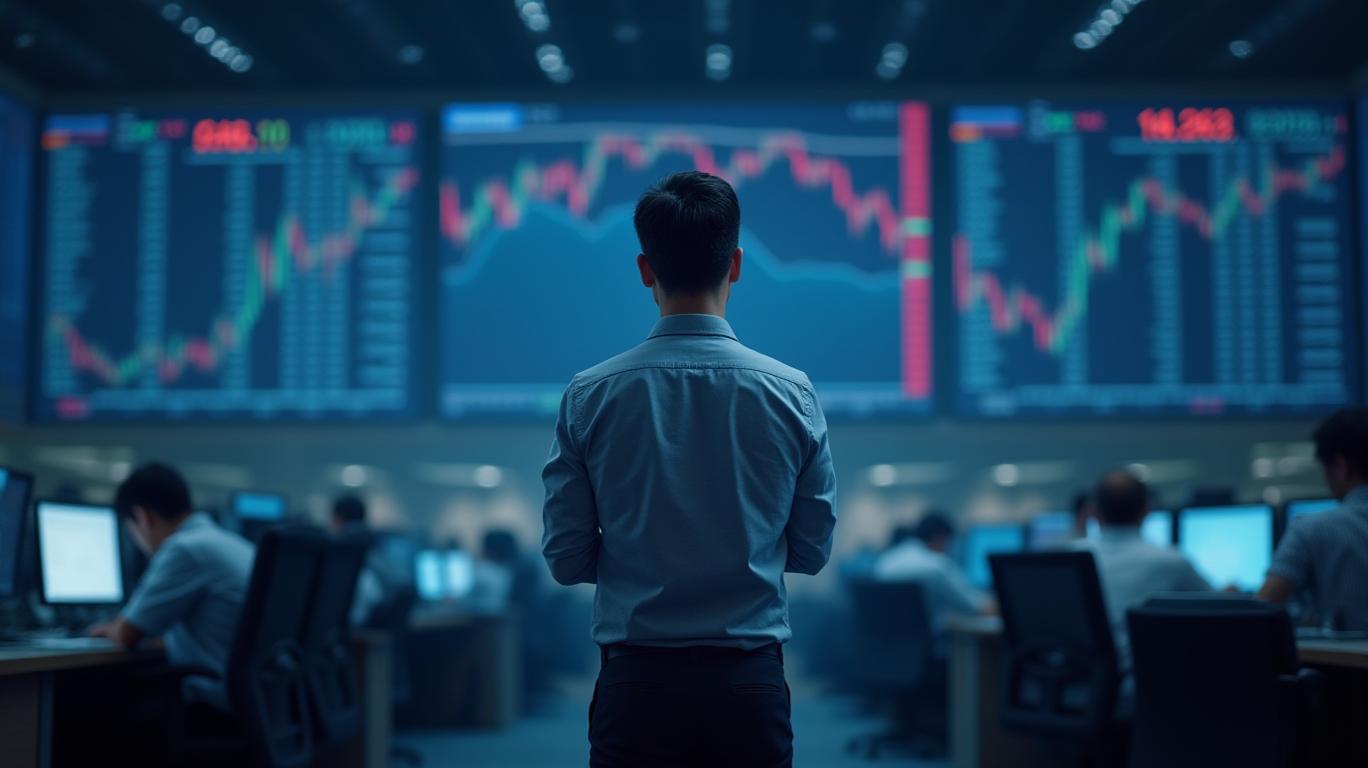
The tariffs, which impose a 10% baseline rate on all imports from Singapore and higher rates on specific trading partners, have sent shockwaves through the region. Singapore, heavily reliant on international trade, is particularly vulnerable. Prime Minister Lawrence Wong warned that the tariffs could tip the global economy into a full-blown trade war, with Singapore taking a bigger hit than others due to its trade dependence.
The immediate impact on the STI has been severe. The index’s 8.58% drop was its worst since the 2008 crisis, exceeding even the 8.4% fall during the COVID-19 pandemic in March 2020. Major companies like DBS Bank saw their stocks fall nearly 5%, while semiconductor-related firms and engineering companies also took a hit. The sell-off was so intense that it triggered a circuit breaker, temporarily halting trading in Japan’s Nikkei index, which sank 8.03%.
Business leaders are now faced with the daunting task of navigating this turbulent landscape. Diversification of markets and supply chains is one strategy being employed. Companies are seeking to reduce their reliance on the U.S. market and pivot towards other regions, particularly within Asia. Chinese retaliatory tariffs on U.S. goods, for instance, may redirect demand towards ASEAN countries, creating opportunities for Singaporean firms to supply these markets instead.
However, the effectiveness of these strategies remains uncertain. The temporary exemption of pharmaceuticals and semiconductors from tariffs, for example, allows some firms to adjust, but the threat of future tariffs undermines sustained investment. Maybank economist Chua Hak Bin warned that these exemptions would not last, predicting further levies by late April or early May.
Cost management and operational adjustments are also being implemented. The Ministry of Trade and Industry (MTI) has revised its 2025 GDP growth forecast down to 1-3%, and firms like Maybank have downgraded Singapore’s GDP projections. Companies are cutting costs and reassessing investments to weather the market volatility. DBS Bank’s stock fall and the sharp declines in sectors like semiconductors and engineering reflect the need for operational reviews.
Advocacy and negotiation with governments are another key strategy. Engaging in lobbying and trade negotiations to reduce tariff impacts is crucial. U.S. Treasury Secretary Scott Bessent hinted at potential tariff adjustments if trading partners negotiate, creating incentives for Singaporean firms to advocate for exemptions. Singapore’s decision not to impose retaliatory tariffs aims to maintain diplomatic leverage, as noted by PM Lawrence Wong. This restraint contrasts with China’s aggressive retaliation, which may pressure the U.S. to seek compromises.
Capital raising and structural adjustments are also being considered. Two firms, Vin’s Holdings and YLF Group, filed for IPOs in 2025, while Murata Manufacturing delisted from SGX due to poor trading. These moves aim to secure funding or reduce exposure to market volatility. However, the effectiveness of these strategies is mixed. IPOs may struggle in a downturn, while delisting is a defensive move rather than a growth strategy.
Hedging and safe-haven assets are another tactic being employed. Shifting assets to safer investments like U.S. Treasuries or gold to protect against market turbulence is a common strategy. The flight to Treasuries caused 10-year yields to drop to 3.897%, while gold fell slightly (0.7%) amid profit-taking. However, the sell-off in gold and equities indicates that even safe assets are vulnerable during a liquidity crisis.
The challenges to the effectiveness of these strategies are significant. The 63% market-implied chance of a Fed rate cut in May versus Powell’s "no hurry" stance creates conflicting signals, complicating planning. The temporary exemptions for critical sectors like pharmaceuticals and semiconductors are set to end, forcing firms to prepare for future levies. The 13.22% plunge in Hong Kong’s Hang Seng and the 10% drop in Germany’s DAX show that regional strategies cannot insulate Singapore from a global recession.
In conclusion, while business leaders in Singapore are employing a mix of diversification, cost management, advocacy, and capital adjustments, these strategies face significant limitations. The prolonged uncertainty, potential recession, and sector-specific risks threaten long-term resilience. The effectiveness of these strategies hinges on global negotiations and the Fed’s response, neither of which are yet clear. As Mark Malek noted, gains in the near term are unlikely to be "sustainable" without resolution to the tariff conflict.



Divulgación editorial y transparencia de la IA: Ainvest News utiliza tecnología avanzada de Modelos de Lenguaje Largo (LLM) para sintetizar y analizar datos de mercado en tiempo real. Para garantizar los más altos estándares de integridad, cada artículo se somete a un riguroso proceso de verificación con participación humana.
Mientras la IA asiste en el procesamiento de datos y la redacción inicial, un miembro editorial profesional de Ainvest revisa, verifica y aprueba de forma independiente todo el contenido para garantizar su precisión y cumplimiento con los estándares editoriales de Ainvest Fintech Inc. Esta supervisión humana está diseñada para mitigar las alucinaciones de la IA y garantizar el contexto financiero.
Advertencia sobre inversiones: Este contenido se proporciona únicamente con fines informativos y no constituye asesoramiento profesional de inversión, legal o financiero. Los mercados conllevan riesgos inherentes. Se recomienda a los usuarios que realicen una investigación independiente o consulten a un asesor financiero certificado antes de tomar cualquier decisión. Ainvest Fintech Inc. se exime de toda responsabilidad por las acciones tomadas con base en esta información. ¿Encontró un error? Reportar un problema


SOBRE NOSOTROS
Nuestra historiaAutores de noticiasBase de conocimientosPolítica de privacidadTérmino de usoDescargo de responsabilidad de corretaje de tercerosTérminos de uso de AIMEDivulgaciones de riesgos de AInvest AICarrerasCONTÁCTENOS
Email: support@ainvest.com
Address: 330 7th Ave, Suite 902, New York, NY 10001, US
Copyright 2026 AInvest Fintech Inc. All rights reserved.


Comentarios
Aún no hay comentarios