
Singapore's Private Home Prices Cool: What's Driving the Slowdown?
Generado por agente de IATheodore Quinn
lunes, 31 de marzo de 2025, 10:44 pm ET1 min de lectura
The Urban Redevelopment Authority (URA) released its flash estimates for the first quarter of 2025, revealing a 0.6% increase in Singapore's private home price index. This marks a significant slowdown from the 2.3% jump in the previous quarter and the 3.9% rise for the entire year of 2024. The moderation in price growth is a clear signal that the market is experiencing a shift, and understanding the underlying factors is crucial for investors and homebuyers alike.
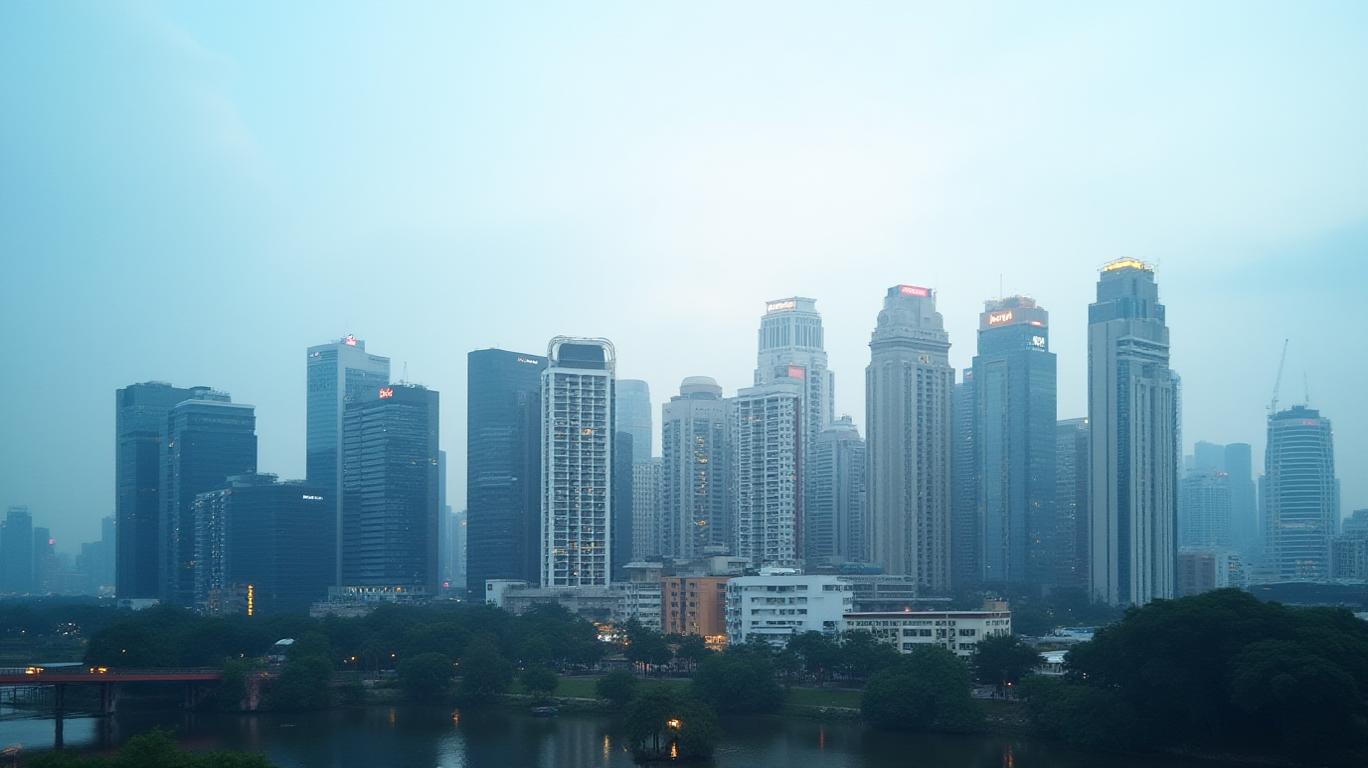
One of the key drivers of this moderation is the 15% decline in sales volume. In the first quarter of 2025, the number of private residential units sold dropped to 6,299, down from 7,433 in the previous quarter. This decline in transaction volume suggests a cooling demand, which could be due to higher interest rates, increased housing supply, or changes in buyer sentiment. Minister for National Development Desmond Lee noted early signs of price moderation in both the public and private housing markets, indicating a broader trend of stabilization.
The government's efforts to maintain a strong supply of housing are also playing a role in this moderation. The government land sales (GLS) programme for the first half of 2025 will see the release of 5,030 private homes, almost 60% higher than the supply on the confirmed list between 2021 and 2023. This increased supply aims to address any potential demand pressures and help stabilize prices.
The moderation in price growth is not uniform across all regions. Prices of non-landed homes grew across the board in the first quarter of 2025, but at a slower pace in the prime Core Central Region (up 0.6% compared with the 2.6% increase previously) and the city fringe or Rest of Central Region (up 1% after registering an increase of 3% in Q4). This suggests that demand may be shifting towards more affordable areas, which could lead to price increases in these regions if supply remains tight.
The decline in sales volume could also have implications for the government's land sales programme. If demand remains weak, the government may need to adjust its land sales programme to ensure that supply does not outstrip demand, which could lead to further price moderation.
In summary, the 0.6% increase in the private home price index for Q1 2025 reflects a moderation in price growth compared to recent trends, driven by factors such as declining sales volume, government interventions to stabilize the market, and a broader trend of price stabilization across different housing segments. Investors and homebuyers should keep an eye on these trends and consider the potential implications for future price movements.



Divulgación editorial y transparencia de la IA: Ainvest News utiliza tecnología avanzada de Modelos de Lenguaje Largo (LLM) para sintetizar y analizar datos de mercado en tiempo real. Para garantizar los más altos estándares de integridad, cada artículo se somete a un riguroso proceso de verificación con participación humana.
Mientras la IA asiste en el procesamiento de datos y la redacción inicial, un miembro editorial profesional de Ainvest revisa, verifica y aprueba de forma independiente todo el contenido para garantizar su precisión y cumplimiento con los estándares editoriales de Ainvest Fintech Inc. Esta supervisión humana está diseñada para mitigar las alucinaciones de la IA y garantizar el contexto financiero.
Advertencia sobre inversiones: Este contenido se proporciona únicamente con fines informativos y no constituye asesoramiento profesional de inversión, legal o financiero. Los mercados conllevan riesgos inherentes. Se recomienda a los usuarios que realicen una investigación independiente o consulten a un asesor financiero certificado antes de tomar cualquier decisión. Ainvest Fintech Inc. se exime de toda responsabilidad por las acciones tomadas con base en esta información. ¿Encontró un error? Reportar un problema




Comentarios
Aún no hay comentarios