
Singapore's Housing Market Surge: A Strategic Opportunity Amid Economic Resilience
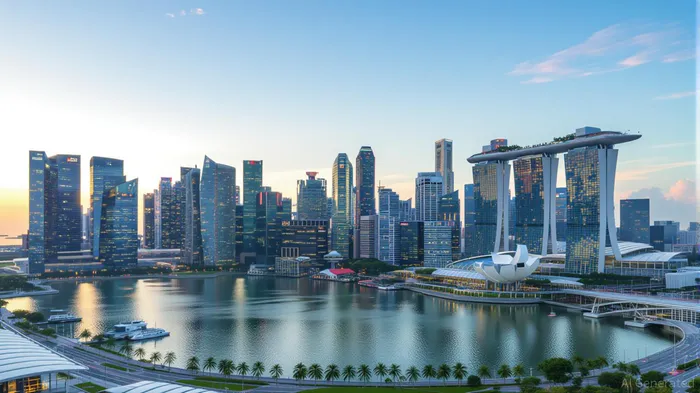
Singapore's housing market in 2025 stands as a testament to the city-state's economic resilience and strategic foresight. With a GDP (PPP) of $952.6 billion and a per capita GDP of $156,755, Singapore remains one of the world's wealthiest economies, providing a robust foundation for real estate investment [1]. Its housing market, characterized by an 88% home-ownership rate and a legacy of meticulous urban planning, continues to attract global investors seeking stability in an era of geopolitical and economic uncertainty [1].
Economic Fundamentals and Policy Framework
Singapore's economic strength is underpinned by its role as a global financial hub, world-class infrastructure, and a business-friendly regulatory environment. The government's long-term focus on urban planning—managed by the Housing & Development Board (HDB)—has ensured affordable housing for the majority of residents while maintaining property values [1]. Recent policies, such as the 5% Additional Buyer's Stamp Duty (ABSD) on foreign purchases, aim to curb speculative activity while still allowing selective foreign investment [4]. These measures balance affordability for locals with the need to attract capital from abroad.
Foreign Investment and Global Positioning
Despite global trade fragmentation driven by U.S. protectionist policies and shifting energy dynamics, Singapore's strategic location in Southeast Asia has reinforced its appeal. As multinational corporations diversify supply chains away from U.S.-centric networks, demand for commercial and industrial real estate in Singapore has surged [4]. Meanwhile, the city-state's commitment to sustainability—evidenced by its green building initiatives and investments in renewable energy infrastructure—aligns with global capital flows prioritizing ESG (Environmental, Social, Governance) criteria [2].
Challenges and Opportunities
Land scarcity remains a persistent challenge, but Singapore's innovative land reclamation and vertical development strategies mitigate this constraint. For instance, the ongoing expansion of the Jurong Innovation District and the development of Punggol Digital District highlight the government's ability to create value from limited space [2]. Investors must also navigate a tightening labor market and rising construction costs, yet these pressures are offset by the city-state's political stability and efficient governance.
Conclusion: A Calculated Bet for Long-Term Investors
Singapore's housing market offers a unique blend of economic resilience, strategic global positioning, and policy discipline. While short-term volatility from global trade shifts or domestic cooling measures may arise, the long-term fundamentals—high income levels, a skilled workforce, and a reputation for transparency—make it a compelling destination for real estate capital. Investors who prioritize quality over speculation, and who align with Singapore's sustainability goals, are likely to find fertile ground for value creation in this high-income economy.







Comentarios
Aún no hay comentarios