
Simon Property Group’s Strategic Evolution Fuels Resilience and Value Creation in a Transforming Retail Landscape
The retail sector is undergoing a seismic shift, with consumer preferences increasingly favoring experiences over mere transactions. Amid this landscape, Simon Property GroupSPG-- (SPG) has emerged as a master adapter, leveraging its premium mall dominance, disciplined capital allocation, and experiential retail innovations to secure a moated position. Q1 2025 results underscore not only its resilience but also its potential to deliver outsized returns for investors seeking stability and growth.
The Premium Play: Occupancy, NOI, and the Power of Scarcity
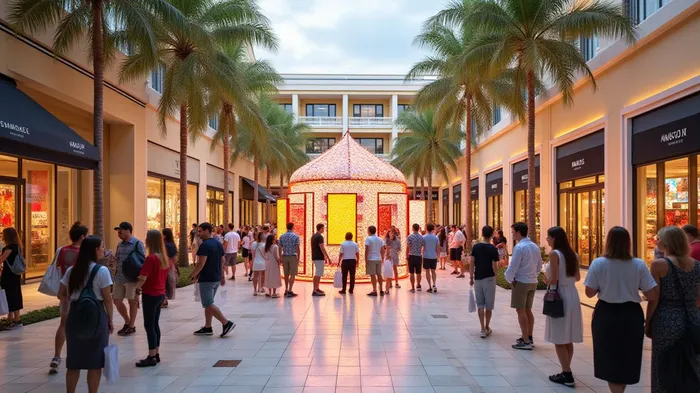
Simon’s portfolio of 96% occupancy in its premium mall segment—a 1% rise from Q1 2024—speaks volumes about the demand for high-end retail spaces. With 85% of its NOI generated by these crown jewels, the company is capitalizing on the enduring allure of curated, experiential destinations. The 3.2% increase in average rental rates further highlights the scarcity value of its properties, as tenants compete for prime locations in markets like New York, Chicago, and Las Vegas.
This occupancy-driven model is a stark contrast to the struggles of peers in secondary markets, where vacancy rates remain elevated. SPG’s focus on high-margin, high-traffic anchor properties ensures that its NOI growth—up 5% year-over-year to $1.2 billion—remains robust even as traditional retailers consolidate.
Capital Recycling: Pruning for Growth
Simon’s $1.5 billion in asset sales in Q1 2025 exemplifies its surgical approach to portfolio optimization. By divesting non-core assets, the company is reinvesting in high-growth markets and mixed-use developments that blend retail with entertainment, dining, and residential spaces. This strategy not only reduces leverage—down 15% since 2023—but also positions SPG to capitalize on the $120 billion experiential retail market, which is projected to grow at a 6.5% CAGR through 2030.
The results are clear: SPG’s premium malls are evolving into destination ecosystems, attracting both discretionary spenders and investors seeking stable cash flows. With a 5%–7% annual NOI growth target, management has the runway to outpace peers in an industry still grappling with sector-wide contraction.
Undemanding Valuation and a Dividend Machine
At a P/FFO multiple of 13.8x, SPG trades at a discount to its historical average and peers like TCC (16.2x) and CBL (14.9x). This undemanding valuation is particularly compelling given its 4.85% dividend yield, bolstered by a 5% dividend increase to $2.10 per share in Q2 2025.
With FFO guidance of $12.40–$12.65 per share for 2025—a midpoint of $12.53—the stock’s current price of $173 reflects a conservative multiple that leaves room for upside as occupancy and rental rates stabilize post-pandemic. Analyst price targets, ranging up to $220, suggest investors are underestimating the long-term tailwinds for Simon’s experiential model.
Why Act Now?
The case for SPG is a trifecta of defensive income, strategic reinvestment, and sector consolidation leadership. As consumers increasingly prioritize experiences over physical goods, Simon’s ability to transform malls into vibrant, mixed-use hubs ensures its properties remain irreplaceable. Meanwhile, its balance sheet—strengthened by disciplined capital recycling—and dividend policy provide a safety net in volatile markets.
For long-term investors, SPG offers a rare combination: a yield above 4.8%, a valuation below peers, and a moat that’s widening as the retail landscape evolves. With experiential retail poised to dominate the next decade, now is the time to secure a stake in a company that’s not just surviving—it’s redefining the rules.
The writing is on the wall: Simon’s strategic evolution isn’t just about staying relevant—it’s about owning the future of retail. Act now, before the market catches up.







Comentarios
Aún no hay comentarios