
Simandou Mining Project Vows Responsible Mining Practices in Guinea
PorAinvest
viernes, 1 de agosto de 2025, 1:45 pm ET1 min de lectura
RIO--
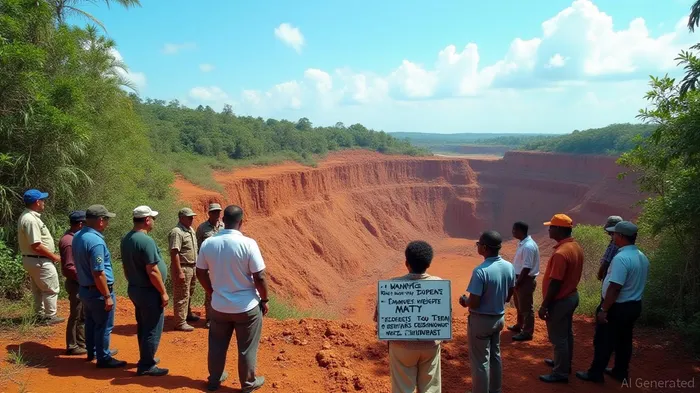
WCS, which includes China Baowu Steel Group, has pledged to collaborate with authorities and communities to mitigate these issues. The company's efforts are part of a broader strategy to balance economic development with environmental protection, a critical factor for the project's long-term success. The commitment is also seen as a response to growing scrutiny from local communities and international stakeholders who have raised concerns about the project's environmental and social impacts.
Rio Tinto, which also holds significant stakes in the project through its partnership with Aluminum Corporation of China (Chinalco), has expressed its commitment to minimizing environmental impacts through preventive and mitigation measures. The company's involvement underscores the importance of environmental sustainability in the development of large-scale mining projects, particularly in regions where communities are heavily dependent on natural resources.
The environmental concerns highlighted by the NGO, Advocates for Community Alternatives, have sparked calls for immediate interventions and long-term remediation strategies. These include the provision of temporary water supply systems, soil remediation efforts, and enhanced environmental monitoring to ensure the project's compliance with international standards. The company's response to these challenges will be crucial in maintaining the project's social license to operate and securing the support of local communities and international investors.
The Simandou iron ore project, with its massive 650-kilometer railway corridor and deep-water port, represents one of the world's largest untapped iron ore reserves. The project's development has faced numerous delays over its decades-long history, but recent commitments from WCS and Rio Tinto suggest a renewed focus on addressing environmental concerns and ensuring sustainable development. As the project moves towards its scheduled first shipments in November 2025, the effective implementation of these commitments will be vital in mitigating potential long-term environmental and social impacts.
References:
[1] https://discoveryalert.com.au/news/simandou-iron-ore-project-water-soil-contamination-2025/
Winning Consortium Simandou, a company developing Guinea's Simandou iron ore deposit, has vowed to address environmental concerns by working with authorities and communities. The commitment comes after a non-governmental organization revealed water and soil pollution linked to the project. Rio Tinto, which also controls blocks of the project, has said it is committed to minimizing impacts through preventive and mitigation measures.
Winning Consortium Simandou (WCS), a Chinese-backed venture developing Guinea's Simandou iron ore deposit, has committed to addressing environmental concerns following revelations of water and soil pollution linked to the project. The commitment comes after a non-governmental organization (NGO) revealed elevated acidity levels and bacterial contamination in water samples, as well as heavy metal concentrations and soil acidification in samples collected along the project area [1].WCS, which includes China Baowu Steel Group, has pledged to collaborate with authorities and communities to mitigate these issues. The company's efforts are part of a broader strategy to balance economic development with environmental protection, a critical factor for the project's long-term success. The commitment is also seen as a response to growing scrutiny from local communities and international stakeholders who have raised concerns about the project's environmental and social impacts.
Rio Tinto, which also holds significant stakes in the project through its partnership with Aluminum Corporation of China (Chinalco), has expressed its commitment to minimizing environmental impacts through preventive and mitigation measures. The company's involvement underscores the importance of environmental sustainability in the development of large-scale mining projects, particularly in regions where communities are heavily dependent on natural resources.
The environmental concerns highlighted by the NGO, Advocates for Community Alternatives, have sparked calls for immediate interventions and long-term remediation strategies. These include the provision of temporary water supply systems, soil remediation efforts, and enhanced environmental monitoring to ensure the project's compliance with international standards. The company's response to these challenges will be crucial in maintaining the project's social license to operate and securing the support of local communities and international investors.
The Simandou iron ore project, with its massive 650-kilometer railway corridor and deep-water port, represents one of the world's largest untapped iron ore reserves. The project's development has faced numerous delays over its decades-long history, but recent commitments from WCS and Rio Tinto suggest a renewed focus on addressing environmental concerns and ensuring sustainable development. As the project moves towards its scheduled first shipments in November 2025, the effective implementation of these commitments will be vital in mitigating potential long-term environmental and social impacts.
References:
[1] https://discoveryalert.com.au/news/simandou-iron-ore-project-water-soil-contamination-2025/


Divulgación editorial y transparencia de la IA: Ainvest News utiliza tecnología avanzada de Modelos de Lenguaje Largo (LLM) para sintetizar y analizar datos de mercado en tiempo real. Para garantizar los más altos estándares de integridad, cada artículo se somete a un riguroso proceso de verificación con participación humana.
Mientras la IA asiste en el procesamiento de datos y la redacción inicial, un miembro editorial profesional de Ainvest revisa, verifica y aprueba de forma independiente todo el contenido para garantizar su precisión y cumplimiento con los estándares editoriales de Ainvest Fintech Inc. Esta supervisión humana está diseñada para mitigar las alucinaciones de la IA y garantizar el contexto financiero.
Advertencia sobre inversiones: Este contenido se proporciona únicamente con fines informativos y no constituye asesoramiento profesional de inversión, legal o financiero. Los mercados conllevan riesgos inherentes. Se recomienda a los usuarios que realicen una investigación independiente o consulten a un asesor financiero certificado antes de tomar cualquier decisión. Ainvest Fintech Inc. se exime de toda responsabilidad por las acciones tomadas con base en esta información. ¿Encontró un error? Reportar un problema


SOBRE NOSOTROS
Nuestra historiaAutores de noticiasBase de conocimientosPolítica de privacidadTérmino de usoDescargo de responsabilidad de corretaje de tercerosTérminos de uso de AIMEDivulgaciones de riesgos de AInvest AICarrerasCONTÁCTENOS
Email: support@ainvest.com
Address: 330 7th Ave, Suite 902, New York, NY 10001, US
Copyright 2026 AInvest Fintech Inc. All rights reserved.


Comentarios
Aún no hay comentarios