
Silver's Structural Supply-Driven Bull Case: Why This Is the Ultimate Green Transition Play
The global silver market is locked in a structural deficit that shows no sign of abating, with cumulative shortfalls over the past five years reaching 820 million ounces-a figure equivalent to an entire year of average mine output. This deficit, driven by inelastic supply and surging industrial demand, positions silver as a unique investment opportunity at the intersection of technological innovation and the green energy transition. As artificial intelligence (AI), electric vehicles (EVs), and solar infrastructure expand, silver's role as an irreplaceable industrial metal is cementing its status as the ultimate "green transition play."
The Structural Deficit: A Perfect Storm of Supply and Demand
Global mined silver supply has stagnated at 813 million ounces annually, with incremental gains from Mexico and Russia failing to offset declines in Peru and Indonesia. Recycling, while rising by 1% in 2025 to a 13-year high, remains a marginal contributor. Meanwhile, industrial demand-once a declining sector-has rebounded as AI, EVs, and solar energy drive consumption. The 2025 deficit of 95 million ounces is projected to deepen as these megatrends accelerate, creating a supply-demand imbalance that is both persistent and structural.
AI: The New Frontier for Silver Demand
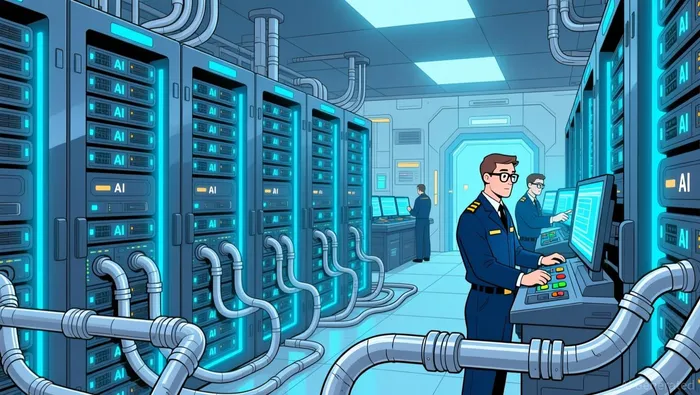 Silver's unparalleled electrical and thermal conductivity (63.01 million siemens per meter and 429 W/m·K, respectively) make it indispensable for AI infrastructure. AI server clusters require 2–3 times more silver than traditional data centers due to their higher power density and complex cooling systems. Semiconductor packaging alone accounts for 18–22% of silver usage in electronics, consuming 1,200–1,500 metric tons annually. With global IT power capacity projected to reach 50 GW by 2025, silver demand from AI is set to surge.
EVs and Solar: The Twin Engines of the Green Transition
Electric vehicles and solar panels are the largest single-use cases for silver in the green economy. Each battery electric vehicle (BEV) consumes 25–50 grams of silver, compared to 15–28 grams for internal combustion engines. By 2025, the automotive industry is expected to absorb nearly 90 million ounces of silver annually, rivaling the 98 million ounces forecast for the photovoltaic (PV) sector. Solar panels, which require 111 milligrams of silver per PV cell, consumed 161 million ounces in 2023 alone. Cumulative demand for solar energy is projected to reach 888 million ounces by 2030, averaging 81 million ounces annually.
Supply Constraints: A Wall of Inelasticity
The silver market's inability to respond to rising demand is rooted in the metal's production structure. Over 75% of silver is a byproduct of base-metal mining, making it impossible to scale production rapidly. Mine output has remained flat for years, while recycling rates, though improving, cannot offset the exponential growth in industrial applications. This inelasticity ensures that the structural deficit will persist, with the 2025 shortfall of 95 million ounces likely to widen as AI, EVs, and solar adoption accelerates.
The Dual Role of Silver: Industrial Metal and Safe-Haven Asset
Silver's unique duality-as both an industrial commodity and a store of value-further strengthens its bull case. While its price is traditionally tied to industrial demand, its role as a hedge against inflation and geopolitical uncertainty adds a layer of resilience. This dual function is particularly relevant in 2025, as global economic uncertainty and geopolitical tensions amplify demand for safe-haven assets.
Conclusion: A Sustained Outperformance
Silver's structural deficit, driven by inelastic supply and insatiable demand from AI, EVs, and solar, creates a compelling investment thesis. Unlike gold, which is purely a monetary asset, silver benefits from both industrial growth and macroeconomic tailwinds. As the green transition accelerates, silver's role as a critical enabler of electrification and data infrastructure will ensure sustained outperformance. For investors, this is not merely a cyclical play-it is a structural opportunity with decades of runway.







Comentarios
Aún no hay comentarios