
Silver's Structural Breakout: Assessing the New Bull Market Regime
Silver has entered a new era. The metal has just broken out of a 45-year-long base, a move described as the second greatest in capital markets history. This technical breakthrough is more than a chart pattern; it resets the entire trading regime. Historically, breakouts of this magnitude do not produce significant corrections in their early phases. Instead, they establish a new, higher price environment where overbought conditions are restructured, not a reason to sell.
The foundation for this shift is a historic structural deficit. The silver market is in its fifth consecutive year of supply deficit, with cumulative shortfalls since 2021 approaching 800 million ounces. This is equivalent to nearly an entire year of global production being drawn down. The physical squeeze is visible in exchange inventories, which have collapsed to historic lows, forcing borrowing costs to spike. This persistent deficit, driven by inelastic supply, creates a powerful tailwind for prices.
Most critically, the demand profile has fundamentally changed. Industrial consumption, particularly from the energy transition and digital infrastructure, now accounts for more than half of all silver demand. Applications in solar panels, electric vehicles, and AI/data centers are irreplaceable and non-discretionary. This industrial tailwind, combined with the metal's strategic designation as a critical mineral, has transformed silver from a traditional commodity into a foundational material for the modern economy.
The bottom line is a completed structural break. The 45-year consolidation has been cleared, the deficit is severe and persistent, and the demand driver is now industrial. This convergence of technical, fundamental, and supply-demand forces suggests silver's new price regime is not a fleeting rally, but the start of a sustained bull market cycle.
Financial Impact: Winners, Losers, and Market Mechanics
The explosive rally in silver is creating a stark financial divide, with winners capturing exponential gains while physical markets strain under acute pressure. The primary beneficiaries are the producers and streamers who have long-term contracts at fixed, low costs. Companies like Wheaton Precious MetalsWPM-- (WPM) are positioned as major victors, capturing the full upside of the rally without the operational risks of direct mining. For primary silver miners such as First Majestic Silver (AG) and Pan American SilverPAAS-- (PAAS), the financial impact is even more direct. As silver prices surge, their margins expand exponentially because their All-In Sustaining Costs have remained relatively stable compared to the metal's explosive price move. This creates a powerful tailwind for their bottom lines.
The stress, however, is concentrated in the physical market. The structural deficit, now spanning five consecutive years and totaling nearly 800 million ounces, has created a severe supply squeeze. This is most visible in exchange inventories, which have collapsed to historic lows. The resulting scarcity has driven borrowing costs for physical silver to spike to 200% annualized, a clear signal of a market in acute tension. This physical tightness is compounded by the metal's unique supply inelasticity; approximately 75-80% of production comes as a byproduct of base metal mining, meaning higher silver prices alone cannot quickly stimulate more output.
This physical pressure is now spilling over into the paper markets, most notably the iShares Silver Trust (SLV). The ETF, a primary vehicle for institutional inflow, is facing scrutiny as investors increasingly demand physical delivery over paper exposure. This dynamic strains the ETF's structure, which is designed to track the spot price but relies on a complex network of authorized participants and underlying physical holdings. The combination of a historic deficit, a premium in Asian markets, and rising demand for tangible metal creates a scenario where the paper market's ability to absorb flows is being tested.
The bottom line is a market in transition. The rally is not a simple speculative spike but a fundamental repricing driven by a structural imbalance. While miners and streamers reap the financial rewards, the physical market's strain and the pressure on paper vehicles like SLV indicate that the current trajectory is unsustainable without a significant increase in supply or a major shift in demand. The path forward will be dictated by whether this supply squeeze can be resolved or if it will continue to fuel volatility and price discovery.
Valuation and Scenarios: From $100 to the Gold-Silver Ratio
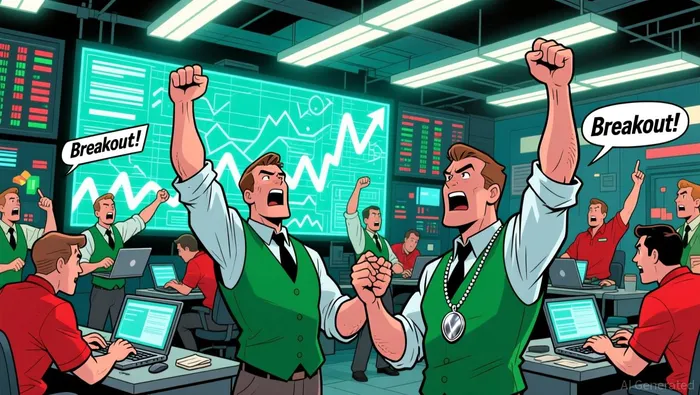
The technical setup for silver is one of historic significance, marking the second greatest breakout in capital markets history. With the price having just broken out of a 45-year-long base, the established trading regime has been reset. This move creates a powerful bullish momentum, with clear measured targets pointing toward $88 and $96. More intriguing is the conditional pattern highlighted by veteran trader Peter Brandt: a confirmed "half-mast flag" could imply a target of $101. The precedent from past major breakouts, like copper in 2005, suggests these moves often proceed with sustained appreciation and only minor pauses for profit-taking, rather than major corrections.
Yet the path to these targets is not without tension. While short-term momentum and relative strength favor silver, long-term ratio indicators are flashing caution. The gold-to-silver ratio, which recently broke below key support, now faces a critical test. To unlock triple-digit silver prices, this ratio would need to compress significantly toward historical extremes in the 45–50 zone. This compression is not merely a technical outcome; it is a signal of a major capital rotation into hard assets. The technical evidence shows silver has broken out of an 11-year consolidation base relative to the traditional 60/40 portfolio, indicating a structural shift as investors seek alternatives to conventional stocks and bonds.
The primary macro catalyst for this rotation is sustained central bank buying and monetary accommodation. As noted in the broader outlook, the global economy is expected to surprise to the upside in 2026, driven by continued liquidity injections from central banks. This environment provides the essential backdrop for precious metals. For gold, this support is structural, with targets moving toward $5,000–$6,000. Silver's case is more asymmetric, as it benefits from both this broad monetary support and its own dual role as a monetary and industrial metal. The persistent supply deficit and rising demand from solar and electronics amplify its upside potential during periods of strong demand.
The bottom line is a market at an inflection point. The technical breakout sets a clear path for measured gains, but the ultimate target hinges on the macro narrative. If central bank buying persists and the gold-to-silver ratio compresses toward historical lows, silver could see explosive moves beyond $100. The current split in ratio signals-caution from long-term models versus strength from short-term trends-means the next decisive move is likely to be high-volatility. For now, the setup favors the bullish case, but the journey to $100 will be dictated by the pace of capital flowing into hard assets and the Fed's ability to maintain its accommodative stance.
Catalysts and Risks: What to Watch in 2026
The bull case for silver now hinges on a series of forward-looking signals that will confirm a structural breakout or expose a fragile, sentiment-driven rally. The immediate technical battleground is clear: a sustained break above $80 per ounce is the critical threshold. This level represents the final major resistance before the market enters uncharted territory. A decisive move past it would validate the bullish technical patterns, like the "half-mast flag" identified by trader Peter Brandt, and eliminate a key overhang that has capped recent gains. With little visible resistance above $80, the upside risks would then be dramatically elevated, potentially opening the path toward the $101 target.
Beyond price, the market's internal health is a key indicator. Investors must monitor the gold-to-silver ratio's trajectory and the physical market's stress points. The ratio has been moving lower, favoring silver in the short term, but long-term ratio analysis flashes caution, warning of a potential blowoff top. More telling are the physical market signals. Skyrocketing silver lease rates and the near-total disappearance of "free-floating" silver point to deep systemic stress. The recent surge in backwardation, where spot prices trade above futures, is a classic sign that physical demand is overwhelming paper supply. If this tension persists, it could fuel a sustained squeeze, but if it eases, it would undermine the fundamental story of a structural deficit.
The most significant risk, however, is overcrowded bullish sentiment. Despite the powerful macroeconomic tailwinds of liquidity injections and expansionary fiscal policy, analysts are warning that the sentiment is already stretched. As one firm noted, the largest advance in silver has already occurred, and the metal is poised for a "blowoff top" before year-end underperformance. This creates a classic vulnerability: a sharp correction could follow if the narrative shifts. A slowdown in industrial demand from sectors like solar and electronics, or a sudden easing of geopolitical tensions that reduces safe-haven flows, could quickly deflate the speculative premium. The market's recent volatility, with a 2.65% daily surge followed by a flash crash at year-end, illustrates this fragility.
The bottom line is a market at a crossroads. The setup offers a powerful upside if technical and physical signals align. Yet the path is fraught with risks from sentiment and supply dynamics. For investors, the coming months will be defined by watching these specific catalysts-the $80 break, the ratio, the physical market stress, and the sentiment gauge-to determine whether this is the start of a multi-decade bull run or the final leg of a speculative frenzy.







Comentarios
Aún no hay comentarios