
Silver's Strategic Resurgence: Macroeconomic Tailwinds and Institutional Demand in 2025
In 2025, silver has emerged as a linchpin in global investment strategies, driven by a confluence of macroeconomic tailwinds and institutional demand. As central banks grapple with inflationary pressures and the green energy transition accelerates, silver's dual identity-as both an industrial metal and a safe-haven asset-is reshaping its role in portfolios. The Sprott Physical Silver Trust's (PSLV) recent milestone of surpassing a $10 billion net asset value (NAV) underscores this shift, reflecting a broader reallocation of capital toward tangible assets amid economic uncertainty, according to a GlobeNewswire release.
Macroeconomic Tailwinds: Inflation, De-Risking, and the Green Transition
The resurgence of silver is inextricably linked to macroeconomic dynamics. Persistent inflation, fueled by supply chain bottlenecks and accommodative monetary policies, has eroded the purchasing power of fiat currencies. In this environment, commodities like silver-historically a hedge against inflation-have gained traction. According to Crux Investor, silver's valuation relative to gold is at a critical inflection point, with the gold-silver ratio currently hovering at 90-100:1, well above its historical average of 65:1. This imbalance suggests silver is significantly undervalued, creating a compelling case for price appreciation.
Simultaneously, the global de-risking trend-marked by a shift toward conservative allocations and diversification-has amplified demand for assets with intrinsic value. Silver's low correlation with traditional equities and bonds makes it an attractive addition to portfolios seeking to mitigate downside risk, according to MarketClutch. For instance, institutional investors have increasingly allocated capital to physical silver funds, with aggressive strategies allocating up to 20-30% of portfolios to the metal, per Ithy.
The green energy transition further amplifies silver's strategic appeal. As a critical component in solar panels, electric vehicles, and electronics, industrial demand for silver has surged. Data from Discovery Alert reveal that solar photovoltaic applications alone consumed 232 million ounces of silver in 2024, with consumption rising at a 14% annual growth rate. This industrial demand, coupled with a historic supply deficit of 117.6 million ounces in 2025, is creating upward pressure on prices, according to Gainesville Coins.
Institutional Demand and the Sprott Physical Silver Trust
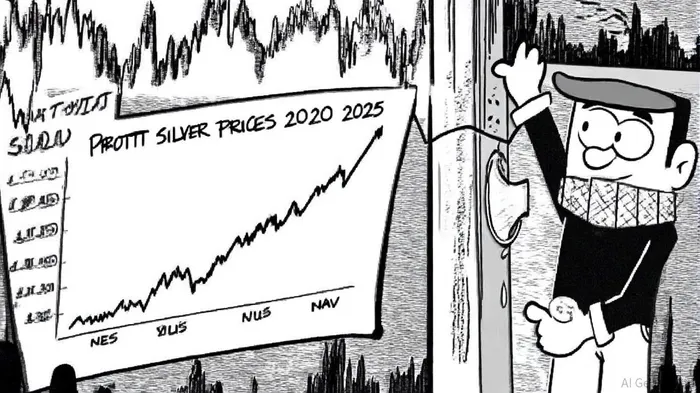
The Sprott Physical Silver Trust's $10 billion NAV milestone is a testament to institutional confidence in silver's strategic role. As of October 13, 2025, the Trust held 202.6 million ounces of physical silver, with a NAV of $14.27 per unit-a 41.91% year-to-date increase, per Sprott. This growth is driven by two key factors: rising silver prices and surging demand for physical exposure.
Institutional adoption of PSLV has been robust, with major shareholders such as Federation des caisses Desjardins du Quebec ($175.75M) and Jupiter Asset Management Ltd. ($93.21M) signaling a shift toward tangible assets, according to MarketBeat. The Trust's structure-offering fully allocated, redeemable silver bullion with a management expense ratio of 0.57%-provides a cost-effective and liquid alternative to direct physical ownership, as shown by Panabee.
The Trust's performance also reflects broader macroeconomic trends. For example, the average discount to NAV narrowed to 2.8% in Q2 2025 from 4.0% in 2024, indicating heightened investor confidence, according to Yahoo Finance. Additionally, the Bourse de Montreal's listing of options on PSLV in September 2025 has enhanced its accessibility, further solidifying its role in institutional portfolios, per the Manila Times.
Portfolio Diversification and the Gold-Silver Ratio
Silver's strategic appeal is further reinforced by its unique position in portfolio diversification. Unlike gold, which is purely a monetary asset, silver's industrial applications provide a dual demand driver. This duality makes it less volatile than gold while still offering inflation protection. The gold-silver ratio, currently at a multi-decade high, suggests that silver is poised for a correction relative to gold. Historical patterns indicate that when the ratio exceeds 80:1, silver often outperforms gold in the subsequent 12-18 months, according to ETFdb.
Moreover, silver's low correlation with traditional assets-such as equities and bonds-makes it an effective hedge against systemic risks. During periods of economic uncertainty, silver has historically outperformed other commodities, offering both capital preservation and growth potential, according to Crux Investor.
Conclusion: A Strategic Asset for the New Era
As macroeconomic uncertainties persist and the green energy transition accelerates, silver's role in global portfolios is evolving from a niche allocation to a strategic cornerstone. The Sprott Physical Silver Trust's $10 billion NAV milestone is not merely a financial achievement but a barometer of institutional confidence in silver's ability to navigate inflationary pressures, industrial demand surges, and de-risking trends. For investors seeking to future-proof their portfolios, silver's dual identity as both a monetary and industrial asset offers a compelling case for inclusion.







Comentarios
Aún no hay comentarios