
Silver Price Surge: Geopolitical and Industrial Forces Reshape 2025 Market Dynamics
In 2025, the silver market is undergoing a seismic shift driven by a confluence of geopolitical tensions, green energy transitions, and structural supply constraints. These forces are creating a volatile yet compelling investment landscape, where physical silver and silver equities are emerging as strategic assets for investors seeking to hedge against macroeconomic uncertainty and industrial demand surges.
Geopolitical Tensions and Central Bank Policies: A New Era of Strategic Reserves
The Russian central bank's decision to begin stockpiling silver in 2025 marks a pivotal shift in how nations are redefining their reserve portfolios. While gold has long dominated central bank holdings, silver's dual role as an industrial and monetary metal is gaining traction. Russia's actions, coupled with BRICS nations' coordinated efforts to develop alternative pricing mechanisms, are fragmenting the global silver market. The Shanghai Gold Exchange (SGE) has seen its inventory surge by 637.9% since 2020, while COMEX and LBMA inventories have plummeted by 75.9% and 63.2%, respectively. This reallocation of physical silver from Western to Eastern vaults is not merely a supply chain adjustment—it is a geopolitical reordering of financial power.
Central banks in emerging markets are also prioritizing domestic silver production. Mexico, the world's largest silver producer, faces regulatory overhauls and U.S. tariff threats that have reduced output by 5%. Meanwhile, China's proposed mining royalty hikes threaten to deter foreign investment in its second-largest silver production sector. These developments, combined with Russia's pivot to BRICS, are creating a fragmented market where pricing transparency is eroding. The result is a structural deficit of 149 million ounces by 2025, according to the U.S. Geological Survey (USGS), driven by declining ore grades and the inelastic nature of silver production.
Green Energy Transition: Silver's Industrial Demand Surge
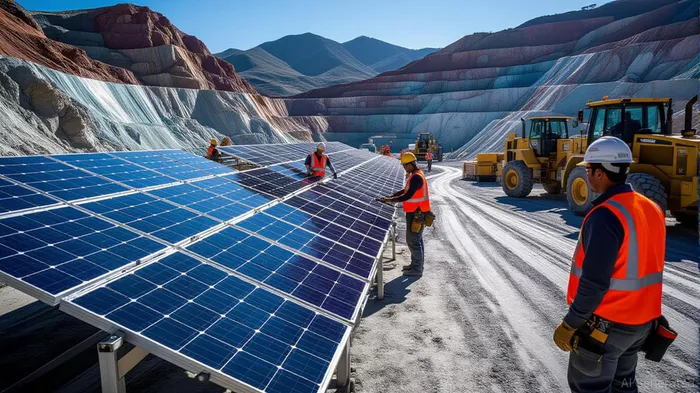
The green energy transition is accelerating silver's industrial demand to unprecedented levels. Solar photovoltaic (PV) and electric vehicle (EV) manufacturing now account for 45% of global silver consumption. The U.S. Inflation Reduction Act has further amplified this trend, with solar panel production alone requiring 1.5 tons of silver per gigawatt of capacity. As of mid-2025, the World Silver Institute forecasts a widening supply deficit, with 5,000 tons of unmet demand in 2024.
Pan American Silver Corp. (NYSE: PAAS), a leading producer, reported record net earnings of $189.6 million in Q2 2025, driven by robust mine operating earnings of $273.3 million. The company's production of 5 million ounces of silver highlights the sector's resilience amid supply constraints. Similarly, the iShares Silver TrustSLV-- (SLV) has surged 23% year-to-date, reflecting institutional and retail investor confidence in silver's industrial and monetary appeal.
The gold-silver ratio, currently at 93:1 (well above its 10-year average of 65:1), underscores silver's undervaluation relative to gold. Analysts argue that as the ratio normalizes, silver could see further gains, particularly as ratio-based trades unwind and artificial selling pressure on gold dissipates.
Supply Constraints and the Looming Silver Squeeze
Silver's supply inelasticity is a critical factor in its price trajectory. Over 70% of silver is a byproduct of copper, lead, and zinc mining, meaning producers cannot easily ramp up output to meet demand. COMEX silver warehouse stocks have declined by 70% since 2021, while recycling rates remain at a mere 5%. This fragility is compounded by geopolitical disruptions: Peru's 2024 labor strikes reduced output by 15 million ounces, and U.S.-China trade tensions are straining rare earth element supply chains critical for EV and solar manufacturing.
The U.S. inclusion of silver in its Critical Minerals List has further intensified market dynamics. Federal support for domestic production, including streamlined permitting and potential stockpiling measures, is expected to bolster long-term supply chain security but may exacerbate short-term price volatility.
Investment Rationale: Strategic Allocation to Physical Silver and Equities
For investors, the case for silver is compelling. ETF inflows into silver-backed products like SLVSLV-- have surged, with 1,073 tons of net inflows in Q2 2025 alone—equivalent to 5% of annual global mine production. This accumulation is straining physical delivery logistics and expanding premiums globally. The ETF's 0.50% expense ratio and high liquidity make it an efficient vehicle for exposure, while physical silver offers a hedge against paper market opacity.
Silver equities, particularly those with domestic production capacity, are also attractive. Companies like Pan American SilverPAAS-- and Silver Wheaton (SLW) are positioned to benefit from supply chain localization trends and industrial demand growth. With global ETF positions in silver still 25% below 2020 peaks, there is significant room for further accumulation.
Conclusion: Navigating the Perfect Storm
The 2025 silver market is a perfect storm of geopolitical realignment, industrial demand surges, and supply-side inelasticity. Investors who recognize this convergence are well-positioned to capitalize on the next wave of price momentum. A strategic allocation to physical silver and equities offers asymmetric upside potential, particularly as central banks, green energy transitions, and supply constraints continue to reshape the market. In a world of rising uncertainty, silver is no longer just an industrial commodity—it is a strategic asset for the 21st century.







Comentarios
Aún no hay comentarios