
Silver vs. Gold in 2026: Which Precious Metal Offers the Stronger Investment Case?
The 2026 investment landscape for precious metals is shaped by a confluence of structural supply constraints, industrial demand surges, and macroeconomic tailwinds. Gold and silver, both traditional safe-haven assets, face distinct trajectories driven by divergent dynamics. This analysis evaluates their investment cases through the lenses of supply-demand fundamentals and macroeconomic trends, drawing on recent data and expert projections.
Gold: Structural Demand and Central Bank Momentum
Gold's 2026 outlook hinges on its role as a geopolitical and inflation hedge, supported by central bank accumulation. Central banks added 254 tonnes of gold in the first ten months of 2025 alone, with October seeing a 36% monthly increase in purchases. By Q3 2025, central bank demand reached 220 tonnes quarterly, up 28% from Q2 and 6% above the five-year average according to data. This trend is projected to continue, with 2026 demand averaging 585 tonnes quarterly, driven by diversification away from the U.S. dollar and inflationary pressures as research shows.
Structural supply constraints also bolster gold's case. Mine production rose modestly to 977 tons in 2025, but weaker jewelry demand partially offset this growth. Meanwhile, real yields remain negative in many developed economies, incentivizing gold's role as a hedge against currency debasement. Analysts at J.P. Morgan note that gold prices could reach $5,000 if central bank demand and low real yields persist. However, the market must contend with potential corrections due to consolidation and shifting investor sentiment.
Silver: Supply Deficits and Industrial Leverage
Silver's investment case is more volatile but offers higher growth potential. The metal entered a phase of price discovery in late 2025, surging above $65 per ounce, driven by a structural supply deficit. By 2025, cumulative silver shortages reached 800 million ounces (25,000 tons), with the 2026 deficit projected to narrow to 30.5 million ounces from 63.4 million in 2025. This deficit is fueled by industrial demand growth of 51% since 2016 in the electrical and electronics sector, driven by silver's unmatched conductivity in solar panels, EVs, and AI data centers.
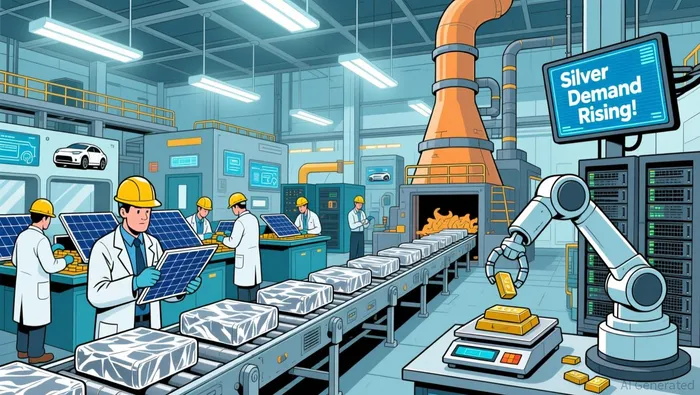
The U.S. government has classified silver as a critical mineral, underscoring its strategic importance in cleantech and emerging technologies. ETF inflows and physical holdings have also tightened silver's supply, with low inventories at exchanges like the Shanghai Futures Exchange. Price forecasts for 2026 range from $44.50 (HSBC) to $65 (Bank of America), with WisdomTree and CME projecting $62–$62.87. While silver's smaller market size amplifies volatility, its industrial leverage and supply constraints position it for stronger percentage gains compared to gold.
Macroeconomic Tailwinds: A Shared Foundation
Both metals benefit from a broader macroeconomic backdrop. The U.S. dollar's weakening, driven by declining confidence in U.S. economic policy and global reserve diversification, has historically supported gold and silver rallies. Inflationary pressures and global debt levels-exceeding $400 trillion-further reinforce their appeal as hedges according to analysts. Geopolitical tensions, including conflicts in Ukraine and Venezuela, have also heightened demand for safe-haven assets.
However, divergences emerge. Gold's structural bull case relies on central bank demand and real yield dynamics, while silver's trajectory depends on industrial adoption and supply constraints. The latter's smaller market size makes it more susceptible to speculative swings but also more responsive to demand shocks in cleantech sectors.







Comentarios
Aún no hay comentarios