
Is Silver at a Critical Inflection Point?
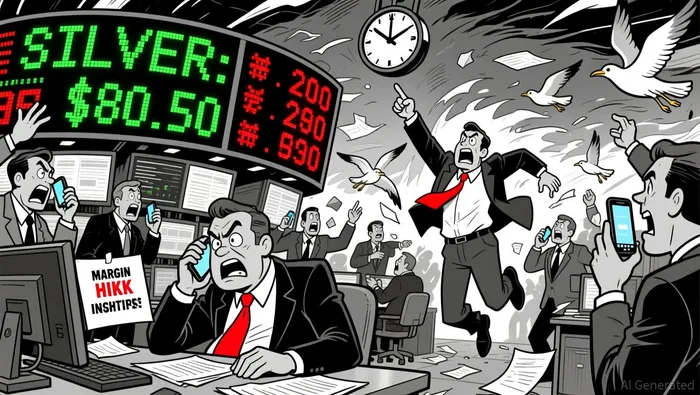
The question of whether silver is at a critical inflection point hinges on a collision of macroeconomic forces, industrial demand, and speculative fervor. Robert Kiyosaki, the Rich Dad Poor Dad author and longtime advocate for precious metals, has positioned the $100-per-ounce threshold as a pivotal milestone for silver in 2026. As of late 2025, silver prices have surged past $80 per ounce, only to face a sharp correction amid margin hikes and speculative trading according to market analysis. This volatility underscores the tension between bullish fundamentals and market fragility-a dynamic that investors must navigate carefully.
The Drivers Behind Silver's Ascent
Kiyosaki's optimism is rooted in three core pillars: inflationary pressures, industrial demand, and structural supply constraints. The U.S. dollar's weakening purchasing power, exacerbated by rising fiscal deficits and Fed rate cuts, has amplified demand for silver as a hedge against fiat currency debasement according to industry reports. Meanwhile, industrial consumption-particularly in solar energy, electric vehicles (EVs), and AI infrastructure-has outpaced supply. Solar energy alone accounted for 25% of global silver use in 2024, with demand projected to double by 2030 according to market analysis. EV-related silver use grew by 20% in 2025, while emerging applications in high-efficiency electrical components and thermal management systems for data centers are creating new demand vectors according to industry reports.
Supply-side constraints further amplify these dynamics. Global mine output has declined since 2010, while annual demand now exceeds 1.2 billion ounces, creating persistent deficits according to industry analysis. Political instability in key producing regions like Mexico and Russia adds to the risk of supply shocks according to market reports. Kiyosaki has repeatedly emphasized these factors, stating that silver's role as a "critical asset" in a destabilized economic environment justifies continued accumulation according to market analysis.
Volatility and the Shadow of Correction
Despite these fundamentals, silver's path to $100 remains fraught with volatility. In late 2025, prices fell nearly 6% after the CME Group increased margin requirements, triggering liquidations and downward pressure according to market reports. This correction highlights the market's speculative nature, where leveraged positions and algorithmic trading can amplify short-term swings. Kiyosaki has advised patience, urging investors to "wait for a crash then GO or NO" according to market analysis, a strategy that acknowledges the inherent unpredictability of the market.
Geopolitical tensions also loom large. U.S.-China and U.S.-India tariff disputes, coupled with instability in silver-producing regions, heighten the risk of sudden shocks according to industry reports. While these factors could drive safe-haven demand, they also introduce uncertainty that may deter risk-averse investors.
Risk-Reward Analysis: A Tug-of-War Between Optimism and Caution
The risk-reward profile for silver near the $100 threshold is complex. On one hand, Kiyosaki's projections-ranging from $100 to $200 per ounce by 2026-are supported by structural industrial demand and a favorable macroeconomic environment according to market analysis. Analysts from institutions like the World Bank and HSBC project prices between $41 and $68.25 per ounce in 2026 according to industry reports, while Alan Hibbard of GoldSilver argues the market underestimates supply deficits, predicting a potential $100+ surge according to market analysis.
On the other hand, the market's speculative nature and sensitivity to monetary policy create significant downside risks. A premature Fed tightening cycle or a sudden drop in industrial demand could trigger another correction. Additionally, ETF inflows, which turned positive in 2025, remain volatile and subject to rapid reversals according to industry reports.
Conclusion: Inflection Point or Illusion?
Silver's current trajectory suggests it is indeed at a critical inflection point-a juncture where long-term fundamentals and short-term volatility intersect. Kiyosaki's $100 threshold represents not just a price target but a psychological and strategic milestone. For investors, the key lies in balancing disciplined accumulation with risk mitigation. While the case for silver is compelling, the path to $100 will require navigating a minefield of macroeconomic shifts, geopolitical risks, and market sentiment.
As the Fed's rate policy and global inflation trends evolve, silver's performance will serve as a barometer for broader economic instability. Whether it becomes a $100-per-ounce asset or faces another correction, one thing is clear: the metal's role in the 21st-century economy is far from settled.







Comentarios
Aún no hay comentarios