
The Silver Crash Narrative: Why They're Lying About the Real Story
The narrative of a manipulated silver price is a distraction from the overwhelming structural forces that drove the metal to unprecedented heights in 2025. The scale of the rally is undeniable: silver gained 148% in U.S. Dollar terms for the year, with a particularly violent surge in December alone. The price hit a record high of $84 per ounce in December before a sharp, single-day correction. This was not a fleeting anomaly; it was the culmination of a multi-year deficit and a powerful shift in investor sentiment.
The core tension in the market was stark. On one side, global silver demand is expected to drop by 4% year-over-year, with industrial demand alone forecast to decline. On the other, investment demand surged, fueled by a confluence of powerful, structural factors. Silver was officially designated a critical mineral by the U.S. government, a move that elevated its strategic importance. Simultaneously, elevated macroeconomic and geopolitical risks prompted a flight to safe-haven assets, with silver's performance in 2025 significantly outpacing both the S&P 500 and BitcoinBTC--. This investment strength was material, with exchange-traded product holdings up by roughly 18% through November.
The thesis is clear: this was a structural event, not a manipulated illusion. The record price and the record deficit were driven by a fundamental reassessment of silver's role in a portfolio, a reassessment that comfortably offset the industrial weakness. The subsequent sharp decline in late December, while dramatic, must be viewed in this context. It was a volatility spike within a powerful, underlying trend, not the reversal of a manipulated rally. The structural forces that built the surge remain intact.
The December Correction: A Liquidity Shock, Not a Manipulation
The violent selloff in late December was a classic market event, not a manufactured crash. The move was defined by its scale and speed. Silver plunged 15% peak to trough, the steepest high-to-low swing in over five years. On the final trading day of the year, silver futures fell 8.7%, a brutal one-day drop that followed a record high above $80. This was a liquidity shock, not a fundamental breakdown.
The primary trigger was a direct, mechanical squeeze. The CME Group, the dominant futures exchange, raised margin requirements on silver futures contracts effective December 29. The initial margin for a standard contract jumped from $22,000 to $25,000. This forced traders with insufficient capital to either inject cash or face automatic liquidation. In a market already stretched from a parabolic 2025 rally, this created a cascade of selling as leveraged positions were unwound to meet the new cash demands. The move was framed as a necessary adjustment to "align margins with volatility," but its timing was critical.
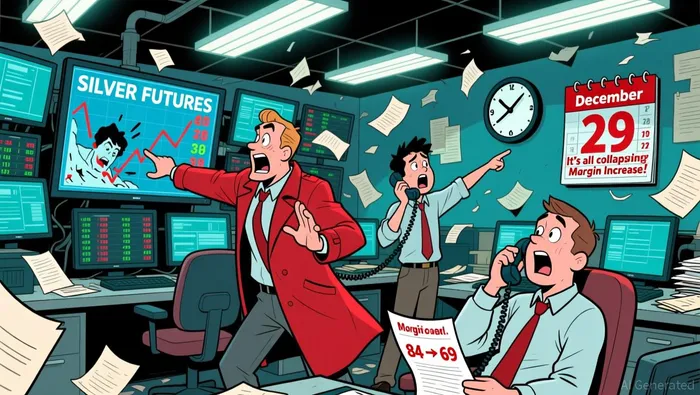
The correction was amplified by thin, year-end liquidity. The unwinding of crowded, leveraged positions collided with a market where fewer participants were active, magnifying the price impact. This is a textbook "crowded trade" unwind. The structural tailwinds for silver-its critical mineral status, safe-haven appeal, and supply deficit-remained unchanged. The sell-off was a technical correction, a forced reduction in leverage that created a sharp, temporary dip in an otherwise powerful trend. The market had simply become too crowded and too leveraged for its own good.
The Manipulation Question: Why the Historical Case Doesn't Apply
The historical case for manipulation is a powerful one, but it is a case from the past. Between 2008 and 2016, a major investigation by U.S. regulators uncovered systematic manipulation in the precious metals markets. Eight banks were found to have engaged in spoofing and price rigging, resulting in $1.27 billion in fines and the imprisonment of two JPMorgan traders. This was a sophisticated, institutional campaign to distort prices. The key point is that this case was prosecuted and settled years ago. The Commodity Futures Trading Commission (CFTC) has not found evidence of a similar, ongoing manipulation in the markets that drove silver's 2025 rally and December selloff.
The December correction's mechanics are fundamentally different from the spoofing tactics of that past era. The selloff was triggered by a direct, mechanical shock: the CME Group raised margin requirements on silver futures contracts effective December 29. This forced traders with insufficient capital to either inject cash or face automatic liquidation. The result was a cascade of selling as leveraged positions were unwound to meet the new cash demands. This is a classic technical event, a forced reduction in leverage within a crowded market, not the subtle, premeditated spoofing that characterized the earlier scandal.
Silver's inherent volatility and the heavy use of leverage in its futures market are often cited as signs of manipulation. In reality, these are features of the asset class, not proof of active deception. The December move was a liquidity shock amplified by thin year-end trading, a textbook scenario for a crowded trade unwind. The structural forces that built the 2025 rally-its critical mineral designation, safe-haven appeal, and supply deficit-remained entirely intact. The selloff was a sharp, technical correction, not a reversal of a manipulated trend. The historical manipulation case does not apply to the recent price action because the market conditions and the nature of the event are entirely different.
Forward Scenarios: Structural Demand vs. Technical Risk
The path ahead for silver is defined by a clear tension between its enduring structural case and persistent technical vulnerabilities. The long-term narrative remains intact. Silver's fundamental value is anchored in its indispensable role in modern industry, particularly in solar photovoltaics, electric vehicles, and electronics. This industrial demand provides a crucial counterweight to the market's recent volatility and underpins the metal's status as a critical mineral. Even with a projected 4% year-over-year drop in global silver demand, the structural shift toward clean energy and digital infrastructure ensures a powerful, long-term floor for prices. The market's record deficit for five consecutive years is a testament to this imbalance between supply and the underlying, growing needs of advanced technologies.
Yet, the market's extreme leverage and thin liquidity create a persistent risk of sharp, volatility-driven corrections. The December selloff was a stark reminder of this dynamic. It was a classic "crowded trade" unwind, triggered by a mechanical shock: the CME Group raised margin requirements on silver futures contracts effective December 29. This forced a cascade of liquidations that amplified a profit-taking move into a technical crash. The setup for such events is not resolved. The market's memory of that liquidity shock, coupled with the heavy use of leverage in its futures complex, means any future surge in volatility could trigger a similar, self-reinforcing sell-off.
The key watchpoints for 2026 are twofold. First, the stability of margin requirements will be a critical technical signal. A return to the previous, lower levels would ease pressure on leveraged traders and improve market stability. Second, and more importantly, the pace of new investment flows will determine if the rally resumes or consolidates. Analysts note that with an expected reacceleration of global growth in 2026, the safe-haven appeal that drove the 2025 rally may lose some of its shine. If cyclical commodities outperform, precious metals could see a shift from defensive to cyclical demand, altering the investment thesis. For now, the structural demand story is intact, but the market's technical risk profile ensures that silver's journey will remain a rollercoaster, not a straight climb.






Comentarios
Aún no hay comentarios