
The Silver Boom: Why Miners and ETFs Are Positioning for a New Era of Speculative Demand and Structural Scarcity
The silver market is undergoing a seismic transformation. By late 2025, the price of silver had surged past $61.47 per ounce, breaking records and outpacing even gold's 60% annual gain. This unprecedented rally is driven by a confluence of speculative demand, industrial innovation, and macroeconomic tailwinds, particularly the anticipation of Federal Reserve rate cuts. As investors and analysts alike pivot their focus to the metal's strategic value chain, silver miners and ETFs are redefining their positioning to capitalize on a market poised for sustained growth.
The Perfect Storm: Speculative Demand and Monetary Policy
The surge in silver prices is inextricably linked to speculative demand and expectations of monetary easing. A 25-basis-point rate cut at the Fed's December 2025 meeting-a near-certainty-has historically pushed silver higher by 18–22% in the year following such reductions. Lower interest rates reduce the opportunity cost of holding non-yielding assets like silver and weaken the U.S. dollar, further amplifying demand. This dynamic has fueled a 158% return for the Global X Silver Miners ETFSIL-- (SIL) in 2025, far outpacing the S&P 500's 15% gain.
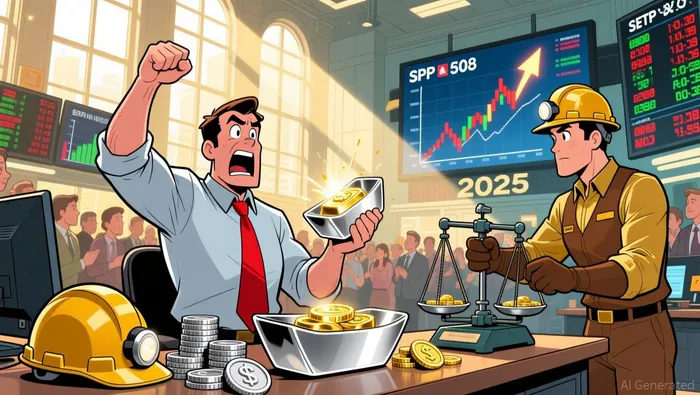 Retail and institutional investors have flocked to silver-backed ETFs, with inflows reflecting renewed confidence. The iShares Silver TrustSLV-- (SLV), for instance, has seen record holdings as investors hedge against inflation and economic uncertainty. Meanwhile, the gold-silver ratio-currently at 79:1 suggests silver remains undervalued relative to gold, positioning it for potential catch-up gains.
Industrial Demand and Structural Scarcity: A New Paradigm
Beyond speculation, structural supply deficits are reshaping the silver landscape. Industrial demand, particularly from solar photovoltaics (PV), electric vehicles (EVs), and electronics manufacturing, now consumes over 700 million ounces annually. The U.S. government's designation of silver as a critical mineral underscores its strategic importance in cleantech and national security. However, mine production has stagnated at around 813 million ounces since 2016, with annual declines averaging 1.4%. This imbalance has created a self-reinforcing cycle: rising prices incentivize stockpiling, which exacerbates shortages, further driving prices upward.
The structural deficit is compounded by geopolitical risks. Fears of U.S. tariffs on silver have prompted domestic stockpiling, while recycling and by-product production from copper and zinc mines remain insufficient to bridge the gap. Analysts project this scarcity will persist through 2026, with prices potentially reaching $100 per ounce if industrial demand continues to outpace supply.
Strategic Positioning: Miners and ETFs in the Value Chain
Silver miners and ETFs are leveraging their positions in the value chain to maximize gains. Leading producers like Pan American SilverPAAS-- (PAAS), First Majestic Silver (AG), and Hecla Mining (HL) have seen profitability soar as prices climb. Wheaton Precious Metals (WPM), a streaming company, exemplifies this trend: by funding miners in exchange for a percentage of future production at fixed prices, it captures high-margin gains as spot prices surge.
ETFs, meanwhile, are diversifying their strategies. SIL's 1.4x leverage to silver price movements-though lower than historical averages-reflects cautious optimism about miner valuations. Rebalancing activities in Q4 2025 further highlight this shift: SIL's top three holdings-Wheaton Precious Metals, Pan American Silver, and Coeur Mining-account for 42% of the portfolio, emphasizing exposure to both production and streaming models.
The Road Ahead: Risks and Opportunities
While the outlook for silver is bullish, challenges remain. Rising prices threaten profit margins in silver-dependent industries like solar and EV manufacturing. Additionally, central banks could pivot toward tighter monetary policy if inflationary pressures resurge, dampening speculative demand.
However, the interplay of structural scarcity, cleantech demand, and accommodative monetary policy suggests these risks are manageable. As one analyst notes, "Silver's affordability and dual role as an industrial and monetary asset make it a unique hedge in an inflationary era." With inventories on exchanges like the London Metal Exchange at historic lows, the market's fragility underscores the urgency for strategic positioning.
Conclusion
The silver boom of 2025 is not a fleeting trend but a structural shift driven by speculative demand, industrial innovation, and monetary policy. Miners and ETFs are capitalizing on this transformation by expanding production, hedging volatility, and rebalancing portfolios to reflect the new reality. For investors, the key lies in understanding the value chain-where leverage, scarcity, and macroeconomic forces converge to create opportunities in a market poised for sustained growth.







Comentarios
Aún no hay comentarios