
Silver's 5% Surge: A Political Catalyst or a Mispricing?
The trigger was a direct assault on institutional credibility. On the morning of January 12, Federal Reserve Chair Jerome Powell confirmed that the Department of Justice had served the central bank with grand jury subpoenas and threatened a criminal indictment. The target: his testimony from June about the Fed's $2.5 billion renovation of two office buildings. This is not a routine audit. It is an unprecedented political attack on the independence of the central bank, framed by Powell as a pretext to undermine the Fed's ability to set interest rates based on economic data rather than political pressure.
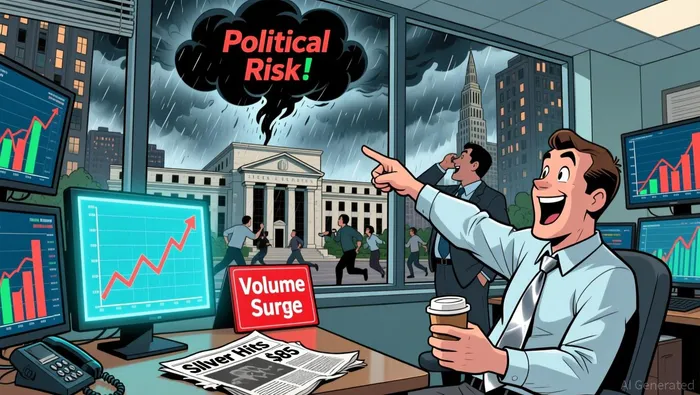
The market's immediate reaction was a flight to hard assets. Silver prices surged by more than 5%, breaching the psychological barrier of $85 per ounce for the first time in history. The iShares Silver TrustSLV-- (SLV) hit a new all-time high. Gold also climbed to record levels. This is the classic mechanism of a safe-haven bid: when the perceived risk of institutional instability spikes, investors rotate capital out of fiat-denominated assets like bonds and equities and into tangible, scarce commodities. The event created a direct channel for this insurance demand.
The core investment question now is whether this is a fundamental re-rating of hard assets or a temporary mispricing. The setup is clear. The subpoenas reignite fears that the Fed's independence is compromised, which could undermine global confidence in U.S. Treasury securities and the dollar. Analysts at Evercore ISI warned of a "sell-America trade" that could hurt bonds, stocks, and the dollar. In that context, silver's historic surge looks like a direct repricing of that institutional risk premium. The event has created a clear catalyst for a tactical trade, but the sustainability of the move hinges on whether this political attack escalates or is contained.
The Trade Setup: Price Action and Key Levels
The surge is now a full-blown breakout. Silver futures spiked roughly 7% on Monday, pushing the physical metal above $85 per ounce for the first time in history. This isn't a minor bounce; it's a structural move that has triggered a cascade of market mechanics. The iShares Silver Trust (SLV), the primary vehicle for retail and institutional investors, is directly reflecting this physical price action. Shares in the ETF were up 7.12% at $77.53 on Monday, hitting a fresh all-time high. This direct linkage is critical: SLVSLV-- holds physical bullion, so its price surge is a pure, unfiltered bet on the safe-haven demand driving the metal higher.
The event has also forced a major structural change on the futures side. The CME Group, the world's largest derivatives exchange, has switched to a new margin calculation system for precious metals futures. They have moved away from fixed dollar amounts to percentage-based requirements after gold and silver hit record highs. This change was necessitated by the surge and volatility, as the old system required frequent manual adjustments. Under the new setup, silver futures now require a 9% maintenance margin for standard accounts. While this may temporarily weigh on the market as traders adjust to higher collateral needs, it should reduce the need for disruptive manual margin hikes going forward.
Zooming out, the momentum is part of a broader, powerful rotation. Silver has gained about 20% in just the first two weeks of 2026. This isn't a seasonal blip; it's a significant speculative and institutional shift into hard assets. The rally is amplified by silver's smaller, more thinly traded market compared to gold, meaning ETF inflows can push prices sharply higher. The setup now is one of a strong, momentum-driven breakout. The key levels to watch are the psychological barrier at $85 and the new all-time high for SLV. The trade is clear: the political catalyst has ignited a safe-haven bid, and the market mechanics are now fully engaged to support the move.
Risk/Reward: Separating the Signal from the Noise
The core driver here is political risk, pure and simple. The market is not pricing in a change to silver's fundamental supply/demand or industrial use case. Instead, it is assigning a severe institutional crisis premium to the metal. The event has created a direct channel for this insurance demand, as investors scramble for tangible assets they believe will hold value if the U.S. dollar and Treasury market stability are compromised.
This sets up a classic risk-on reaction to instability. The surge is a bet that the political attack on the Fed will escalate, undermining confidence in the dollar and U.S. financial assets. The key risk is that this is a temporary mispricing. If the political crisis is contained or resolved-say, the DOJ backs down or the investigation is shown to be non-partisan-the catalyst evaporates. The market's repricing of institutional risk would unwind, and the rally could reverse sharply.
The actual financial impact on the Fed's balance sheet or monetary policy remains uncertain. The subpoenas target a $2.5 billion renovation project, a trivial amount relative to the Fed's balance sheet. The real cost is reputational and political. Analysts warn of a "sell-America trade" that could hurt bonds and stocks, but the direct channel for that damage to silver is through the dollar and Treasury market. For now, the market is pricing in the worst-case scenario of a constitutional crisis. The trade's sustainability hinges entirely on whether that scenario unfolds or is defused.
Catalysts and Watchpoints: What Moves the Price Next
The rally is now live, but its next move depends on a few clear signals. The immediate catalyst is political. Watch for any official statements from the DOJ or the White House that escalate or de-escalate the crisis. President Trump's recent comment that he "doesn't know anything about it" is a non-committal signal. A more forceful statement from the DOJ, perhaps announcing new subpoenas or a formal indictment, would likely reignite the safe-haven bid and push prices higher. Conversely, a cooling of rhetoric or a legal move that appears procedural rather than political could start to unwind the institutional risk premium.
Economic data will provide a secondary test. The U.S. CPI report, due in the coming weeks, will be a key barometer. If inflation prints hotter than expected, it could pressure the Fed to maintain higher rates, reinforcing the narrative of a political battle over policy. This would support the rally. If inflation cools, it might shift focus back to economic fundamentals, potentially reducing the premium on safe-haven metals. The market's focus is currently on policy independence, so any data that challenges that narrative could introduce volatility.
On the market mechanics side, track the iShares Silver Trust (SLV) premium or discount to the physical silver price. A widening premium suggests the rally is being driven by speculative ETF flows, which can be volatile. A tight or negative discount would indicate physical demand is supporting the move, which is a stronger, more sustainable signal. Monitor ETF flows for confirmation. Persistent inflows would validate the institutional rotation into hard assets, while outflows would be a red flag.
Finally, watch the new margin system on the CME. The shift to percentage-based requirements was necessitated by the surge. While it should reduce operational friction, it also increases collateral costs for traders. If this leads to a sudden, sharp reduction in speculative positioning, it could create a short-term headwind for prices. The bottom line is that the rally is event-driven. The next major catalysts are political statements and economic data, while SLV flows and the premium/discount will show whether the move is backed by physical demand or pure speculation.





Comentarios
Aún no hay comentarios