
The Silent Unraveling: Why U.S. Treasury Dysfunction Demands Immediate Action
The U.S.-China trade war has evolved into a financial chess match with profound implications for global markets. As tariffs escalate and diplomatic channels stall, the U.S. Treasury market—a cornerstone of global financial stability—is showing signs of structural strain. Investors who fail to recognize this dysfunction risk severe portfolio erosion. Here's why the time to act is now.
The Perfect Storm: Trade Tensions, Leverage, and Inflation
The U.S.-China trade relationship, once the engine of global growth, is now a catalyst for market instability. Recent tariff adjustments—such as the reduction of U.S. tariffs on Chinese goods to 30% from 125%—mask deeper vulnerabilities. Legal battles over the legality of tariffs (e.g., the U.S. Court of International Trade's ruling against Section 232 duties) and stalled diplomatic talks have created a climate of uncertainty. This uncertainty is exacerbating three critical risks:
Leveraged Trade Unwindings:
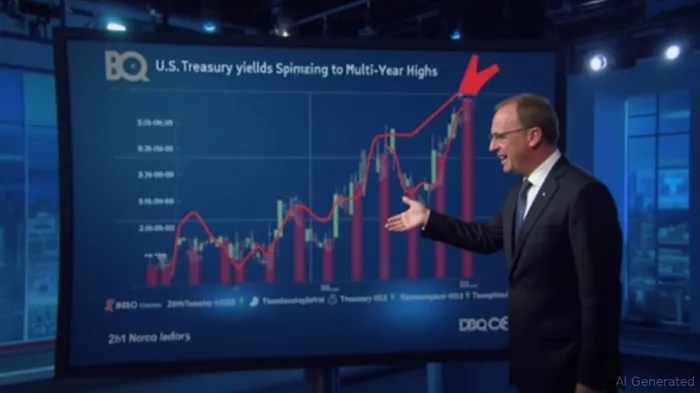
Basis trades, which exploit the spread between Treasury yields and repurchase agreements, are unraveling under pressure. Deutsche Bank's George Saravelos notes that the $280,000-contract drop in 5-year note futures open interest in March 2025 reflects a liquidity crisis. As these trades collapse, short-term Treasury yields are surging, destabilizing bond prices.Tariff-Driven Inflation Fears:
The interplay of tariffs and inflation is a self-reinforcing loop. Higher tariffs on Chinese goods (even at reduced rates) raise import costs, squeezing corporate margins and pushing prices higher. The U.S. inflation rate, already above 4%, could breach 5% by year-end if trade tensions persist. This dynamic undermines the Fed's ability to stabilize rates, creating a “no-win” scenario for bond holders.Misperceptions About China's Treasury Holdings:
China's Treasury holdings have plummeted to $759 billion—near 2009 lows—and are now shorter-term in duration. Analysts at the Brookings Institute highlight that this shift reflects a strategic move to reduce exposure to U.S. fiscal risks, not a “weaponization” threat. Yet, fears of sudden sales persist, amplifying volatility. The reality? China's holdings represent just 7% of U.S. debt. The real threat is the broader erosion of foreign demand for Treasuries, as private investors increasingly fill the void.
Structural Vulnerabilities: The Writing on the Wall
The Treasury market's dysfunction is not just cyclical—it's structural. Three factors are accelerating the decline:
- Foreign Ownership Decline: Foreign official holdings of Treasuries have fallen to 39% of the market (from 48% in 2019), with private investors now driving 61% of demand. This shift reduces the market's “buffer” against sudden sell-offs.
- Debt Ceiling Constraints: The U.S. debt ceiling's recurring threats limit Treasury issuance flexibility, forcing the Fed to navigate a tightrope between liquidity and fiscal limits.
- Geopolitical Weaponization: While China won't “dump” Treasuries (doing so would devalue its own reserves), its reduced holdings signal a broader decoupling from U.S. debt. This trend will accelerate as Beijing diversifies into gold and euros.
Investment Strategy: Shorten, Hedge, and Diversify
The stakes are clear: investors must rebalance portfolios to mitigate Treasury risks. Here's how:
Shift to Short-Term Bonds:
Extend maturities only to 2–3 years. The 3-month T-bill yield has already risen to 4.2%, offering safety with minimal duration risk. Avoid 10-year Treasuries, which face a 15%+ price drop if yields hit 5%.Inflation-Hedged Assets:
Treasury Inflation-Protected Securities (TIPS) and commodities like gold and copper are critical. The Fed's inability to tame inflation means TIPS' real yields will outperform nominal bonds.Geopolitical Diversification:
Allocate 10–15% to European core bonds (e.g., German bunds) and UK gilts. These markets offer negative correlation to U.S. Treasury stress while benefiting from Europe's fiscal stimulus (e.g., Germany's €500 billion infrastructure fund).Monitor Leverage Metrics:
Track the SOFR-Treasury spread—a key gauge of funding strain. A widening gap signals further basis trade unwinding, prompting immediate bond reductions.
Conclusion: Act Before the Unraveling Becomes a Collapse
The U.S. Treasury market's dysfunction is not a temporary glitch but a symptom of deeper geopolitical and financial realignments. Investors who cling to outdated assumptions—such as China's “hold hostage” narrative—risk catastrophic losses. The path forward is clear: shorten durations, hedge against inflation, and diversify beyond U.S. borders. The clock is ticking—act now before the next tariff escalation triggers a liquidity crisis.







Comentarios
Aún no hay comentarios