
The Silent Crisis in Crypto: Supply Chain Vulnerabilities in NPM and the Investment Imperative
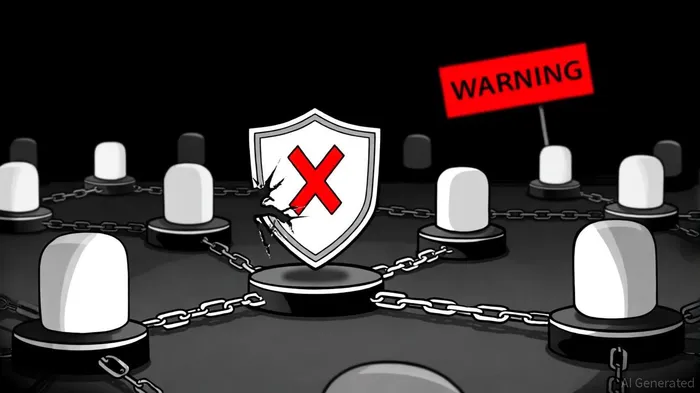
The crypto ecosystem has long been a battleground for innovation and risk. While blockchain's promise of decentralization and immutability has reshaped finance, the underlying infrastructure—particularly open-source developer tools like npm—remains a critical vulnerability. Recent supply chain attacks on npm packages have exposed systemic weaknesses, with attackers exploiting trusted code to hijack crypto transactions, steal credentials, and inject malware. For investors, this is not just a technical issue—it's a financial and strategic crisis demanding immediate attention.
The Anatomy of the Threat: NPM as a Weaponized Vector
npm, the default package manager for JavaScript, hosts over 2.6 million packages, many of which are foundational to crypto applications. In 2024-2025, attackers weaponized this ecosystem with alarming precision. A phishing campaign compromised maintainers of widely used packages like chalk and debug, leading to the injection of crypto-stealing malware into versions with over 2.6 billion weekly downloads[1]. The malware functioned as a "crypto clipper," silently replacing wallet addresses in transactions to redirect funds to attacker-controlled accounts[3].
The scale of these attacks is staggering. For instance, North Korea-linked hackers uploaded 67 malicious npm packages containing XORIndex malware, which were downloaded over 17,000 times[3]. Another incident involved a trojanized jQuery library that exfiltrated form data to attacker servers[1]. These attacks highlight a disturbing trend: even the most "trusted" packages are now high-risk vectors for crypto theft.
Financial Implications: Small Stolen Amounts, Massive Systemic Risk
While the actual financial losses from these attacks have been modest—less than $500 in one case[3]—the systemic risk is enormous. The compromised packages had the potential to affect millions of users, including major crypto platforms like UniswapUNI-- and MetaMask[1]. The low financial impact so far is not a sign of insignificance but a warning: attackers are testing the system, and a single sophisticated breach could result in catastrophic losses.
For crypto firms, the cost of inaction is clear. A 2025 report by SOCRadar found that attackers are now leveraging AI-powered command-line tools to automate reconnaissance and exploit trusted developer workflows[3]. This evolution means that even minor vulnerabilities in open-source dependencies could become entry points for ransomware or large-scale theft.
Investment Implications: Prioritizing Proactive Risk Management
The crypto industry's reliance on open-source tools creates a unique exposure. Firms and funds that fail to audit their dependencies or adopt robust security frameworks are at risk of both financial loss and reputational damage. For investors, this underscores the importance of allocating capital to companies that address these vulnerabilities directly.
Strategic Allocations: Cybersecurity and Blockchain Infrastructure
- Automated Dependency Scanning Tools: Firms like Mend[1] and SISA[1] are leading the charge in real-time vulnerability detection. These tools can identify malicious code in npm packages before they reach production environments.
- Decentralized Identity and Attestation Platforms: Blockchain-based solutions like Safe Heron[3] and SOCRadar's Extended Threat Intelligence (XTI)[1] offer tamper-proof package verification and real-time threat alerts.
- Hardware Wallet Providers: Companies like Ledger and Trezor remain critical for mitigating transaction-level risks, as hardware wallets prevent clipboard-based address swaps[3].
- Quantum-Safe Cryptography Firms: As attackers increasingly target cryptographic weaknesses, firms developing post-quantum algorithms (e.g., Qrypt, DigiCert) will gain relevance[1].
The Path Forward: A Call for Systemic Reform
The npm supply chain crisis demands more than reactive fixes. Developers and firms must adopt signed workflows, enforce strict version pinning, and migrate to private package registries[1]. For investors, this means supporting companies that innovate in these areas while divesting from projects that ignore supply chain risks.
The crypto ecosystem's future hinges on its ability to secure the very tools that power it. As Anthony Pompliano has often emphasized, "Security is not a feature—it's the foundation." In 2025, that foundation is under siege. The time to act is now.






Comentarios
Aún no hay comentarios