
Siemens' Strategic Divestment from Healthineers: A Reassessment of Value and Portfolio Synergy
Capital Allocation Optimization: A Strategic Reallocation
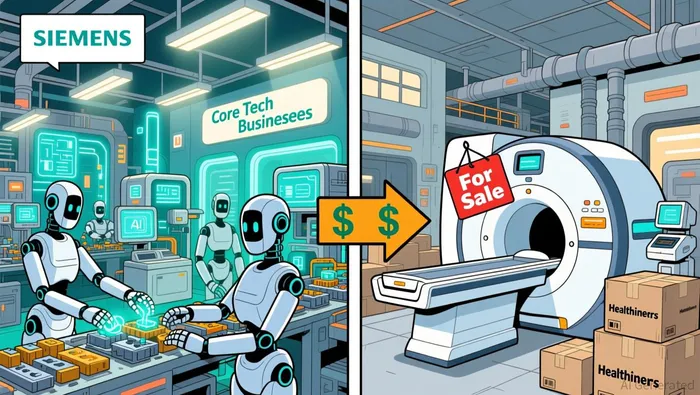
Siemens' divestment of Healthineers is not an isolated event but part of a broader, multiyear effort to optimize capital deployment. The company has already sold a 2% stake in Healthineers earlier in 2025 for 1.45 billion euros, signaling its intent to gradually exit the business, as reported by MarketWatch. This approach aligns with the CFO's acknowledgment that the synergies between Siemens and Healthineers are insufficient to justify the 45 billion euros invested in the subsidiary, a point noted in a Handelsblatt report.
By reducing its ownership to a minority position, Siemens gains flexibility to reinvest in areas with higher growth potential. For instance, the company has expressed interest in acquiring Altair, a software specialist, to bolster its digital capabilities, as noted in the Handelsblatt report. This reallocation reflects a strategic pivot toward sectors where Siemens can leverage its industrial expertise-such as AI-driven automation and smart infrastructure-rather than competing in a fragmented healthcare market.
Long-Term Shareholder Value Creation
The spinoff is designed to enhance shareholder value through multiple channels. First, transferring 30% of Healthineers' shares to Siemens AG shareholders directly increases their equity stake in the medical unit while preserving Siemens' minority interest, according to the MarketWatch report.
Second, the divestment reduces financial drag. Healthineers, while an "attractive business," operates in a capital-intensive sector with thin margins compared to Siemens' industrial technology divisions, as noted in the MarketWatch report. By shedding this liability, Siemens can allocate capital to higher-margin ventures, such as its digital industrial software suite, which has shown consistent revenue growth in recent quarters, as noted in the MarketWatch report. Analysts note that this focus on core competencies could accelerate Siemens' path to achieving its 2027 EBIT margin target of 12%, as reported in a Seeking Alpha article.
Strategic Rationale and Market Reactions
The decision has been met with cautious optimism. While some investors initially questioned the timing of the spinoff, the market has largely endorsed Siemens' strategic clarity. The company's stock has outperformed the European industrial index since the announcement, reflecting confidence in its refocused portfolio, according to the MarketWatch report. CEO Roland Busch emphasized that the move aligns with Siemens' mission to "accelerate profitable growth in digital solutions," a vision reinforced by its recent investments in cloud-based manufacturing platforms, as noted in the MarketWatch report.
However, challenges remain. The spinoff requires shareholder approval, and regulatory hurdles in key markets could delay execution. Additionally, maintaining a minority stake in Healthineers exposes Siemens to potential volatility in the healthcare sector, which remains sensitive to macroeconomic shifts.
Conclusion
Siemens' divestment of Healthineers represents a calculated step toward portfolio rationalization and value creation. By prioritizing capital allocation in high-growth technology domains, the company positions itself to capitalize on the digital transformation of industry. While the transition carries risks, the strategic logic-reducing drag, enhancing flexibility, and aligning with market trends-appears sound. For investors, the move signals Siemens' commitment to long-term resilience in an era of rapid technological change.







Comentarios
Aún no hay comentarios