
The Shutdown Economy: Implications for Credit Risk and Small Business Exposure
The global economy is navigating a complex landscape marked by persistent shutdowns, shifting policy frameworks, and sector-specific vulnerabilities. As policymakers and investors grapple with the fallout, three critical areas-real estate, small business, and consumer finance-stand at the epicenter of systemic risk. These sectors are not only sensitive to macroeconomic shocks but also interlinked in ways that amplify fragilities. This analysis examines the evolving dynamics of credit risk and exposure in these domains, drawing on recent data to highlight strategic imperatives for stakeholders.
Real Estate: A Sector in Transition
The real estate sector has long been a barometer of economic health, and its current struggles underscore the depth of the shutdown economy. Elevated debt costs and liquidity constraints have stifled investment activity, with sales volumes declining across offices, industrial spaces, retail, and apartments. Office markets, in particular, face a perfect storm: hybrid work models have reduced demand for traditional spaces, pushing vacancy rates to 23% in central business districts and 22% in suburbs. Asset values in urban centers have plummeted by up to 50%, especially for lower-tier properties.
The industrial sector, once a bright spot driven by e-commerce, is now showing signs of strain. Vacancy rates rose to 5.9% in early 2024, up from near-record lows in 2022. Meanwhile, broader macroeconomic challenges-such as rising interest rates and capital costs-threaten refinancing stability. Half of real estate respondents anticipate worsening capital availability through 2024, signaling heightened debt maturity risks. the sector's fragility: commercial real estate deal volume dropped for the first time since the post-Fed rate hike recovery began in early 2024. While multifamily and industrial segments remain resilient, the office sector's struggles and policy uncertainties suggest a prolonged adjustment period.
Small Business: Credit Constraints and Cash Flow Challenges
Small businesses, the backbone of economic dynamism, are increasingly exposed to credit risk and operational strain. The 2024 Small Business Credit Survey (SBCS) reveals that 75% of firms cite rising costs of goods, services, and wages as their primary financial challenge. Compounding this, 56% struggle to cover operating expenses, while 51% face uneven cash flows. Access to credit has also deteriorated: 36% of applicants received only partial financing, and 24% received none. Denials are often linked to excessive existing debt, a problem that has worsened since 2021. 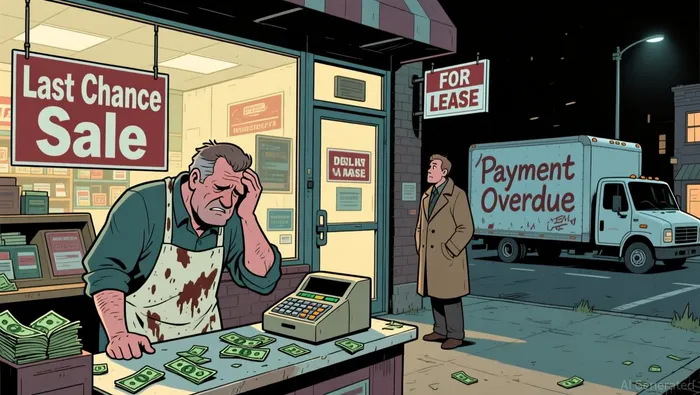
The shift in lending behavior is equally telling. Applications at large banks declined from 44% in 2023 to 39% in 2024, while small banks saw higher approval rates (54%). Dissatisfaction with lenders, particularly online platforms, has grown due to high interest rates and unfavorable terms. Recent trends in 2024-2025, however, show a glimmer of resilience: despite declining revenues, small businesses have maintained stable employment growth. Financial resilience-through diversified funding and cash flow management-is emerging as a key priority.
Consumer Finance: Delinquencies and Debt Dynamics
Consumer finance vulnerabilities are intensifying as households navigate inflationary pressures and policy uncertainties. Equifax's 2023 economic outlook highlighted delinquency rates in credit cards and subprime auto loans reaching levels not seen since the Great Recession. Auto delinquency balances and unit delinquencies hit all-time highs in 2023, while bank card utilization surged among younger demographics, reflecting rising financial stress.
Recent data from November 2025 offers a mixed picture: while auto and mortgage delinquencies increased year-over-year, they remain below pre-pandemic levels. Student loan delinquencies, which peaked in May 2025, have since declined. Consumer debt, however, continues to climb, with mortgage and revolving debt reaching record levels. These trends underscore a fragile equilibrium: households are leveraging debt to sustain consumption but face growing risks of default if economic conditions deteriorate further.
Strategic Implications and the Path Forward
The interplay of real estate, small business, and consumer finance vulnerabilities highlights the need for proactive risk management. For real estate investors, prioritizing sectors with resilient demand-such as multifamily and industrial-while avoiding overexposed office assets is critical. Small businesses must diversify funding sources and strengthen cash flow buffers to weather credit constraints. Meanwhile, lenders should recalibrate risk assessments to account for sector-specific stressors, particularly in commercial real estate and subprime lending.
Policy interventions will also play a pivotal role. Easing refinancing conditions, supporting small business access to credit, and stabilizing consumer debt burdens could mitigate systemic risks. As the shutdown economy evolves, adaptability and foresight will be paramount for navigating the uncertainties ahead.







Comentarios
Aún no hay comentarios