
Shorting AUD/USD: The Perfect Storm of Fiscal Weakness and Monetary Dovishness
The AUD/USD pair has entered a critical inflection point, driven by a toxic mix of U.S. fiscal instability, synchronized monetary easing across major economies, and escalating trade tensions. For contrarian investors, this is a rare opportunity to profit from a structural breakdown in the currency pair. Here’s why shorting AUD/USD to key support levels of 0.6358–0.6388 makes sense—and how to capitalize on it.
The U.S. Fiscal Train Wreck: A Dovish Fed Can’t Fix This
Let’s start with the elephant in the room: the Moody’s downgrade of U.S. debt to Aa1 on May 16, 2025. This historic move underscores a fiscal crisis years in the making. The U.S. now faces a $36.2 trillion debt burden, with interest payments alone set to consume 30% of federal revenue by 2035. Even the Fed’s wait-and-see approach—which may include one rate cut this year—can’t offset the damage.
The market has already priced in the U.S. dollar’s decline. The DXY index has fallen over 10% from its January peak, and the 10-year Treasury yield spiked to 4.56% post-downgrade. This isn’t just a technical dip—it’s a structural weakening of the world’s reserve currency. With the Fed hamstrung by inflation and trade policy risks, the greenback’s safe-haven status is evaporating.
RBA’s Dovish Bias: A Recipe for AUD Weakness
Australia’s central bank isn’t helping the AUD’s cause. The RBA’s May rate cut to 3.85% signals a shift toward aggressive easing to counter weak private demand and trade war fallout. While the RBA cites moderating inflation (now at 2.4% headline), the reality is grimmer:
- Domestic growth is increasingly reliant on public spending and infrastructure projects.
- Labor market tightness is a mirage—wage growth is cooling, and underemployment remains a lurking threat.
- Trade tensions with the U.S. are squeezing Australia’s key export sectors (commodities, agriculture).
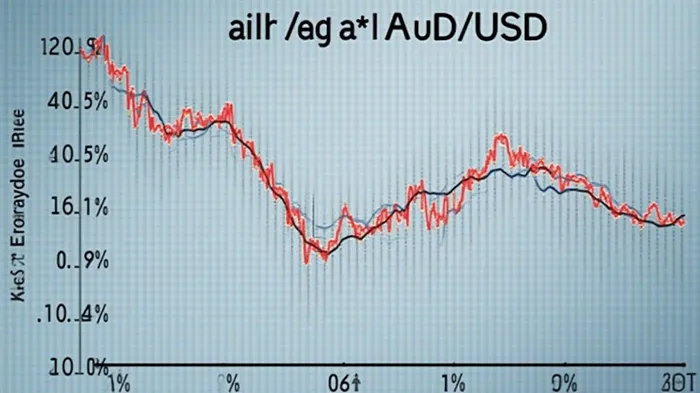
The RBA’s dovish pivot has already pushed the AUD/USD below 0.65, and further cuts are likely if trade risks escalate. Remember: Lower rates reduce yield differentials, making the AUD less attractive to carry traders.
China’s LPR Cuts: Fueling Global Divergence
China’s monetary easing—most recently the 10-basis-point reduction in LPRs—is another nail in the AUD’s coffin. While Beijing aims to stimulate its slowing economy, the move highlights a broader truth: global growth is diverging sharply.
- Trade wars hurt Australia’s exports: U.S. tariffs on Chinese imports are indirectly pressuring Australia’s commodity prices.
- Capital flows are shifting: Investors are fleeing U.S. fiscal recklessness for safer havens—or at least less fiscally irresponsible ones.
The synchronized easing in Australia and China creates a “double whammy” for the AUD/USD. Both economies are relying on monetary stimulus to offset external headwinds, but neither can escape the gravitational pull of weaker global demand.
Technical Breakdown: Target 0.6358–0.6388
The charts don’t lie. AUD/USD has already broken below key support at 0.64, with the next bearish targets at:
1. 0.6358–0.6388: A confluence of Fibonacci retracement levels and psychological support.
2. 0.62: The 2020 pandemic lows—a level that would confirm a multi-year downtrend.
Short-term traders should use the 0.64 resistance as a reentry point, while longer-term investors should accumulate puts or inverse ETFs.
Act Now: Short AUD/USD—Before the Fed and RBA’s Words Catch Up to Reality
The writing is on the wall:
- The U.S. dollar’s decline is structural, not cyclical.
- RBA rate cuts will keep downward pressure on the AUD.
- Trade wars and fiscal overreach guarantee volatility—and opportunities.
This isn’t just a trade; it’s a bet against the unsustainable fiscal policies of the world’s largest economies. Short AUD/USD aggressively, target 0.6358, and prepare for the next leg down.
Action Items:
1. Enter short positions at current levels (near 0.64).
2. Set stop-loss above 0.65.
3. Target 0.6358 first, then aim for 0.62.
4. Monitor RBA meetings and U.S. fiscal headlines for catalysts.
The AUD/USD is in freefall—don’t miss the ride.







Comentarios
Aún no hay comentarios