
Why Short-Term Market Noise Should Never Derail Your Long-Term Strategy
Let's cut to the chase: the stock market is a circus. One day it's a rollercoaster, the next it's a seesaw. But if you're a long-term investor, you need to stop letting the circus distract you. Recent studies and historical data make one thing crystal clear-short-term underperformance is noise. Ignore it.
Take 2022, for instance. , sending panic through Main Street and Wall Street alike, according to a Visual Capitalist chart. Fast forward to 2023, . By 2025, global equities had even outperformed U.S. stocks, , as that Visual Capitalist chart shows. What's the takeaway? Volatility isn't new-it's inevitable. Yet investors keep making the same mistake: selling in the troughs and buying at the peaks, driven by emotional reactions to short-term headlines.
According to a 2025 study, this cognitive dissonance between short-term signals and long-term goals is a major trap. When investors fixate on quarterly earnings misses or geopolitical crises, they lose sight of the bigger picture: markets reward patience. U.S. , according to The Measure of a Plan. That's not a fluke-it's the power of compounding.
Here's where the rubber meets the road: your portfolio. If you're holding quality assets-like low-cost ETFs or active strategies targeting private credit and infrastructure-you're already positioned for the long game, according to a 2025 Deloitte report. That report highlights a seismic shift in investor preferences toward active ETFs and alternative assets, which offer diversification and resilience during downturns. These aren't just trends; they're structural changes that align with long-term wealth-building.
Let's talk numbers. A refined MACD indicator, enhanced with sentiment analysis, showed improved profitability in quantitative strategies over five years, according to a paper. Why? Because it filters out the noise. Similarly, a novel investor sentiment index developed in 2025 proved more accurate than traditional measures like the Consumer Sentiment Index, according to a 2025 . The takeaway? Tools exist to help you stay focused on fundamentals, not fleeting headlines.
But here's the real kicker: history. From 1985 to 2024, U.S. , data from The Measure of a Plan show. That's despite crashes in 2000, 2008, and 2022. Cash and bonds? They lagged. , , per the same Measure of a Plan data. If you're chasing safety in cash, you're actually risking your future buying power.
So what should you do? First, rebalance your portfolio to reflect your long-term goals. Second, embrace dollar-cost averaging-consistent, disciplined investing smooths out market whipsaw. Third, stay informed but unemotional. As the 2024 Journal of Financial Innovation study shows, long-term strategies are the only ones that truly predict long-term outcomes.
In the end, the market's a marathon, not a sprint. The dissonance between short-term sentiment and long-term performance isn't a bug-it's a feature. Use it to your advantage.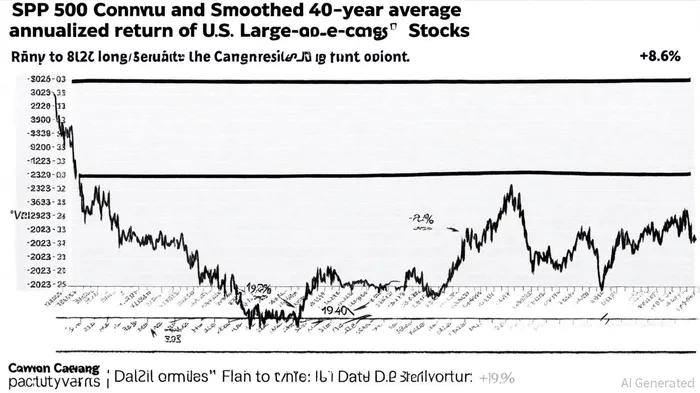







Comentarios
Aún no hay comentarios