
Short-Duration Bond Strategies: A Shield Against Rising Rates in 2025
In the current macroeconomic climate, where central banks remain cautious about further rate cuts and inflationary pressures linger, investors are increasingly turning to short-duration bond strategies to balance income generation with capital preservation. According to a ProShares report, short-term bond ETFs-those holding bonds maturing in 1–3 years-have demonstrated resilience in rising rate environments by minimizing price volatility and enabling frequent reinvestment at higher yields. This dynamic is particularly relevant in 2025, as the Federal Reserve's pause on rate cuts has created a buffer against macroeconomic volatility, making short-duration bonds an attractive hedge, according to a Transamerica analysis.
Income Stability: The Yield-to-Duration Trade-Off
Short-duration high yield bonds have historically offered a compelling yield-to-duration ratio, a metric that quantifies the return relative to interest rate risk. As noted by Hartford Funds, these instruments provide strong potential returns while mitigating exposure to rate hikes. For example, a 2-year high yield bond with a 6% coupon and a duration of 1.8 years offers a yield-to-duration ratio of approximately 3.3, significantly outperforming the 1.5 ratio of a 10-year Treasury bond yielding 5.5%. This outperformance is highlighted by AllianzGI. The trade-off is further enhanced by the pull-to-par effect, which reduces default risk as bonds approach maturity, ensuring that even in a downturn, prices converge toward par value, the Hartford Funds piece observes.
Capital Preservation: Mitigating Rate Risk
Short-duration strategies inherently limit exposure to interest rate risk. When rates rise, long-duration bonds face steep price declines, whereas short-term bonds experience minimal losses. A study by Hartford Funds highlights that a short-duration portfolio (average maturity: 2 years) would lose only 1.5% in value during a 100-basis-point rate hike, compared to a 7% decline for a long-duration portfolio (average maturity: 10 years). This resilience is critical in a bull steepener scenario, where short-term rates rise faster than long-term rates, amplifying the relative strength of short-duration holdings, Hartford Funds adds.
Strategic Nuances: Hedging and Credit Exposure
While shortening duration is a foundational approach, advanced strategies like interest rate hedging can further enhance risk-adjusted returns. ProShares notes that hedged bond strategies use derivatives to offset Treasury rate risk while retaining exposure to credit spreads, which tend to tighten in improving economic conditions. For instance, a hedged municipal bond fund might lock in a 4% yield while neutralizing 80% of its duration risk, offering a safer income stream than unhedged alternatives.
However, investors must remain cautious. Floating-rate notes (FRNs), which adjust coupons with rate changes, provide stable income but may underperform if spreads tighten faster than expected, as a Gov.Capital guide notes. Similarly, bank loan funds, though offering high yields, face liquidity constraints and call provisions that can limit returns during market stress, the guide warns.
Conclusion: A Timely Allocation
As of September 2025, the case for short-duration bonds is bolstered by both structural and tactical factors. The Fed's policy pause reduces the urgency to lock in long-term yields, while the pull-to-par effect and lower volatility of short-term instruments make them ideal for preserving capital. For income-focused investors, a diversified approach-combining short-duration high yield bonds, hedged strategies, and laddered maturities-offers a robust framework to navigate uncertainty.
In an environment where rate hikes remain a possibility and credit cycles are in flux, short-duration strategies are not just a defensive play-they are a cornerstone of prudent portfolio management.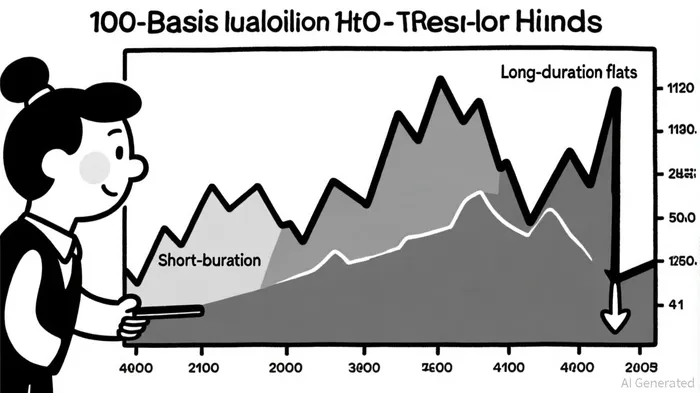







Comentarios
Aún no hay comentarios