
Shoe Carnival's $0.15 Dividend: A Sustainable Income Play in a Shifting Retail Landscape

Shoe Carnival's recent declaration of a $0.15 quarterly dividend per share, payable on October 20, 2025, marks the 54th consecutive quarterly payout and a 2.7% yield for income investors [1]. This move underscores the company's commitment to shareholder returns, even as it navigates a challenging retail environment. For income-focused investors, the key question is whether this dividend is sustainable and whether Shoe Carnival's financial health justifies its inclusion in a long-term portfolio.
Dividend Growth and Historical Consistency
Shoe Carnival has raised its dividend for nine consecutive years, with an average annual growth rate of 27.25% over the past three years [3]. The most recent increase, from $0.135 to $0.15 per share, represents a 11.1% jump and aligns with the company's long-standing strategy of rewarding shareholders while maintaining flexibility. This consistency is rare in the retail sector, where many companies have cut or suspended dividends during downturns.
The payout ratio—dividends relative to earnings—further supports sustainability. Based on the trailing 12 months of earnings, Shoe Carnival's payout ratio stands at 12.20% [2], indicating ample room for future increases. For context, a payout ratio below 30% is generally considered conservative and sustainable, even during economic volatility.
Financial Health: Liquidity and Strategic Reinvestment
Shoe Carnival's balance sheet is a critical pillar of its dividend sustainability. As of Q2 2025, the company held $91.9 million in cash and marketable securities, with no debt on its books [4]. This liquidity buffer is a testament to its 20-year streak of funding operations and growth through operating cash flow, a practice that insulates it from refinancing risks.
The company's recent financial results, however, reveal mixed signals. Q1 2025 revenue fell short of expectations at $262.94 million, while Q2 2025 saw a 7.9% year-over-year decline in net sales, driven by weaker performance in its core Shoe CarnivalSCVL-- banner [3]. Despite these headwinds, gross profit margin expanded to 38.8% in Q2, reflecting successful pricing and product mix strategies [4].
A key strategic initiative—rebannering 44 Shoe Carnival stores to the higher-margin Shoe Station banner—is expected to impact FY25 operating income by $25 million, with $13 million already incurred by mid-2025 [4]. While this short-term drag raises questions about near-term profitability, the long-term goal of elevating margins and customer experience appears aligned with shareholder value creation.
Competitive Positioning and Industry Challenges
Shoe Carnival operates in a highly competitive retail landscape, facing rivals such as Genesco (GCO), Designer Brands (DBI), and Hibbett (HIBB). As of 2025, Shoe Carnival reported a net margin of 7.47%, outperforming some peers but trailing industry leaders like Foot Locker [5]. Its market share has contracted to approximately 3%, reflecting broader industry trends of declining foot traffic and e-commerce disruption [1].
Yet, the company is not standing still. It has prioritized digital transformation, aiming to boost online sales by 45% and expand omnichannel capabilities [1]. Additionally, plans to open 15 new stores in high-potential suburban markets and enhance its loyalty program signal a proactive approach to customer retention. These initiatives, combined with its debt-free balance sheet, position Shoe Carnival to weather industry headwinds.
Risks and Opportunities for Income Investors
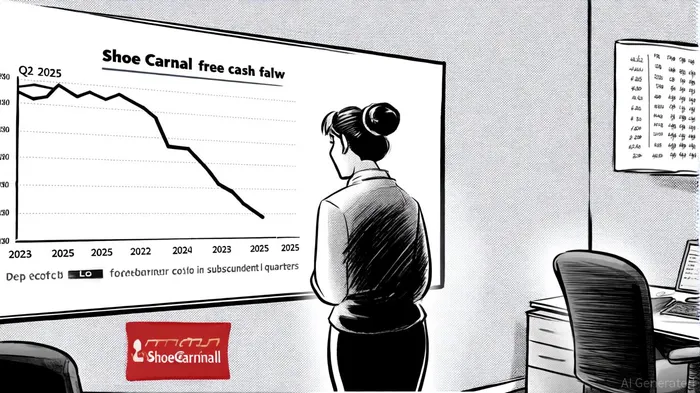
While Shoe Carnival's dividend appears secure, investors should remain mindful of risks. The recent revenue declines and rebanner costs could pressure short-term cash flow, and the footwear retail sector remains vulnerable to macroeconomic shifts, such as reduced consumer spending. However, the company's strong liquidity, low payout ratio, and strategic reinvestment in higher-margin formats mitigate these risks.
For long-term income investors, the 2.7% yield offers an attractive entry point, particularly given the company's track record of dividend growth and financial discipline. The absence of debt and the $150 million cash reserve post-Back-to-School season further reinforce confidence in its ability to sustain payouts [1].
Historical performance around dividend announcements provides additional context. A backtest of SCVL's stock price movements from 2022 to 2025 reveals that while the immediate market reaction to dividend announcements was minimal (a negligible +0.5% on the event day), the stock outperformed the benchmark by 1.7% over the following 30 days, albeit without statistical significance. This suggests that while dividend announcements alone may not drive strong short-term returns, they could contribute to a modestly positive trend over time.
Conclusion
Shoe Carnival's $0.15 dividend declaration reflects a company balancing immediate shareholder returns with long-term strategic reinvestment. While revenue challenges persist, its financial health—marked by no debt, robust liquidity, and a conservative payout ratio—provides a solid foundation for dividend sustainability. For income investors, the key will be monitoring the success of its rebanner strategy and digital initiatives, which could unlock new growth avenues in a competitive sector.





Comentarios
Aún no hay comentarios