
G-Shock's Metaverse Gambit: How Digital Innovation is Reshaping Brand Equity and Retail Strategies for the Next Generation of Investors
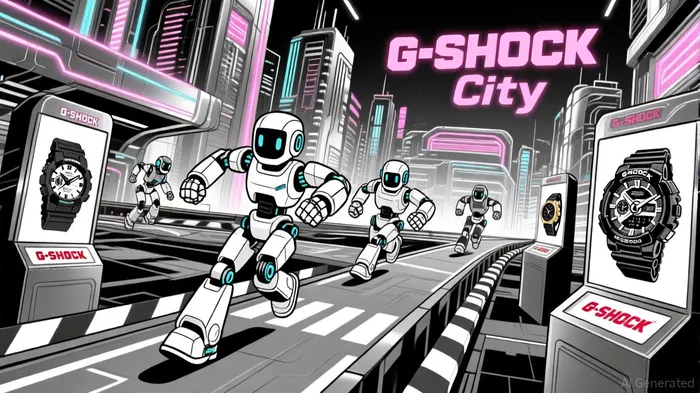
The metaverse is no longer a speculative concept—it's a $500 billion market[1] where brands are redefining engagement, equity, and retail. Casio's G-SHOCK, a name synonymous with durability and rebellion since 1983, is now leading a charge into this digital frontier. By partnering with The SandboxSAND--, a Web3 gaming platform, G-SHOCK has launched VIRTUAL G-SHOCK, a project that marries its legacy of toughness with blockchain innovation. This isn't just a marketing stunt; it's a strategic pivot to future-proof a brand that has long symbolized resilience.
The Metaverse as a Brand Equity Catalyst
G-SHOCK's metaverse expansion is a masterclass in leveraging digital-native tools to amplify brand equity. The G-SHOCK City virtual space[2], accessible to all users, transforms the brand's history into an interactive adventure game. Players navigate survival races inspired by the shock-resistant testing of G-SHOCK watches, a mechanic that directly mirrors the brand's core identity. According to a report by Casio International[3], this gamified storytelling not only educates users about the brand's heritage but also positions G-SHOCK as a pioneer in merging physical and digital narratives.
The introduction of NFT avatars—robotic doppelgängers of iconic models like the DW-5600 and GA-V01—further cements this equity. These avatars, priced between 19 and 399 SAND tokens[4], are more than collectibles; they're social currency in a community-driven ecosystem. By creating scarcity (limited-edition NFTs) and utility (avatar customization), G-SHOCK taps into the psychology of ownership and exclusivity, a tactic proven to drive loyalty in Web3 spaces[5].
Retail Innovation in the Digital Frontier
Traditional retail is dying. E-commerce is the new norm, but the metaverse offers something even more disruptive: experiential commerce. G-SHOCK's collaboration with The Sandbox isn't just about selling NFTs—it's about building a retail environment where users interact with the brand in novel ways. For instance, the survival races in G-SHOCK City[6] blend gamification with product education, subtly reinforcing the brand's value proposition. This approach aligns with a broader trend: 72% of Gen Z consumers prefer brands that offer immersive digital experiences[7].
Moreover, the project bridges the gap between physical and digital markets. While the NFTs are virtual, they're tied to real-world brand identity. A user who purchases a GA-V01 robot avatar is more likely to invest in the physical watch, creating a flywheel effect. This dual-layer strategy—digital-first, physical-second—mirrors Nike's success with .SWOOSH and underscores the importance of cross-platform synergy in modern retail[8].
Why This Matters for Investors
For investors, G-SHOCK's metaverse push is a case study in asymmetric risk/reward. The costs of entry into Web3 (blockchain infrastructure, game development) are high, but the potential rewards are exponential. By 2027, the metaverse retail market is projected to reach $1.5 trillion[9], and early adopters like G-SHOCK are positioning themselves to capture a significant share.
Consider the metrics:
- Brand engagement: G-SHOCK City's free-to-access model democratizes participation, ensuring broad reach.
- Monetization: NFTs and in-game purchases create recurring revenue streams.
- Scalability: The Sandbox's global user base (over 10 million monthly active users[10]) provides a ready-made audience.
Critics may argue that metaverse projects are speculative, but G-SHOCK's approach mitigates this risk. The brand isn't abandoning its physical roots—it's enhancing them. This hybrid model reduces reliance on volatile Web3 markets while still capitalizing on their growth potential.
Conclusion: A Blueprint for the Future
G-SHOCK's metaverse expansion isn't just about selling watches—it's about redefining what a brand can be in the digital age. By combining gamification, NFTs, and immersive storytelling, Casio is creating a blueprint for how legacy brands can thrive in a decentralized world. For investors, this signals a shift in value creation: the most successful companies will be those that treat the metaverse not as a side project, but as a core component of their strategy.
As the line between physical and digital blurs, G-SHOCK's bold move proves that innovation isn't just about technology—it's about imagination. And in the metaverse, imagination is the ultimate currency.






Comentarios
Aún no hay comentarios