
Shipping Crossroads: Geopolitics, Emissions, and the New Cost of Trade
The global shipping industry faces a perfect storm of geopolitical tension, environmental mandates, and operational chaos—a storm that could reshape trade routes, corporate strategies, and investor portfolios. At its epicenter is the U.S. proposal to impose $1.5 million per port call fees on Chinese shipping companies, a move that threatens to upend $1.3 trillion in annual trans-Pacific trade.
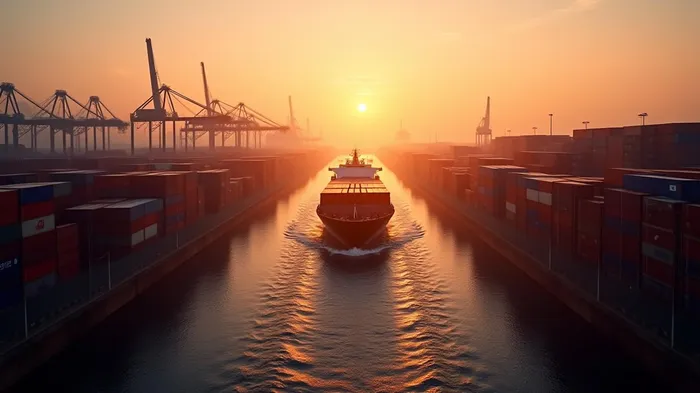
The Geopolitical Tsunami: U.S. vs. China in the Port
The U.S. Trade Representative’s (USTR) March 2025 proposal to penalize Chinese shipping firms like COSCO—a company already blacklisted by the Pentagon as a “Chinese military entity”—marks a radical escalation in trade warfare. If enacted, the fees could add $5.4 billion annually to U.S. port costs for Chinese imports, forcing firms to reroute cargo or absorb losses.
“This isn’t just about tariffs—it’s about weaponizing maritime logistics,” says John McCown of the Global Maritime Forum. The policy, which targets vessels built in China, directly challenges Beijing’s $200 billion state-backed shipping subsidies.
Note: COSCO’s shares fell 8% in early March amid USTR’s announcement, rebounding slightly as stakeholders pushed for exemptions.
Carrier Alliances: A Fragile New Order
While the U.S.-China clash dominates headlines, the industry’s operational backbone—carrier alliances—is unraveling. The Mediterranean Shipping Company (MSC), now controlling 19.8% of global vessel capacity, has muscled into Transpacific trade via partnerships with ZIM and the Premier Alliance. Meanwhile, Maersk and Hapag-Lloyd’s Gemini Cooperation aims for “90% schedule reliability” by reducing direct port calls—a move that risks extending transit times by weeks.
The fallout is stark: 8% less capacity on Trans-Pacific routes by February 2025, with carriers skipping ports entirely. “Blank sailings are the new normal,” says Clarksons Research. Schedule reliability, already in freefall, now hovers at 53.8%, down 3% from 2023 levels.
The Emissions Quagmire: Costs That Sinking
Regulatory headwinds are equally perilous. The EU’s FuelEU Maritime directive, effective January 2025, mandates carriers offset 40% of 2024 emissions by 2025—a penalty costing the industry €1.6 billion. The International Maritime Organization’s (IMO) 2030 net-zero target faces skepticism, with only 22% of required actions on track globally.
The U.S. Maritime Decarbonization Action Plan, unveiled in late 2024, pledges a net-zero domestic fleet by 2050 but lacks concrete funding. “Without subsidies for green fuels, this is a wish list,” says a Lloyd’s List analyst.
When Infrastructure Fails: The Baltimore Bridge Collapse
Safety crises amplify the chaos. The March 26 collapse of the Francis Scott Key Bridge in Baltimore—a result of a collision with the containership Dali—killed six and halted port operations for 11 weeks. The incident exposed vulnerabilities in aging infrastructure and oversized vessels, with newer ships now exceeding 24,000 TEUs.
“This isn’t an isolated accident—it’s a warning,” says Rear Admiral Karl Schultz of the U.S. Coast Guard. “Ports must upgrade or face cascading disruptions.”
Conclusion: Navigating the Stormy Seas
Investors must prepare for a shipping sector in flux. Geopolitical risks demand diversification: favor carriers like MSC or Maersk, which avoid reliance on Chinese infrastructure, while hedging against regulatory costs with firms investing in green fuels.
The USTR’s fees, if implemented, could add $2,000 per 40-foot container to Chinese exports—a cost likely passed to consumers or manufacturers. Meanwhile, the EU’s emissions penalties highlight the need for capital-intensive transitions to ammonia or hydrogen fuels.
The industry’s crossroads is clear: adapt to survive, or be swallowed by the storm.
Data sources: USTR, Global Maritime Forum, Clarksons Research, IMO, Lloyd’s List.







Comentarios
Aún no hay comentarios