
Shifting Public Health Policy and Biotech Valuations: Moderna's Transition in a Post-COVID Era
The Centers for Disease Control and Prevention's (CDC) decision to abandon universal annual COVID-19 vaccine recommendations marks a pivotal shift in public health policy, with profound implications for biotech equities. By transitioning to a “shared clinical decision-making” model, the CDC has effectively removed the blanket endorsement that once drove mass vaccination campaigns[1]. For companies like ModernaMRNA--, which built a significant portion of its post-pandemic revenue on routine booster demand, this policy change represents a seismic disruption.
Moderna's Revenue Reorientation and Cost-Cutting Gambit
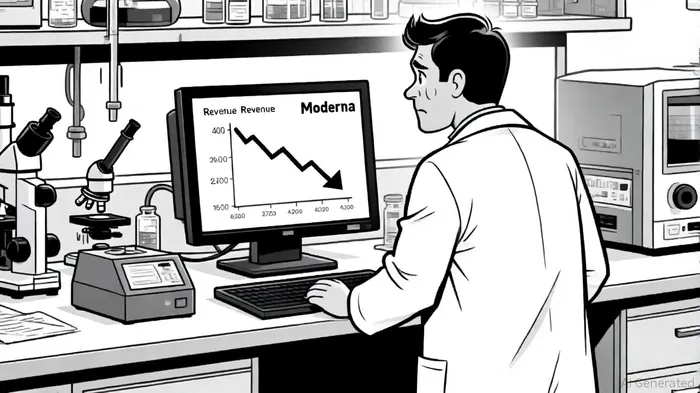
Moderna's financial trajectory underscores the vulnerability of biotech firms to regulatory shifts. The company now projects 2025 revenue of $1.5–$2.5 billion, a sharp decline from its 2024 sales of $3.0–$3.1 billion[2]. This contraction is driven by waning demand for its Spikevax vaccine, compounded by restrictive CDC guidance for respiratory syncytial virus (RSV) vaccines and intensified competition from rivals like PfizerPFE-- and GSK[3]. To offset these headwinds, Moderna has announced a $1.0 billion cost-cutting initiative in 2025 and an additional $500 million in 2026, targeting R&D, manufacturing, and administrative expenses[2].
Despite these measures, Moderna's aggressive R&D spending—projected to exceed $4.5 billion in 2025—remains a double-edged sword. While the company advances promising programs in oncology (e.g., personalized neoantigen therapy mRNA-4157) and rare diseases, its near-term profitability is jeopardized by operating losses exceeding $3.9 billion in 2024[4]. The challenge lies in balancing short-term fiscal discipline with long-term innovation, a tightrope many biotechs struggle to navigate.
Policy Risks and Historical Precedents
The CDC's policy shift is emblematic of broader regulatory uncertainties that have historically impacted biotech valuations. For instance, Medicare price negotiations under the Inflation Reduction Act and the Trump-era “most favored nation” pricing policy have reshaped market expectations for drug profitability[5]. Similarly, leadership changes at the FDA and HHS, including Robert F. Kennedy Jr.'s controversial reorganization of the CDC's Advisory Committee on Immunization Practices, have introduced volatility into approval pathways and public trust[1].
Biotech stocks, inherently sensitive to policy and macroeconomic trends, have shown pronounced reactions to such shifts. A 2022 market reset, driven by high interest rates and inflation, forced startups to justify valuations with stronger clinical data[5]. Moderna's 20% stock price drop following its revenue forecast cut in 2025 mirrors this pattern, reflecting investor skepticism about its ability to pivot profitably[3].
Strategic Resilience and Market Positioning
Moderna's response to these challenges highlights both its strengths and vulnerabilities. The company's $9.5 billion cash reserves as of 2024 provide a buffer for R&D, while its diversification into combination vaccines (e.g., flu-COVID) and rare disease therapeutics offers long-term growth avenues[4]. Strategic partnerships, such as its collaboration with IBMIBM-- to integrate quantum computing into mRNA design, further underscore its technological edge[4].
However, Moderna's reliance on mRNA technology—a platform still unproven in non-vaccine applications—introduces risks. The company's deprioritization of standalone flu and pediatric RSV vaccines in favor of combination shots also narrows its addressable market, potentially limiting scalability[2]. Analysts caution that while the mRNA vaccine market is projected to grow from $20.1 billion in 2024 to $89.8 billion by 2030, capturing this growth will require navigating regulatory hurdles and competitive pressures[3].
Conclusion: Navigating a Policy-Driven Future
For investors, Moderna's journey underscores the dual-edged nature of biotech innovation. While its pipeline and cash reserves position it to weather near-term storms, the company's long-term success hinges on its ability to adapt to a policy landscape increasingly shaped by cost-conscious regulators and fragmented public trust. The broader biotech sector, too, must contend with a new normal where valuations are tethered to regulatory clarity, pricing pressures, and the agility to pivot from one therapeutic frontier to another.
As the CDC's decision reshapes the vaccine landscape, Moderna's story serves as a case study in the delicate interplay between public health policy and market dynamics—a reminder that even the most advanced biotech firms are not immune to the tides of regulatory change.





Comentarios
Aún no hay comentarios