
Shifting Power Dynamics in Urban Rental Markets: How Rental Registry Laws Reshape Real Estate Investment Returns
The Valuation Conundrum: Rent Caps and Property Depreciation
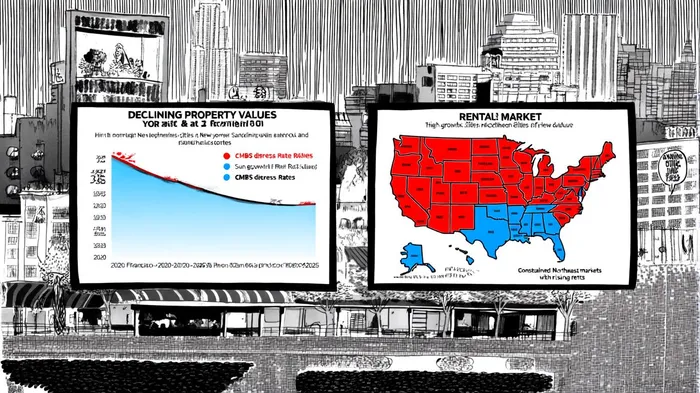
Rental registry laws have had a pronounced effect on property valuations in urban markets. In cities like New York and San Francisco, where stringent rent control policies limit annual increases, regulated multifamily property values have plummeted by approximately 30% since 2022, according to a Trepp analysis. That analysis also notes the decline is compounded by rising commercial mortgage-backed securities (CMBS) distress rates, which peaked at 16.43% in 2025 as lenders grappled with nonperforming loans.
The discount on rent-controlled properties-often trading at 10–25% below unregulated counterparts-reflects investors' diminished expectations for income growth and regulatory compliance costs, according to a Selling and Buying a Home analysis. A 2024 study by the National Apartment Association further underscores this trend, linking rent control to deteriorating housing quality, including higher rates of cockroach infestations and electrical failures. Such deficiencies not only reduce tenant satisfaction but also deter demand, creating a self-reinforcing cycle of declining occupancy and maintenance.
Investor Adaptation: Value-Add Strategies and Diversification
Faced with these challenges, investors have adopted value-add strategies to mitigate losses. Capital improvements-such as energy-efficient upgrades or unit renovations-have become critical tools to qualify for modest rent increases under stabilization policies, according to a 2024 study. For example, landlords in rent-controlled markets have prioritized HVAC modernization and insulation upgrades, which not only offset rising utility costs but also justify incremental rent adjustments.
Diversification has also emerged as a key risk-management tactic. Investors are balancing portfolios between regulated and unregulated markets, such as pairing properties in New York with those in Sun Belt cities like Phoenix, where rising supply has tempered rent growth, according to Baselane rental trends. This approach allows investors to hedge against regulatory volatility while capitalizing on markets with more flexible pricing.
Regional Divergence: Supply, Demand, and Policy Interactions
The impact of rental registry laws varies starkly by region. In the Northeast and Midwest, where supply constraints persist, rental prices have risen despite increasing inventory, driven by inelastic demand and limited new construction. Conversely, Sun Belt cities like Austin have seen rents dip slightly as single-family rental units outpace demand, illustrating the complex interplay between policy and market forces.
Technology is further reshaping these dynamics. Nearly 93% of property managers now use digital tools for tenant communication and maintenance scheduling, though adoption remains uneven among smaller landlords. These tools can enhance operational efficiency but do little to offset the financial pressures of rent caps.
The Long-Term Implications: Supply Crunches and Investor Flight
While short-term adaptations help, the long-term sustainability of rent-controlled markets remains in question. Deferred maintenance and limited return potential are already deterring new construction. A 2025 ULI report warns that without incentives for developers, urban housing stock may stagnate, further straining affordability.
Investors are also recalibrating their risk appetites. Multifamily real estate, once a cornerstone of institutional portfolios, now faces scrutiny due to regulatory uncertainty. The shift mirrors earlier trends in commercial real estate, where cap rates widened as investors demanded higher yields for regulatory risk.
Conclusion: Balancing Affordability and Investment Incentives
The rise of rental registry laws marks a pivotal shift in urban real estate. While these policies have succeeded in curbing short-term rent spikes, their unintended consequences-reduced property values, deteriorating housing quality, and constrained supply-pose long-term challenges. For investors, the path forward lies in strategic diversification and value-add initiatives. Yet, for markets to remain vibrant, policymakers must balance tenant protections with incentives for development and maintenance.
As the 2025 data shows, the urban rental market is no longer a one-sided game. The power dynamics between landlords, tenants, and regulators are in flux, and the winners will be those who navigate this new landscape with agility and foresight.







Comentarios
Aún no hay comentarios