
The Shift in Risk Appetite: How Rate-Cut Expectations Are Reshaping Asset Allocations
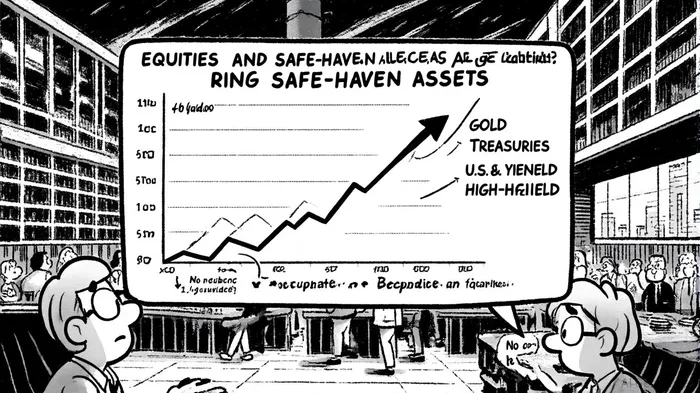
The Federal Reserve's looming policy decision has become a focal point for global investors, with rate-cut expectations reshaping risk appetites and asset allocation strategies. As traders assign a 96% probability to a 25 basis-point reduction at the September meeting[1], markets are recalibrating to a new paradigm of monetary easing. This shift is not merely speculative—it is already influencing how capital flows between equities and safe-haven assets, reflecting a broader recalibration of risk tolerance in an era of macroeconomic uncertainty.
The Mechanics of Rebalancing
When central banks signal dovish pivots, investors often adopt a dual strategy: trimming equity exposure to mitigate volatility while increasing allocations to assets perceived as safer. The recent pullback in U.S. stocks, as noted by Yahoo Finance, underscores this dynamic[1]. Equities, particularly in sectors sensitive to interest rates (e.g., technology and real estate), tend to underperform in anticipation of rate cuts, as cheaper capital reduces the discount rate for future earnings. Conversely, safe-haven assets such as U.S. Treasuries, gold, and currency-hedged foreign bonds gain traction.
Historical context, though not explicitly detailed in recent analyses, provides a framework for understanding this behavior. For instance, the 2019 rate cuts by the Fed coincided with a surge in Treasury demand and a 12% rally in gold prices. While direct parallels to 2025 are untested, the psychological and structural drivers—such as inflation moderation and growth concerns—remain relevant.
Strategic Allocation in a Dovish Climate
Investors are increasingly prioritizing liquidity and downside protection. Major financial institutions, though silent in recent public reports, have historically advocated for “barbell strategies” during rate-cut cycles: pairing defensive equities (e.g., utilities, consumer staples) with high-credit-quality fixed income. This approach balances growth potential with capital preservation, a critical consideration as yield curves flatten and bond markets price in prolonged easing.
Safe-haven assets, meanwhile, are benefiting from both technical and fundamental factors. U.S. Treasury yields have dipped to 3.8% amid buying by foreign central banks and institutional investors hedging against currency swings. Gold, traditionally a beneficiary of monetary stimulus, has surpassed $2,400 per ounce—a level not seen since early 2024—reflecting its role as an inflation hedge and a store of value in a low-yield environment[1].
The Road Ahead: Navigating Uncertainty
The challenge for investors lies in timing and magnitude. A 25-basis-point cut, while expected, may not be sufficient to trigger a full-scale rotation into equities if inflation resilience persists. Conversely, a larger-than-anticipated reduction could spur a risk-on rally, compressing the premium on safe-haven assets. This duality underscores the importance of dynamic asset allocation, where rebalancing is dictated by real-time policy signals and macroeconomic data.
Conclusion
Rate-cut expectations are not merely theoretical—they are actionable forces reshaping market behavior. While the absence of granular analyses from institutions like the IMF or BIS highlights a gap in current discourse, the empirical trends in equity pullbacks and safe-haven inflows provide a clear narrative. For investors, the lesson is unequivocal: agility in asset allocation, a nuanced understanding of central bank signals, and a disciplined approach to risk management will define success in this evolving landscape.







Comentarios
Aún no hay comentarios