
The Shift in Berkshire Hathaway's CEO Compensation: Implications for Governance and Shareholder Value
The leadership transition at Berkshire Hathaway, marked by Greg Abel's appointment as CEO in January 2026, has sparked a pivotal debate about the balance between competitive leadership incentives and long-term value creation. This shift, characterized by a significant increase in Abel's compensation and a reconfiguration of the company's governance framework, reflects a deliberate departure from Warren Buffett's legacy of modest, equity-linked remuneration. As investors and analysts scrutinize the implications, the central question remains: Can a market-aligned approach to CEO compensation sustain Berkshire's unique value proposition while navigating the challenges of post-Buffett succession?
A New Compensation Paradigm
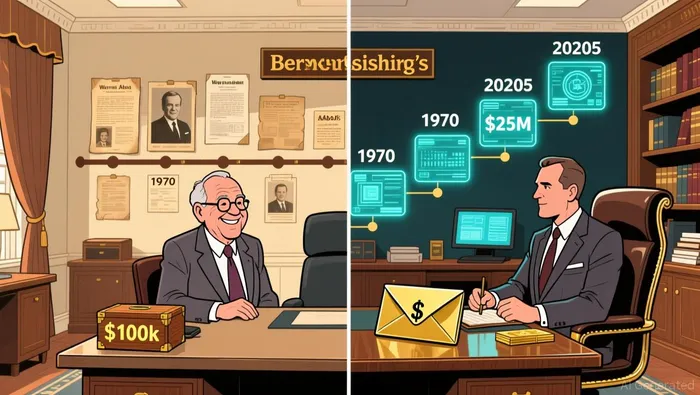
Greg Abel's annual cash salary of $25 million, a 19% increase from his 2024 earnings as vice chairman, starkly contrasts with Warren Buffett's iconic $100,000 annual salary, which he accepted for over four decades. This adjustment aligns Abel's pay with the median total compensation of S&P 500 CEOs in 2024, estimated at $17.1–$18.9 million. While critics may view this as a departure from Buffett's frugal ethos, proponents argue it reflects a pragmatic response to evolving market expectations. By tethering leadership incentives to broader industry standards, Berkshire aims to attract and retain top-tier talent capable of steering its sprawling conglomerate through an increasingly complex economic landscape.
 However, the absence of explicit performance-based equity incentives in Abel's compensation package raises questions. Unlike Buffett, whose rewards were inextricably linked to shareholder returns, Abel's structure appears to prioritize cash compensation over long-term value alignment. This shift could signal a broader philosophical pivot toward operational efficiency and managerial accountability, but it also risks diluting the intrinsic link between executive rewards and sustainable capital appreciation.
Governance Reimagined: Formalization and Continuity
Berkshire's governance framework is undergoing a structural transformation to complement Abel's leadership. The creation of new roles, including an in-house general counsel and the appointment of Charles Chang as CFO, underscores a move toward formalized oversight. This contrasts with Buffett's decentralized, trust-based model, which relied heavily on his personal brand and informal decision-making. While such formalization may enhance transparency and risk management, it also introduces bureaucratic layers that could slow the company's historically agile response to market opportunities.
Investor sentiment has been mixed. notes that Berkshire's stock price declined following Buffett's May 2025 retirement announcement, reflecting unease about succession risks. Yet Buffett himself has expressed confidence in Abel's ability to preserve the company's legacy, emphasizing his operational expertise and deep institutional knowledge. This duality-between institutional continuity and market skepticism-highlights the delicate balancing act required to maintain stakeholder trust during a leadership transition.
Shareholder Value: Risks and Opportunities
The long-term impact of these changes on shareholder value hinges on two critical factors: Abel's ability to execute Buffett's investment philosophy and the resilience of Berkshire's operating businesses. Proponents argue that Abel's infrastructure and operational focus could unlock efficiencies in underperforming segments, such as energy and railroads, while his disciplined capital allocation approach mirrors Buffett's strategic priorities.
Yet challenges persist. The erosion of the so-called "Buffett premium"-a valuation cushion historically attributed to his unparalleled reputation-poses a risk. Academic studies on CEO compensation suggest a nuanced relationship between pay and performance, with excessive short-term incentives potentially undermining long-term value. For Berkshire, the absence of performance-linked equity in Abel's package may test the hypothesis that market-aligned pay structures inherently drive sustainable growth.
Conclusion: Navigating the Post-Buffett Era
Berkshire's shift in CEO compensation and governance represents a calculated gamble. By aligning Abel's incentives with industry norms, the company acknowledges the realities of modern leadership while retaining a core commitment to operational excellence. However, the absence of explicit long-term value metrics in his compensation structure introduces uncertainty about how closely his priorities will align with those of shareholders.
As the post-Buffett era unfolds, Berkshire's success will depend on Abel's ability to balance these competing demands. The company's enduring strength lies in its diverse operating businesses and a culture of disciplined stewardship. If Abel can preserve these cornerstones while adapting to new governance norms, Berkshire may yet prove that market-aligned incentives and long-term value creation are not mutually exclusive. For now, investors remain watchful, aware that the true test of this transition will unfold over years, not months.







Comentarios
Aún no hay comentarios