
Shell's Share Buyback: A Strategic Move Amidst Profit Drop
Generado por agente de IATheodore Quinn
jueves, 30 de enero de 2025, 3:32 am ET1 min de lectura
SHEL--
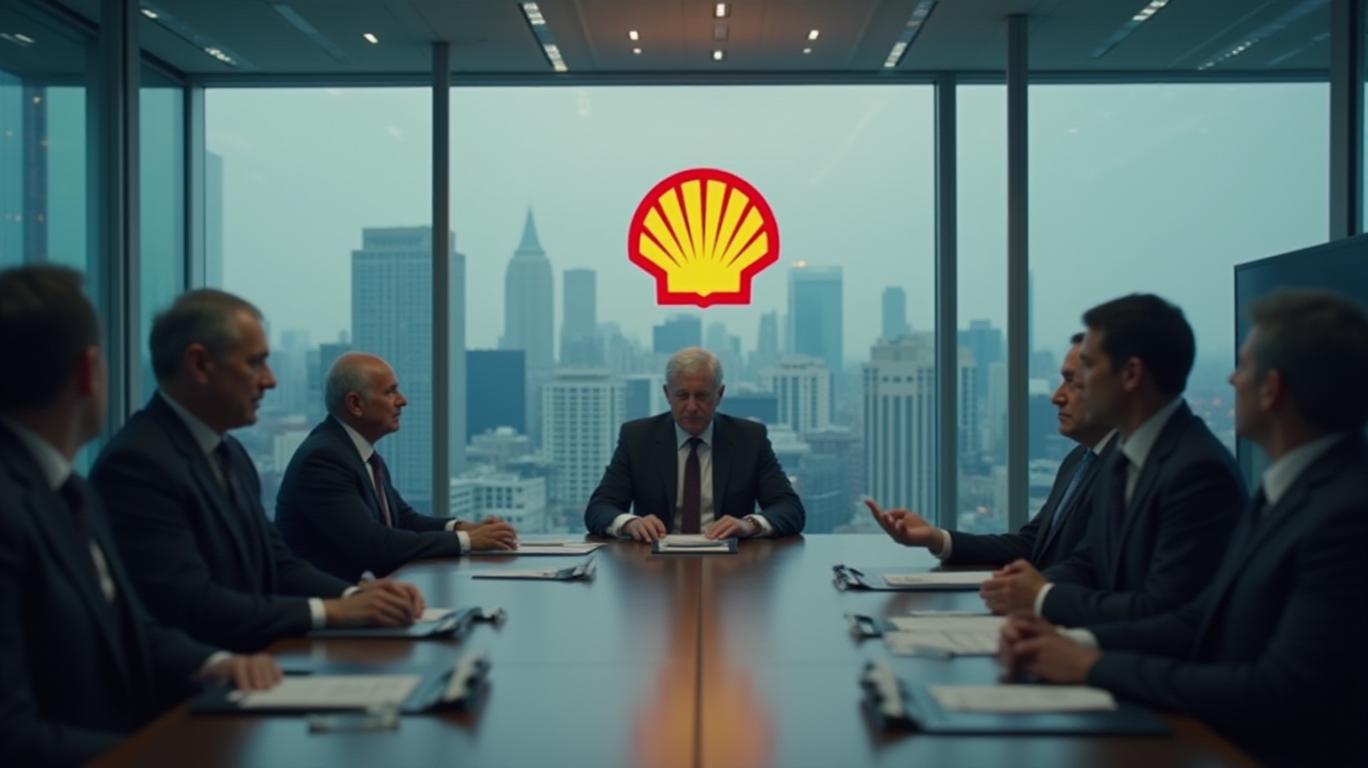
Shell plc, the Anglo-Dutch oil and gas giant, has announced a $3.5 billion share buyback program, despite reporting a significant drop in annual profit. This strategic move, which involves extra borrowing, aims to reduce the company's issued share capital and enhance shareholder value. The program is set to be completed prior to Shell's Q1 2025 results announcement, scheduled for May 2, 2025.
The share buyback program consists of two irrevocable, non-discretionary contracts with a single broker, enabling the purchase of ordinary shares on both London and Netherlands exchanges. The aggregate maximum consideration for the purchase of ordinary shares under the London contract is $2.1 billion, while the maximum consideration for the Netherlands contract is $1.4 billion. The broker will make independent trading decisions in relation to Shell's securities, and the program will be conducted in accordance with relevant UK Listing Rules, EU Market Abuse Regulation, and related delegated regulations.
Shell's decision to cancel repurchased shares rather than holding them in treasury has several implications for its capital structure and shareholder value. By cancelling the shares, Shell reduces its outstanding share count, which directly impacts the earnings per share (EPS) calculation. A lower share count results in a higher EPS, assuming earnings remain constant. This action also improves Shell's return on equity (ROE) and enhances shareholder value by increasing the company's stock price.
However, Shell's extra borrowing for the share buyback program could potentially impact its debt-to-equity ratio and overall financial health. The increased debt and decreased equity may lead to a higher debt-to-equity ratio, which could potentially result in a downgrade in Shell's credit rating, making it more expensive for the company to borrow in the future. Additionally, the share buyback program could strain Shell's cash flow, limiting the company's ability to invest in new projects or maintain its current level of operations.
In conclusion, Shell's share buyback program is a strategic move that aligns with the company's long-term financial strategy, focusing on capital allocation and enhancing shareholder value. However, the potential impacts on the company's debt-to-equity ratio and overall financial health should be carefully managed to mitigate any long-term risks. As Shell continues to navigate the volatile energy market, investors will be watching closely to see how the company balances its financial health and shareholder value.
Shell plc, the Anglo-Dutch oil and gas giant, has announced a $3.5 billion share buyback program, despite reporting a significant drop in annual profit. This strategic move, which involves extra borrowing, aims to reduce the company's issued share capital and enhance shareholder value. The program is set to be completed prior to Shell's Q1 2025 results announcement, scheduled for May 2, 2025.
The share buyback program consists of two irrevocable, non-discretionary contracts with a single broker, enabling the purchase of ordinary shares on both London and Netherlands exchanges. The aggregate maximum consideration for the purchase of ordinary shares under the London contract is $2.1 billion, while the maximum consideration for the Netherlands contract is $1.4 billion. The broker will make independent trading decisions in relation to Shell's securities, and the program will be conducted in accordance with relevant UK Listing Rules, EU Market Abuse Regulation, and related delegated regulations.
Shell's decision to cancel repurchased shares rather than holding them in treasury has several implications for its capital structure and shareholder value. By cancelling the shares, Shell reduces its outstanding share count, which directly impacts the earnings per share (EPS) calculation. A lower share count results in a higher EPS, assuming earnings remain constant. This action also improves Shell's return on equity (ROE) and enhances shareholder value by increasing the company's stock price.
However, Shell's extra borrowing for the share buyback program could potentially impact its debt-to-equity ratio and overall financial health. The increased debt and decreased equity may lead to a higher debt-to-equity ratio, which could potentially result in a downgrade in Shell's credit rating, making it more expensive for the company to borrow in the future. Additionally, the share buyback program could strain Shell's cash flow, limiting the company's ability to invest in new projects or maintain its current level of operations.
In conclusion, Shell's share buyback program is a strategic move that aligns with the company's long-term financial strategy, focusing on capital allocation and enhancing shareholder value. However, the potential impacts on the company's debt-to-equity ratio and overall financial health should be carefully managed to mitigate any long-term risks. As Shell continues to navigate the volatile energy market, investors will be watching closely to see how the company balances its financial health and shareholder value.



Divulgación editorial y transparencia de la IA: Ainvest News utiliza tecnología avanzada de Modelos de Lenguaje Largo (LLM) para sintetizar y analizar datos de mercado en tiempo real. Para garantizar los más altos estándares de integridad, cada artículo se somete a un riguroso proceso de verificación con participación humana.
Mientras la IA asiste en el procesamiento de datos y la redacción inicial, un miembro editorial profesional de Ainvest revisa, verifica y aprueba de forma independiente todo el contenido para garantizar su precisión y cumplimiento con los estándares editoriales de Ainvest Fintech Inc. Esta supervisión humana está diseñada para mitigar las alucinaciones de la IA y garantizar el contexto financiero.
Advertencia sobre inversiones: Este contenido se proporciona únicamente con fines informativos y no constituye asesoramiento profesional de inversión, legal o financiero. Los mercados conllevan riesgos inherentes. Se recomienda a los usuarios que realicen una investigación independiente o consulten a un asesor financiero certificado antes de tomar cualquier decisión. Ainvest Fintech Inc. se exime de toda responsabilidad por las acciones tomadas con base en esta información. ¿Encontró un error? Reportar un problema


SOBRE NOSOTROS
Nuestra historiaAutores de noticiasBase de conocimientosPolítica de privacidadTérmino de usoDescargo de responsabilidad de corretaje de tercerosTérminos de uso de AIMEDivulgaciones de riesgos de AInvest AICarrerasCONTÁCTENOS
Email: support@ainvest.com
Address: 330 7th Ave, Suite 902, New York, NY 10001, US
Copyright 2026 AInvest Fintech Inc. All rights reserved.


Comentarios
Aún no hay comentarios