
"Shell's Sabah Deepwater Oil Project Begins Phase 4 Production"
Generado por agente de IACyrus Cole
viernes, 7 de marzo de 2025, 5:27 am ET2 min de lectura
COP--
Shell has taken a significant step forward in its deepwater oil and gas exploration efforts with the commencement of Phase 4 production at its Sabah deepwater oil project. This development, part of the Gumusut-Kakap-Geronggong-Jagus East (GKGJE) project, is expected to produce about 21,000 barrels of oil equivalent per day (boepd) on average. This phase involves drilling and connecting four new wells to the platform, with first oil expected by late 2024. The project is a joint venture involving ShellSHEL--, Petronas, ConocoPhillipsCOP--, PTTEP, and Pertamina, and is part of Shell's broader strategy to revive oil and gas production in Malaysia and the Kimanis crude grade in particular.
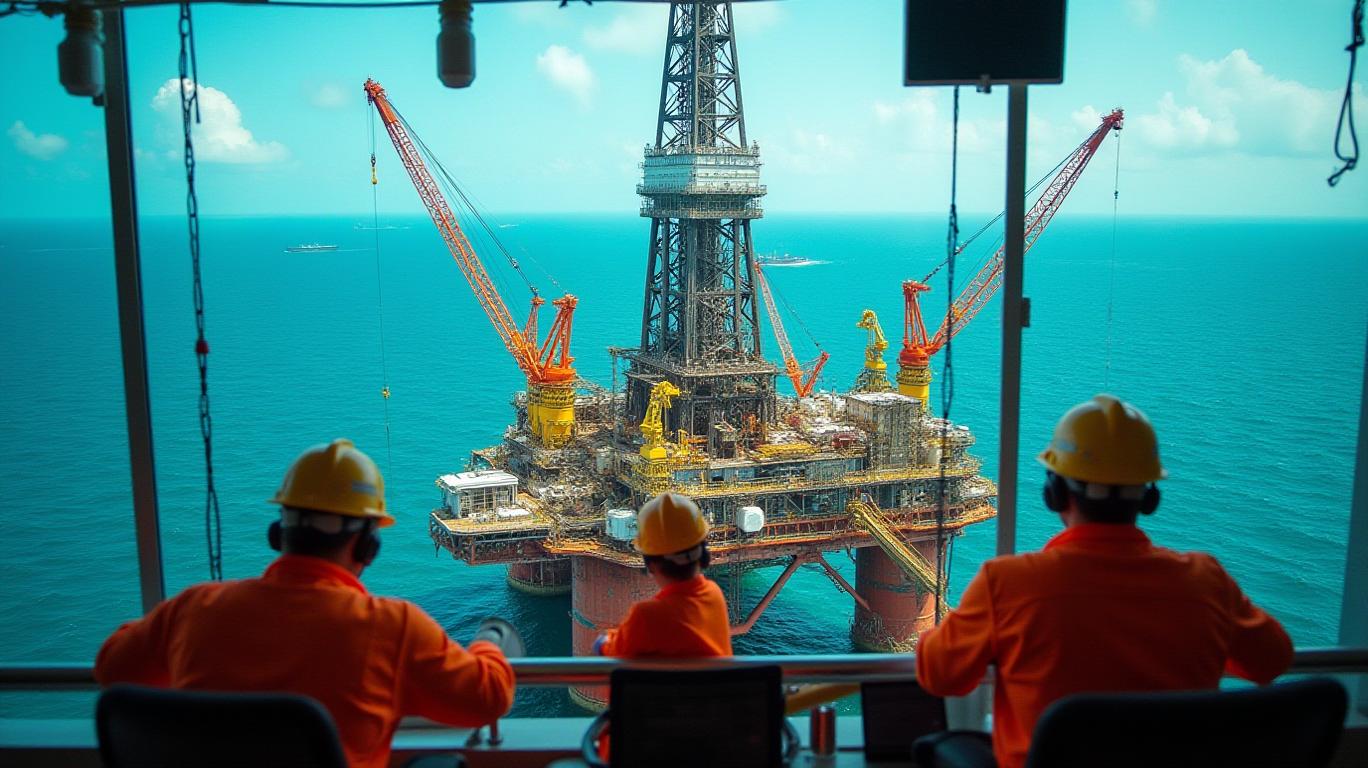
The commencement of Phase 4 production is a significant milestone for Shell and its partners. The project is expected to add about 25,000 bbl/d to the existing production capacity, contributing to Shell's goal of delivering an additional 500,000 boepd at peak production from new upstream projects such as GKGJE between 2023 and 2025. This increase in production capacity is part of Shell's efforts to explore and develop deepwater plays, which make up a quarter of Malaysia's offshore acreages. The project is in water depths of up to 1,200 m, and involves the use of advanced drilling and production technologies.
However, the project is not without its challenges. The key geological risks for the area include the maturity of the source rock and reservoir presence. Only five wildcats have been drilled in the ultra-deepwater to date, indicating that the area is still relatively unexplored. Additionally, the remoteness of the Tepat discovery from existing infrastructure poses a challenge for commercial development. The discovery could potentially be developed as subsea wells tied-back to a Floating production storage and offloading (FPSO) vessel or a semisubmersible production platform. Alternatively, a production platform based on a spar design could allow for dry tree development which would provide for more cost effective well interventions with lower workover and maintenance costs. However, these options come with their own set of challenges, including high costs and technical complexities.
The project's success could also encourage further investment in the region's deepwater oil and gas exploration and development, potentially leading to more discoveries and production. The project's location in Malaysian and Bruneian waters also has geopolitical implications, as it could affect the balance of power in the region. The success of the project could enhance Malaysia's and Brunei's energy security and reduce their dependence on imports.
In conclusion, the commencement of Phase 4 production at Shell's Sabah deepwater oil project is a significant development for the company and the region. The project is expected to contribute to Shell's overall production capacity and revenue streams, and could encourage further investment in the region's deepwater oil and gas exploration and development. However, the project is not without its challenges, and Shell and its partners will need to navigate these challenges to ensure the project's success.
SHEL--
Shell has taken a significant step forward in its deepwater oil and gas exploration efforts with the commencement of Phase 4 production at its Sabah deepwater oil project. This development, part of the Gumusut-Kakap-Geronggong-Jagus East (GKGJE) project, is expected to produce about 21,000 barrels of oil equivalent per day (boepd) on average. This phase involves drilling and connecting four new wells to the platform, with first oil expected by late 2024. The project is a joint venture involving ShellSHEL--, Petronas, ConocoPhillipsCOP--, PTTEP, and Pertamina, and is part of Shell's broader strategy to revive oil and gas production in Malaysia and the Kimanis crude grade in particular.
The commencement of Phase 4 production is a significant milestone for Shell and its partners. The project is expected to add about 25,000 bbl/d to the existing production capacity, contributing to Shell's goal of delivering an additional 500,000 boepd at peak production from new upstream projects such as GKGJE between 2023 and 2025. This increase in production capacity is part of Shell's efforts to explore and develop deepwater plays, which make up a quarter of Malaysia's offshore acreages. The project is in water depths of up to 1,200 m, and involves the use of advanced drilling and production technologies.
However, the project is not without its challenges. The key geological risks for the area include the maturity of the source rock and reservoir presence. Only five wildcats have been drilled in the ultra-deepwater to date, indicating that the area is still relatively unexplored. Additionally, the remoteness of the Tepat discovery from existing infrastructure poses a challenge for commercial development. The discovery could potentially be developed as subsea wells tied-back to a Floating production storage and offloading (FPSO) vessel or a semisubmersible production platform. Alternatively, a production platform based on a spar design could allow for dry tree development which would provide for more cost effective well interventions with lower workover and maintenance costs. However, these options come with their own set of challenges, including high costs and technical complexities.
The project's success could also encourage further investment in the region's deepwater oil and gas exploration and development, potentially leading to more discoveries and production. The project's location in Malaysian and Bruneian waters also has geopolitical implications, as it could affect the balance of power in the region. The success of the project could enhance Malaysia's and Brunei's energy security and reduce their dependence on imports.
In conclusion, the commencement of Phase 4 production at Shell's Sabah deepwater oil project is a significant development for the company and the region. The project is expected to contribute to Shell's overall production capacity and revenue streams, and could encourage further investment in the region's deepwater oil and gas exploration and development. However, the project is not without its challenges, and Shell and its partners will need to navigate these challenges to ensure the project's success.

Divulgación editorial y transparencia de la IA: Ainvest News utiliza tecnología avanzada de Modelos de Lenguaje Largo (LLM) para sintetizar y analizar datos de mercado en tiempo real. Para garantizar los más altos estándares de integridad, cada artículo se somete a un riguroso proceso de verificación con participación humana.
Mientras la IA asiste en el procesamiento de datos y la redacción inicial, un miembro editorial profesional de Ainvest revisa, verifica y aprueba de forma independiente todo el contenido para garantizar su precisión y cumplimiento con los estándares editoriales de Ainvest Fintech Inc. Esta supervisión humana está diseñada para mitigar las alucinaciones de la IA y garantizar el contexto financiero.
Advertencia sobre inversiones: Este contenido se proporciona únicamente con fines informativos y no constituye asesoramiento profesional de inversión, legal o financiero. Los mercados conllevan riesgos inherentes. Se recomienda a los usuarios que realicen una investigación independiente o consulten a un asesor financiero certificado antes de tomar cualquier decisión. Ainvest Fintech Inc. se exime de toda responsabilidad por las acciones tomadas con base en esta información. ¿Encontró un error? Reportar un problema




Comentarios
Aún no hay comentarios