
SharkNinja's 2025 Resilience: Can Growth Withstand Supply Chain and Regulatory Pressures?
Tariff costs alone are already chewing up hundreds of millions in profits for consumer goods firms like SharkNinjaSN--, forcing rapid supply chain relocations and constant price recalibration. This exorbitant direct hit is now compounded by intensifying regulatory scrutiny around AI adoption and data handling practices, adding layers of compliance expenses and operational friction.
The double whammy pressures margins significantly, especially as competitors scramble to absorb similar tariff burdens while also investing heavily in AI tools for cost savings. While AI promises efficiency gains, firms must now deploy scarce capital on both supply chain pivots and compliance frameworks, stretching financial flexibility thin. 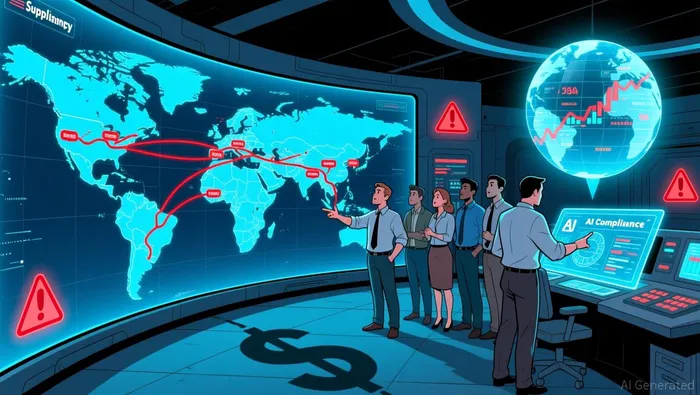 The immediate challenge isn't just surviving these costs but determining whether profit recovery is feasible without stifling innovation or triggering price wars in competitive markets. The real test of corporate resilience comes not from external growth opportunities, but from weathering these simultaneous structural headwinds.
Growth Engine & Margin Quality
SharkNinja's third-quarter results highlighted robust revenue momentum, with net sales . This surge was powered overwhelmingly by two segments: Beauty and Home Environment, , and international markets, . The expansion reflects successfully captured market share, .
International growth, while strong, faces headwinds. Tariffs eroded some of the company's gross margin gains, creating uncertainty around sustainability. , this progress relied partially on non-recurring cost savings and supply chain adjustments. Analysts note these optimizations may not fully persist, leaving margin expansion vulnerable to ongoing tariff pressures and input cost fluctuations. , but margin degradation in key export markets could test that target.
Supply Chain Shifts & Compliance Uncertainty
SharkNinja's pivot away from China to Southeast Asia manufacturing is a direct response to tariff pressures, aiming to mitigate costs. However, this transition hasn't eliminated the financial impact; . While cost reductions through supplier negotiations and redesigns add resilience, the scale of past tariff hits underscores the volatility inherent in global supply chains. This operational churn creates uncertainty, a known risk factor investors should monitor closely.
Further complicating the picture is SharkNinja's apparent lag in adopting transformative supply chain technologies. Industry leaders are increasingly leveraging AI for optimization, , and , with . SharkNinja's current focus appears centered on physical relocation and cost control rather than this digital leap. This potential gap could translate into relative inefficiency over time if AI-driven competitors gain significant cost or responsiveness advantages.
A significant unresolved risk lies in regulatory preparedness. The company's public plans emphasize physical supply chain movement but lack detail on evolving compliance frameworks, particularly concerning and responsible AI deployment as these technologies are integrated. The absence of clearly defined strategies for navigating these complex, shifting , especially with heightened global scrutiny, creates substantial uncertainty. This undefined compliance posture, coupled with the tangible costs and operational challenges of the manufacturing shift, signals potential headwinds that could erode margins or trigger unexpected expenses if regulatory requirements tighten or AI integration proves more complex than anticipated. Investors should treat the Southeast Asia transition and AI adoption gap as dual vulnerabilities requiring careful monitoring.
Outlook and Key Risks
SharkNinja's current outlook rests on continued strong sales momentum, with the company recently . This aligns with the 13-15% growth band you noted, . Q3 results demonstrated this resilience, , . However, this growth trajectory faces significant friction from ongoing tariff costs. creating a persistent drag on margins, despite cost optimization efforts.
Management is actively mitigating supply chain risk by relocating nearly all U.S.-bound manufacturing out of China to Southeast Asia. While this strategic shift aims to eliminate future tariff impacts, it introduces new transition risks. Any disruption to this manufacturing relocation exceeding 30 days could significantly hinder sales execution and fulfill the key risk trigger. Furthermore, the profitability gains partially achieved in Q3 remain vulnerable. The gross margin improvements were partially offset by tariffs, and the sustainability of these gains hinges critically on successfully navigating the supply chain transition and avoiding further regulatory penalties.
Therefore, , several downside risks demand attention. Persistent tariff-related costs, delays or complications in the manufacturing shift, unexpected , or a Q4 sales miss exceeding 2% would trigger heightened risk scenarios. The path to maintaining improved margins appears clear on paper but remains fraught with execution risk and external cost pressures.







Comentarios
Aún no hay comentarios