
Shareholder Risk and Corporate Governance at ACADIA Pharmaceuticals: Legal Scrutiny and Investor Confidence in the Wake of ACP-101's Failure
The recent collapse of ACADIA Pharmaceuticals Inc.'s (NASDAQ: ACAD) ACP-101 trial for Prader-Willi syndrome (PWS) has ignited a cascade of legal and governance concerns, casting a shadow over the company's corporate transparency and investor confidence. The Phase 3 COMPASS PWS trial, which failed to demonstrate statistically significant improvement over placebo, triggered a 9.92% stock price drop to $21.26 per share on September 24, 2025, according to Reuters. This event has catalyzed a securities fraud investigation by the Pomerantz Law Firm, raising critical questions about the company's leadership accountability and risk management practices.
A Trial Failure and Its Immediate Fallout
The ACP-101 trial's failure marks a pivotal moment for ACADIA, a biopharmaceutical firm heavily reliant on its two flagship products, NUPLAZID and DAYBUE, which generated $264.6 million in Q2 2025 revenues, per the company's SEC filing. The discontinuation of ACP-101, acquired in 2022 via the Levo Therapeutics acquisition, underscores the inherent risks of developing therapies for rare diseases. A Talk.bio report found the trial's 175-patient cohort showed no meaningful clinical benefit, leading to the drug's abrupt termination. This outcome not only eroded $2.34 billion in market value but also exposed vulnerabilities in ACADIA's pipeline diversification strategy.
Legal Scrutiny and Governance Gaps
The Pomerantz Law Firm's investigation, launched in response to the trial's announcement, centers on allegations of misleading statements or omissions by ACADIA's leadership. The firm is probing whether the company's prior communications about ACP-101's potential misrepresented its likelihood of success, thereby inflating stock prices between November 2023 and September 2025, the Morningstar alert said. This inquiry echoes a 2024 class-action lawsuit over NUPLAZID's commercialization, where Pomerantz LLP successfully argued against a motion to dismiss claims of deceptive practices.
ACADIA's corporate governance structure, while emphasizing ethical compliance and FDA adherence on its corporate social responsibility page, appears to lack robust mechanisms for preemptive risk disclosure. The absence of specific September 2025 SEC filings addressing the ACP-101 failure-despite the stock's sharp decline-suggests either delayed regulatory reporting or insufficient transparency in governance practices, as indicated by Nasdaq's SEC filings. This opacity could exacerbate investor skepticism, particularly as the company's 2025 guidance remains tied to its existing products rather than unproven pipeline candidates.
Leadership Responses and Strategic Reassurance
In the wake of the trial failure, ACADIA's CEO, Catherine Owen Adams, emphasized the company's "strong foundation," citing $1 billion in projected 2025 revenue from NUPLAZID and DAYBUE and plans for seven new trials by 2027 in the company press release. However, such statements risk overshadowing the broader implications of ACP-101's failure. The decision to discontinue the drug, while pragmatic, highlights a reliance on a narrow product portfolio and raises concerns about overexposure to high-risk, high-reward R&D bets.
The appointment of Allyson McMillan-Youngblood as Senior Vice President of Rare Disease Franchise in June 2025, noted in the Last10K filing, signals a strategic pivot toward rare diseases, yet the ACP-101 setback underscores the volatility of this approach. Investors must now weigh whether ACADIA's leadership has the governance frameworks to mitigate such risks or if the company's governance structure remains reactive rather than proactive.
Investor Confidence and the Path Forward
The Pomerantz investigation, coupled with the trial failure, has created a dual challenge for ACADIA: addressing legal liabilities while restoring investor trust. According to a FiercePharma analysis, the failure of ACP-101 has intensified scrutiny of the company's pipeline, with analysts questioning its ability to deliver on future milestones. The absence of recent SEC filings post-September 2025 further complicates this landscape, leaving investors in a regulatory gray area.
For ACADIA to regain credibility, it must demonstrate transparency in its governance practices, including timely disclosures of clinical setbacks and a diversified R&D strategy. The company's upcoming patent litigation wins and leadership appointments, noted in a StockTitan report, offer some optimism, but these must be paired with concrete steps to address governance gaps.
Conclusion
ACADIA Pharmaceuticals stands at a crossroads. The ACP-101 trial failure and subsequent legal scrutiny have exposed vulnerabilities in its corporate governance and risk management. While the company's leadership has sought to reassure investors through strategic hires and revenue projections, the absence of robust pre-announcement disclosures and post-trial regulatory filings raises red flags. For shareholders, the path forward hinges on ACADIA's ability to align its governance practices with the transparency and accountability demanded by a skeptical market.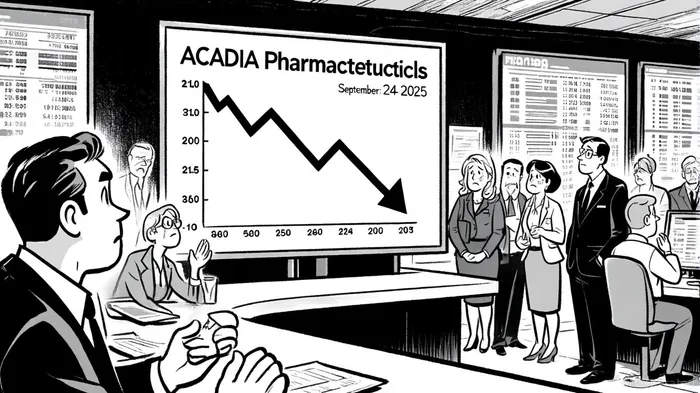





Comentarios
Aún no hay comentarios