
The K-Shaped Retail Recovery: Investing in Winners and Avoiding Losers in the New Holiday Economy
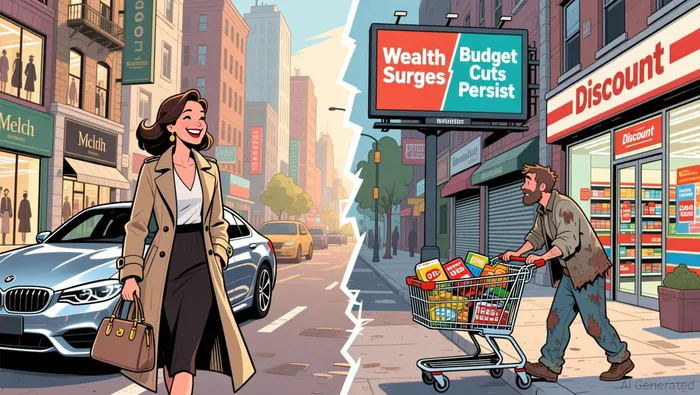
The 2025 retail landscape is defined by a stark K-shaped recovery, where economic gains are concentrated among high-income households while lower- and middle-income consumers tighten their budgets. This divergence, amplified by inflation, job insecurity, and AI-driven efficiency, has reshaped consumer behavior and investment dynamics. For investors, navigating this bifurcated market requires a nuanced understanding of which sectors are thriving and which are faltering.
Divergent Consumer Behavior: A Tale of Two Markets
According to Zacks Investment Research, higher-income households continue to spend robustly on discretionary and luxury goods, while middle- and lower-income consumers prioritize essentials and value-driven purchases. This split is evident in the 2025 holiday season, where overall retail sales grew by 3.1 percent, driven by discount events like Black Friday and Cyber Monday. AI-powered tools have further empowered price-conscious shoppers, enabling them to compare deals and optimize spending. Meanwhile, service-oriented sectors like dining and wellness have seen resilience, reflecting a shift toward experiences over goods.
AI-Driven Efficiency: A Double-Edged Sword
Artificial intelligence is reshaping retail operations, but its impact varies across the sector. Big-box retailers like WalmartWMT--, AmazonAMZN--, and CostcoCOST-- have leveraged AI to enhance supply chain forecasting, personalize customer experiences, and reduce returns through tools like AI-powered sizing assistants. For instance, case studies show that AI-driven personalization can boost conversion rates by up to 332% and increase average order values. These efficiencies have solidified their dominance in a market where price transparency and convenience are paramount.
Conversely, legacy retailers that lag in AI adoption are struggling. Nike, for example, has seen stagnant sales growth and eroding margins due to rising logistics costs and shifting consumer preferences toward experiences over goods. Similarly, athleisure brands like Lululemon face mounting pressure as economic anxiety curtails discretionary spending.
Winners and Losers in the K-Shaped Recovery
Winning Sectors:
1. Value-Oriented Retailers: Walmart and Costco have capitalized on the "trade-down" trend, where households prioritize affordability amid inflation. Their AI-driven inventory management and dynamic pricing strategies have further strengthened margins.
2. Tech-Enabled Retailers: Amazon's AI-powered recommendation engines and automated warehouses exemplify how technology can drive efficiency and customer retention.
3. Consumer Staples and Utilities: Institutional investors are rotating capital into these sectors for stability, as highlighted by WRAL's analysis of risk-off strategies.
Underperforming Sectors:
1. Luxury and Housing-Linked Retailers: Companies like Home Depot and TargetTGT-- have underperformed as consumers shift focus to essentials. Tariffs on apparel and footwear, coupled with Red Sea shipping disruptions, have also compressed margins for global retailers.
2. Legacy Retail Formats: Malls lacking experiential elements are struggling, while AI-driven e-commerce platforms dominate.
Strategic Investment Insights
For investors, the K-shaped recovery demands a dual approach:
- Capitalizing on AI-Driven Growth: Prioritize companies integrating AI across operations, from supply chain optimization to customer engagement. Tech giants like Nvidia and Microsoft, which power AI infrastructure, remain strong performers.
- Avoiding Overexposed Sectors: Exercise caution with luxury brands and housing-linked retailers, which face structural headwinds from economic bifurcation.
- Value Opportunities in Consumer Staples: Attractively valued essentials-oriented companies, particularly those serving high-income households, offer defensive appeal. As highlighted in a recent analysis, consumer spending remains a key driver.
Looking Ahead: 2026 and Beyond
The K-shaped recovery is likely to deepen in 2026, with retailers further segmenting their strategies to target either the value or luxury end of the market. Continued AI adoption and flexible payment options will shape consumer behavior, while macroeconomic risks-such as a weakening labor market-could exacerbate the divide. Investors must remain agile, favoring innovation and resilience over traditional brand loyalty.







Comentarios
Aún no hay comentarios