
The K-Shaped Economy and Its Investment Implications: Preparing for Divergence and Disruption
The global economy in late 2025 is increasingly defined by a stark K-shaped divergence, where growth and prosperity are concentrated among high-income households and specific sectors, while lower- and middle-income groups face persistent economic headwinds. This asymmetry is reshaping investment landscapes, demanding a nuanced approach to asset allocation and risk management. Understanding the mechanics of this two-tiered recovery-and strategically positioning portfolios to capitalize on or mitigate its effects-is critical for navigating the uncertainties ahead.
Sector Divergence: Winners and Losers in a K-Shaped Recovery
The K-shaped economy is most evident in sector performance. High-income households, who now account for nearly two-thirds of U.S. consumer spending, are driving demand in technology, artificial intelligence (AI), and luxury goods according to market analysis. These groups benefit from rising asset values in large-cap equities and real estate, which amplify their purchasing power and fuel further investment in innovation-driven industries as reported in Morgan Stanley's guide. Conversely, lower-income households are grappling with stagnant wages, elevated inflation on essentials, and a fragile labor market. Sectors like hospitality, automotive financing, and consumer discretionary are underperforming, as middle-class consumers prioritize savings over spending.
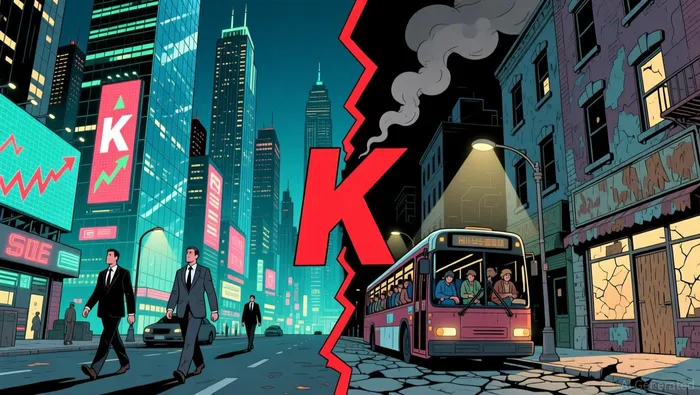
This divergence is not merely a function of income inequality but also of structural shifts. For instance, the rise of generative AI has disproportionately boosted productivity and profitability in tech firms, while small businesses and traditional retailers struggle to adapt according to RBC's macroeconomic memo. Similarly, tariffs and global supply chain disruptions have exacerbated financial stress for industries reliant on cross-border trade, further deepening the K-shaped divide .
Asset Class Returns: Quality, Duration, and Real Assets in Focus
The K-shaped economy has also led to pronounced divergences in asset class returns. Large-cap technology stocks, long-duration bonds, and real assets like gold and real estate have outperformed, reflecting their appeal to investors seeking stability and growth in a fragmented environment as Morgan Stanley notes. Central banks' aggressive gold accumulation-driven by geopolitical uncertainties and a loss of confidence in fiat currencies-has further bolstered the precious metal's role as a strategic hedge according to market analysis.
Meanwhile, lower-quality assets and speculative investments are underperforming. BitcoinBTC--, for example, remains in a neutral-to-weak zone, lagging behind broader market gains and gold as discussed in market commentary. Similarly, small-cap equities and high-yield bonds face elevated risks due to weak demand from middle-class consumers and a tightening credit environment according to Oak Harvest's analysis.
Strategic Positioning: Navigating Divergence Through Diversification
To thrive in a K-shaped economy, investors must adopt a dual strategy: capitalizing on high-growth opportunities while hedging against systemic risks. Three key principles emerge from current market dynamics:
Prioritize Quality and International Exposure: Large-cap technology stocks and global equities-particularly in AI and clean energy-remain attractive due to their resilience and growth potential. International markets, especially in Asia and emerging economies, offer additional diversification as developed-world growth slows as Morgan Stanley reports.
Extend Duration and Embrace Real Assets: Long-duration bonds and real assets like real estate and commodities are critical for preserving capital and generating inflation-protected returns. Gold, in particular, has gained renewed relevance as a store of value amid central bank policy uncertainty according to market analysis.
Rebalance for Income and Liquidity: With middle-class consumers tightening their budgets, sectors reliant on discretionary spending face headwinds. Investors should reduce exposure to cyclical industries and instead focus on defensive sectors like healthcare and utilities, which offer stable cash flows according to investment advice.
Conclusion: Preparing for a Fragmented Future
The K-shaped economy underscores the need for adaptability in investment strategies. As divergences between income groups and sectors deepen, success will depend on a portfolio's ability to balance growth-oriented bets with risk-mitigation tactics. Investors must remain vigilant to macroeconomic signals, including Federal Reserve policies and global trade dynamics, which will continue to shape the trajectory of this uneven recovery as Morgan Stanley's guide notes.
In this environment, the mantra is clear: diversify thoughtfully, prioritize quality, and remain agile. The future belongs to those who recognize that the K-shaped economy is not a temporary anomaly but a structural shift demanding long-term strategic foresight.







Comentarios
Aún no hay comentarios