
Shanghai International Airport's Passenger Recovery as a Catalyst for Aviation and Tourism-Linked Investments in China's Economic Powerhouse
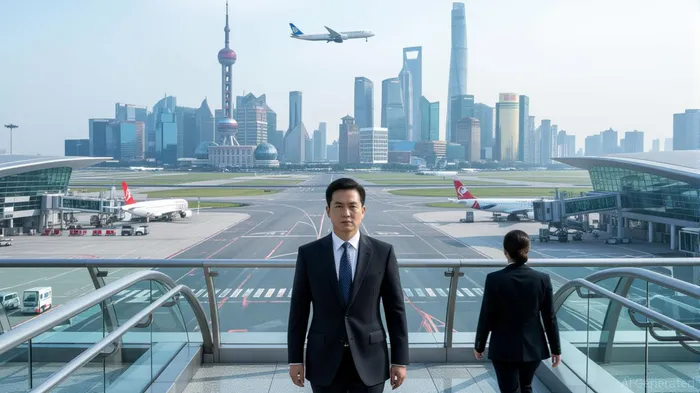
The post-pandemic resurgence of Shanghai's aviation sector has emerged as a linchpin for China's broader economic revival, particularly in the Yangtze River Delta. As the world's second-largest city and a global financial center, Shanghai's two international airports—Pudong and Hongqiao—serve as critical arteries for trade, tourism, and infrastructure-driven growth. Their recovery trajectories, while not quantified in granular detail, are emblematic of the city's strategic importance in reactivating regional commerce and reinforcing its position as a magnet for global capital.
Aviation as an Economic Catalyst
Shanghai's airports have long been more than transportation hubs; they are engines of economic activity. According to a report by Shanghai Facts, the city's dual-airport system facilitates both domestic and international connectivity, enabling the movement of goods, services, and people that underpin its status as a regional economic powerhouse [1]. Post-pandemic, the resumption of air travel has catalyzed a ripple effect across sectors. For instance, the revival of international routes has likely spurred demand for hospitality, retail, and logistics services, all of which are integral to Shanghai's economic ecosystem [1].
While specific passenger recovery metrics for 2023–2025 remain elusive, the broader context suggests a robust rebound. Shanghai's population growth and its role as a gateway to the Yangtze River Delta—a region contributing nearly 25% of China's GDP—underscore the inevitability of increased air traffic [1]. Infrastructure investments, including expansions at Pudong International Airport, further signal confidence in sustained demand. These projects are not merely about capacity; they reflect a strategic bet on Shanghai's ability to attract foreign direct investment and maintain its dominance in regional trade [1].
Tourism and the Infrastructure Multiplier Effect
Tourism, a sector decimated by pandemic-era restrictions, has shown signs of reawakening. The reopening of international borders and the easing of quarantine protocols have likely driven a surge in inbound visitors, particularly to Shanghai's cultural and commercial landmarks. As noted by Shanghai Facts, the city's tourism revenue is inextricably linked to its aviation infrastructure, which connects it to over 300 global destinations [1]. This connectivity is not just a convenience—it is a competitive advantage in a global economy where foot traffic translates to economic flow.
Moreover, the airports' role extends beyond tourism. They are nodes in a vast transportation network that includes high-speed rail and an extensive metro system, all of which amplify their economic impact. For investors, this interconnectivity represents a multiplier effect: every passenger touchdown at Pudong or Hongqiao generates demand for ancillary services, from cargo handling to real estate development.
Challenges and Long-Term Prospects
Despite the optimism, challenges persist. Geopolitical tensions, fluctuating global demand, and the lingering effects of the pandemic could temper growth. However, Shanghai's strategic investments in infrastructure—such as the ongoing expansion of Pudong's terminal facilities and the integration of smart technologies—position it to weather these headwinds [1]. For investors, the key is to view these airports not as isolated assets but as components of a larger, infrastructure-driven growth story.
The city's emphasis on sustainability and digital transformation also offers new avenues for investment. Green bonds tied to airport energy efficiency projects or tech-driven solutions for passenger flow management could attract ESG-focused capital. Meanwhile, the Yangtze River Delta's integration into China's broader economic strategy ensures that Shanghai's airports will remain central to the region's prosperity.
Conclusion
Shanghai International Airport's post-pandemic recovery is more than a local success story—it is a harbinger of China's economic resilience. For investors, the airports represent a confluence of strategic infrastructure, tourism potential, and regional economic momentum. While precise passenger metrics remain opaque, the qualitative indicators are clear: Shanghai's aviation sector is a cornerstone of its—and by extension, China's—economic future.







Comentarios
Aún no hay comentarios