
U.S. Shale Sector's Resilience Amid Production Stagnation: Strategic Positioning of High-Conviction Energy Plays Like Diamondback Energy (FANG)
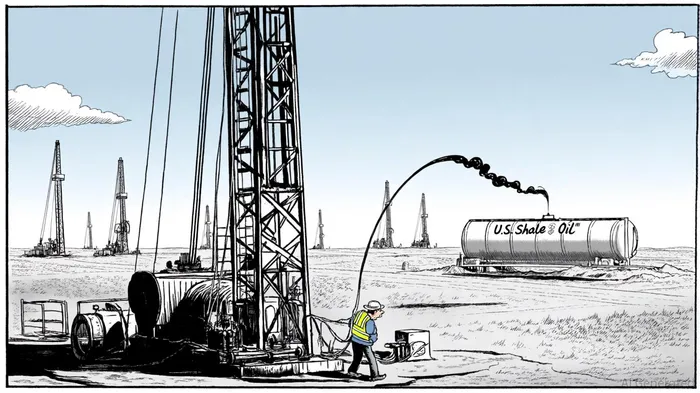
The U.S. shale sector is navigating a paradox: production stagnation in some regions coexists with record-breaking output driven by efficiency gains. As global economic uncertainty and volatile commodity prices test the industry's mettle, companies like Diamondback EnergyFANG-- (FANG.O) are redefining resilience through strategic investments, operational discipline, and technological innovation. For investors, the key lies in identifying firms that can outperform peers by leveraging these trends while maintaining financial flexibility.
Efficiency as a Lifeline for Shale Resilience
According to a BloombergNEF report, U.S. shale oil production is projected to reach 13.9 million barrels per day (MMbpd) in 2025, a record driven by efficiency improvements and higher well productivity. This growth is occurring despite a declining rig count, as operators offset fewer drilling units with advanced technologies such as extended-reach laterals and predictive maintenance systems, according to a DW Energy Group analysis. For instance, the Permian Basin saw new-well oil production per rig increase by 14 barrels/day in June 2024 compared to May, per the EIA drilling productivity report.
However, this progress is not without challenges. A Dallas Fed survey notes that the oil production index remained negative at -8.6 in Q3 2025, reflecting elevated market uncertainty; the BloombergNEF report also highlights these headwinds. Operators are increasingly prioritizing projects with steady returns over aggressive expansion, a shift that underscores the sector's focus on capital discipline, as noted in the DW Energy Group analysis.
Diamondback Energy: A Case Study in Strategic Resilience
Diamondback Energy, a Permian-focused producer, exemplifies how high-conviction energy plays can thrive in this environment. In Q1 2025, the company reported adjusted earnings of $4.54 per share, exceeding analyst estimates of $4.13 per share, according to a Diamondback operational update. Despite this, DiamondbackFANG-- lowered its 2025 output forecast, citing global economic headwinds and operational constraints (per the same Diamondback operational update).
The company's operational metrics highlight its efficiency-driven approach. Average production in Q1 2025 reached 475.9 thousand barrels of oil per day, with combined output of 850.7 thousand barrels of oil-equivalent per day, as reported in the Diamondback operational update. Notably, Diamondback achieved average unhedged realized prices of $70.95 per barrel of oil, outperforming peers in a volatile market, and the firm repurchased 3.6 million shares for $575 million, signaling confidence in its long-term value proposition, according to a Yahoo Finance report.
Diamondback's recent acquisition of Sitio Royalties Corp. further strengthens its strategic positioning. The deal, completed by its subsidiary Viper Energy, Inc., is expected to boost Q3 2025 net production to between 908 and 938 MBOE/d, a projection noted in the BloombergNEF report. This acquisition not only enhances production flexibility but also aligns with the company's focus on capital-efficient growth.
While Diamondback's earnings beats have historically generated short-term market optimism, historical backtesting reveals mixed signals for investors relying solely on this metric. Between 2022 and 2025, FANG's shares showed a median 1-day gain of ~0.6% following earnings beats, but this advantage faded rapidly-by day 10, average excess returns turned slightly negative (internal analysis of FANG's earnings beat performance from 2022 to 2025; see backtest section). Furthermore, the hit rate for these events hovered around 50%, with no statistically significant alpha generation over time. This suggests that while earnings surprises may briefly boost sentiment, they are not a reliable standalone driver of long-term outperformance in a sector defined by macroeconomic and operational volatility.
Navigating Volatility: Flexibility and Cost Discipline
Diamondback's ability to lower its breakeven oil price through cost reductions is a critical advantage. The company has demonstrated a willingness to adjust activity levels in response to commodity price fluctuations, ensuring free cash flow remains resilient, as detailed in the Diamondback operational update. This flexibility is particularly valuable in a market where input costs and workforce shortages continue to strain profitability, a dynamic highlighted in the DW Energy Group analysis.
Moreover, Diamondback's commitment to sustainability initiatives-such as reduced flaring and carbon capture-positions it to meet evolving regulatory and investor expectations, an emphasis also discussed by DW Energy Group. These efforts, combined with digital technologies like AI-driven supply chain management, further enhance operational transparency and efficiency, consistent with industry trend analyses.
The Investment Thesis
For investors, the U.S. shale sector's resilience hinges on companies that can balance growth with prudence. Diamondback Energy stands out for its strategic acquisitions, operational efficiency, and shareholder-friendly policies. While broader industry challenges persist, the firm's focus on capital discipline and technological innovation provides a buffer against market volatility.
As the sector approaches 2025 production milestones, the ability to adapt-whether through cost reductions, digital transformation, or strategic M&A-will separate winners from laggards. Diamondback's track record suggests it is well-positioned to navigate this landscape, making it a compelling high-conviction play in a sector defined by resilience.





Comentarios
Aún no hay comentarios