
The Shadow Market: How Illicit Crypto Platforms Threaten Global Finance and the Investment Opportunities in the Fight Back
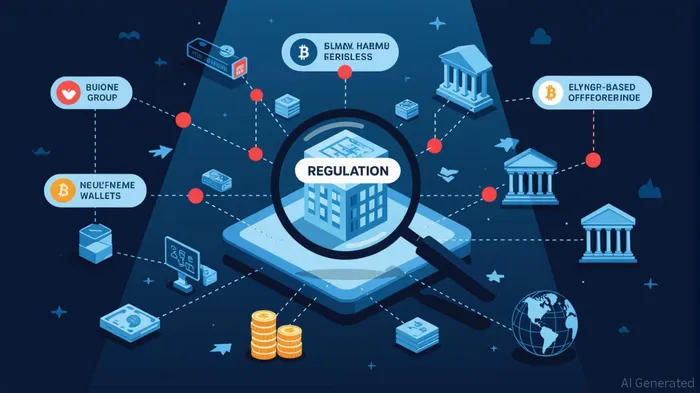
In the shadow of the digital revolution, a new class of financial predators has emerged—illicit crypto platforms that exploit regulatory gaps and technological loopholes to facilitate cybercrime on a global scale. At the forefront of this ecosystem is the Huione Group, a Cambodia-based conglomerate that has become a linchpin for money laundering, fraud, and cyber-enabled crime. From 2023 to 2025, Huione and its subsidiaries—Huione Guarantee, Huione Pay, and Tudou Guarantee—have processed over $70 billion in illicit transactions, enabling everything from pig butchering scams to North Korean cyber heists. Their operations, built on weak KYC controls, Telegram-based coordination, and a fragmented regulatory landscape, highlight a systemic threat to traditional markets and anti-money laundering (AML) frameworks. For investors, this crisis presents both a warning and an opportunity: the stakes are rising, but so is the demand for solutions.
The Huione Model: Exploiting Gaps in Crypto Infrastructure
Huione's success lies in its ability to weaponize the very infrastructure designed to democratize finance. By offering escrow services, digital wallets, and marketplaces for cybercrime tools, the group has created a parallel financial system where trust is replaced by algorithmic guarantees. Vendors post digital asset deposits—ranging from $5,000 to $70,000 in USDT—to signal credibility, while platforms like Huione Pay process transactions with minimal oversight. When regulators or platforms like Telegram crack down, Huione pivots: after a 2025 FinCEN designation and a Telegram ban, the group shifted to Tudou Guarantee, increasing its transaction volume 70-fold.
This adaptability underscores a broader problem. Traditional AML systems, designed for legacy banking, struggle to track decentralized, cross-border flows. Regulators are left playing catch-up as illicit actors migrate to jurisdictions with lax oversight, such as Cambodia, or exploit privacy-enhancing technologies. The result is a financial ecosystem where $46.1 billion in illicit crypto transactions were recorded in 2024 alone, up from $24.2 billion in 2023, according to Chainalysis.
The Investment Response: Fintech, Cybersecurity, and Compliance as the New Frontlines
The rise of platforms like Huione has accelerated investment in three sectors poised to redefine financial security: fintech, cybersecurity, and compliance technology (RegTech).
AI and Machine Learning in AML Systems
By 2025, 90% of financial institutionsFISI-- are projected to use AI-driven AML tools, up from 62% in 2023. These systems detect complex laundering tactics—such as layering and structuring—by analyzing transaction patterns in real time. For example, AI models can reduce false positives by 40% while flagging suspicious activity with higher accuracy. Companies like PalantirPLTR-- and Nuance are leading this charge, integrating natural language processing to parse unstructured data from Telegram channels and dark web marketplaces.
Blockchain and RegTech for Transparent Compliance
Blockchain-based KYC/AML systems are gaining traction, with 15% of compliance processes expected to be digitized by 2025. These systems offer immutable records of transactions and identities, enabling cross-border collaboration. The global RegTech market, valued at $22 billion by mid-2025, is dominated by firms like Trulioo and Onfido, which automate sanctions screening and digital identity verification. Investors should note that 70% of KYC onboarding will be automated by 2025, driven by biometric authentication and AI.
Cybersecurity as a Layered Defense
The convergence of AML and cybersecurity is critical. Financial institutions faced $4.1 billion in cybercrime-related losses in 2023, prompting investments in AI-powered threat detection and multi-signature wallets. The DPRK's $1.5 billion ByBit hack in 2025, for instance, exposed vulnerabilities in social engineering and employee vetting. Cybersecurity firms like CrowdStrikeCRWD-- and CrowdStrike are now integrating AML protocols into their offerings, while blockchain analytics tools like Chainalysis and Elliptic help trace illicit flows.
Strategic Implications for Investors
The systemic threat posed by illicit crypto platforms demands a dual approach: short-term hedging against risks and long-term investment in solutions.
- Short-Term Hedging: Investors should avoid fintech companies with weak AML frameworks or exposure to under-regulated markets. For example, stablecoin issuers like Tether, which have frozen illicit addresses, are better positioned than those with opaque compliance.
- Long-Term Opportunities: Allocate capital to AI-driven AML platforms, blockchain-based compliance tools, and cybersecurity firms with cross-sector expertise. The RegTech market, growing at a 23.5% CAGR, offers high-margin, recurring revenue models. Similarly, privacy-enhancing technologies (PETs), such as zero-knowledge proofs, are gaining traction as regulators balance compliance with data privacy.
Conclusion: The New Gold Rush
The battle against illicit crypto platforms is not just a regulatory challenge—it is a market opportunity. As Huione Group and its ilk exploit gaps in the system, the demand for innovative solutions will only grow. For investors, the key is to align with the forces reshaping finance: artificial intelligence, decentralized compliance, and cybersecurity resilience. The next frontier of financial security is being built not in the shadows, but in the light of technological progress.







Comentarios
Aún no hay comentarios