
The "Shadow" Fed Chair: Navigating Policy Uncertainty in Bond Markets and Rate-Sensitive Sectors
The Federal Reserve's next chair is emerging not just as a central banker but as a potential “shadow” figure—one whose ideological leanings and political ties could reshape monetary policy, bond yields, and the trajectory of rate-sensitive sectors like utilities and real estate. With the current leadership's term expiring in May 2026, the contenders for the role are already influencing markets through expectations. This article examines historical Fed transitions, their impacts on fixed-income assets, and how investors should position portfolios ahead of the next chapter in monetary policy.
A Legacy of Leadership: Historical Fed Transitions and Market Impacts
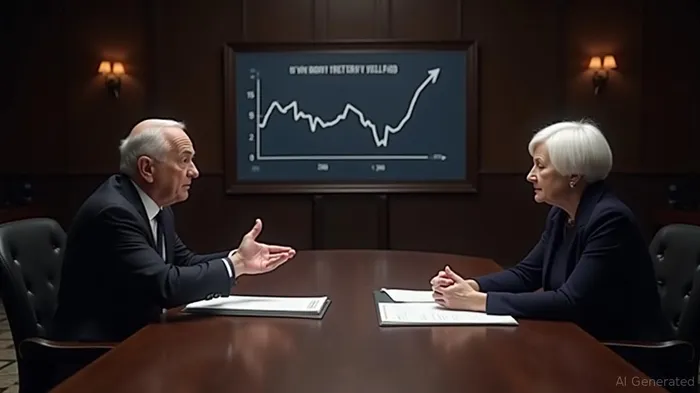
The Fed's chair has always been a pivotal force in financial markets. Paul Volcker's aggressive anti-inflation campaign in the 1980s pushed the federal funds rate to 19%, triggering a bond bear market and spiking mortgage rates to 20%. Alan Greenspan's tenure brought the “Great Moderation,” with gradual rate adjustments that stabilized bond yields and fueled real estate booms. Ben Bernanke's crisis-era policies—quantitative easing and near-zero rates—suppressed yields for over a decade, inflating real estate valuations and utilities' dividend-driven appeal.
The lessons are clear: hawkish chairs raise rates, compressing bond prices and tightening credit for sectors like housing. Dovish leaders lower rates, boosting bond prices but risking inflation. The next chair's stance on independence versus political alignment could amplify these dynamics.
The 2025 Candidates: Ideologies and Implications for Markets
The current field of contenders offers stark contrasts in policy preferences:
Scott Bessent (U.S. Treasury Secretary): A Trump loyalist, Bessent prioritizes growth over independence. His support for aggressive rate cuts to counter tariff-driven economic drag could initially lift bonds and real estate. However, his political ties raise concerns about Fed politicization, potentially spooking long-term bond investors.
Kevin Warsh (Former Fed Governor): A seasoned insider, Warsh advocates for policy continuity. His focus on inflation control and central bank autonomy could mean slower rate cuts than markets expect, keeping yields elevated and constraining real estate valuations.
Kevin Hassett (White House Adviser): A pro-stimulus advocate, Hassett's preference for lower rates to boost growth could drive a bond rally. Utilities and REITs might benefit from cheaper financing, but his alignment with Trump's expansionary agenda could fuel inflation fears, capping gains.
David Malpass (Former World Bank Leader): Malpass's globalist perspective emphasizes trade and fiscal policy linkages. His approach might lead to cautious rate adjustments, balancing growth and inflation. This could create a “Goldilocks” environment for utilities but leave real estate vulnerable to rate-sensitive demand shifts.
Christopher Waller (Current Fed Governor): A data-driven moderate, Waller's adherence to the Fed's dual mandate could mean gradual policy shifts. Bond markets might consolidate, while real estate faces mixed signals as affordability and demand oscillate.
Positioning Portfolios: Balancing Risk and Reward
Investors must prepare for both the announced policies and the “shadow” effects of political influence. Here's how to navigate the uncertainty:
Fixed-Income Strategy:
- Shorten Duration: If a politically aligned candidate (e.g., Bessent) wins, expect volatility in long-dated Treasuries. Shift to short-term bonds (e.g., ) to mitigate rate risks.
- Inflation-Linked Bonds: For candidates like Hassett, who may tolerate higher inflation, Treasury Inflation-Protected Securities (TIPS) offer a hedge.
Rate-Sensitive Sectors:
- Utilities: Their stable dividends appeal in low-rate environments. However, a hawkish chair like Warsh could pressure multiples. Consider sector ETFs with low beta to interest rates.
- Real Estate: REITs thrive in low-rate regimes but face headwinds if rates rise. Focus on high-quality, income-focused REITs and avoid leveraged players.
Hedging Against Policy Uncertainty:
- Inverse Rate ETFs: Products like TLT (long Treasury bonds) could be paired with inverse ETFs (e.g., TBF) to offset directional bets.
- Diversify Globally: Emerging markets bonds or European utilities may offer yield pickup while reducing Fed-specific exposure.
Conclusion: The Fed Chair Race Is the New Risk Factor
The next Fed chair's ideology will define whether bonds rally or stumble, and whether utilities and real estate ride rate cuts or face a reckoning. Investors must treat this transition as a macro risk akin to trade wars or geopolitical shifts.
For now, favor flexibility. Shorten bond durations, lean into utilities' defensive qualities, and hedge against rate surprises. The “shadow” of political influence looms large—prepare to pivot as the Fed's next chapter unfolds.
This analysis is for informational purposes only and should not be considered investment advice. Always consult a financial advisor before making investment decisions.







Comentarios
Aún no hay comentarios