
SFX's USDT Integration and the Future of Stablecoin-Driven Neobanking
The integration of stablecoins into neobanking platforms is redefining the global financial landscape, and SFX, a crypto-native neobank, stands at the forefront of this transformation. By leveraging USDTUSDT-- and USDCUSDC--, SFX is addressing critical pain points in cross-border payments and financial inclusion, offering a compelling case for investors seeking exposure to blockchain-driven innovation. This analysis evaluates SFX's strategic edge, contextualized by regulatory tailwinds, technological differentiation, and performance metrics in emerging markets.
Strategic Advantages: Partnerships, Compliance, and Technology
SFX's integration of USDT and USDC is underpinned by strategic partnerships and regulatory alignment. The neobank has partnered with Visa to issue virtual cards, enabling users to spend stablecoins seamlessly in traditional and digital ecosystems. This mirrors the user-centric approach of competitors like FreeBnk but combines it with the institutional credibility of USDC, which is fully backed by cash and short-term U.S. Treasuries and subject to monthly audits. Meanwhile, SFX's adoption of the U.S. GENIUS Act framework-requiring stablecoin reserves to be 1:1 backed by U.S. dollars or Treasuries-positions it as a trusted player in institutional cross-border settlements.
Compared to rivals, SFX's hybrid model offers a unique value proposition. While Circle's USDC prioritizes regulatory compliance and Tether's USDT relies on its market dominance, SFX bridges the gap by integrating stablecoin infrastructure with fiat-backed liquidity and real-time spending tools. This approach not only reduces transaction costs often below 1% for cross-border transfers but also bypasses the volatility and intermediaries inherent in traditional systems.
Performance in Emerging Markets: A Case for Financial Inclusion
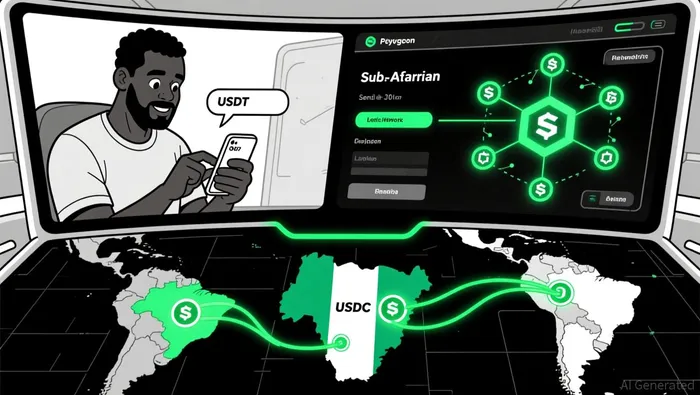
SFX's impact is most pronounced in underserved regions, where stablecoins are bridging gaps in access to global commerce. In Sub-Saharan Africa, for instance, stablecoin transaction volumes surged to $200 billion in 2025, with Nigeria and South Africa leading adoption. SFX's integration of USDT on the Polygon network has enabled instant deposits and withdrawals, reducing costs and delays for diaspora remittances. Similarly, in Latin America, where 71% of firms use stablecoins for cross-border payments, SFX's solutions have cut fees by up to 95% compared to traditional methods.
The neobank's focus on financial inclusion is further validated by macroeconomic trends. In Brazil, stablecoins accounted for 90% of crypto transactions in 2025, driven by inflationary pressures and the need for U.S. dollar-linked stability. By offering Visa-backed virtual cards, SFX empowers users in non-dollarized economies to access global payment systems without relying on underdeveloped local banking infrastructure.
Regulatory Tailwinds and Institutional Adoption
The regulatory environment is a critical enabler of SFX's growth. The GENIUS Act, enacted in July 2025, has provided clarity on stablecoin reserves and anti-money laundering (AML) compliance, fostering institutional trust. This aligns with broader trends: Fireblocks reported that 86% of firms now consider their infrastructure ready for stablecoin adoption, with cross-border payments as the top use case. SFX's adherence to these frameworks positions it to capitalize on the projected $60 trillion in stablecoin transaction volumes by 2029.
Moreover, SFX's integration with enterprise-grade platforms like sFOX and Finastra underscores its role in modernizing legacy systems. These partnerships enable real-time liquidity management and seamless blockchain integration, addressing operational inefficiencies in traditional cross-border workflows.
Challenges and Mitigation Strategies
Despite its strengths, SFX faces challenges. Stablecoin adoption in emerging markets remains constrained by limited on/off ramps and technical complexity. However, SFX's focus on user-friendly tools-such as its Visa-backed virtual cards-mitigates these barriers by simplifying access to blockchain-based payments. Regulatory uncertainties in regions like Southeast Asia also persist, but the neobank's alignment with global frameworks (e.g., MiCA in the EU) provides a buffer against fragmentation.
Conclusion: A Strategic Play in the Future of Finance
SFX's integration of USDT and USDC represents a strategic convergence of technological innovation, regulatory foresight, and market demand. By targeting cross-border payments and financial inclusion, the neobank is not only reducing costs and settlement times but also democratizing access to global financial systems. With stablecoin transaction volumes projected to rival traditional card networks and institutional adoption accelerating, SFX is well-positioned to lead the next phase of blockchain-driven finance. For investors, the neobank's ability to scale in emerging markets while navigating regulatory complexities offers a compelling long-term opportunity.





Comentarios
Aún no hay comentarios