
ServiceTitan's Q3 2026 Earnings Performance and Strategic Outlook: Assessing Operational Efficiency and Long-Term Growth in the SaaS Trades Sector
ServiceTitan (NASDAQ: TTAN) has long positioned itself as a transformative force in the SaaS trades sector, leveraging automation and AI to empower small businesses in industries like HVAC, plumbing, and electrical services. As the company prepares to release its Q3 2026 earnings on December 4, 2025, investors are keenly focused on its operational efficiency metrics and strategic direction. This analysis evaluates ServiceTitan's recent performance, its progress in optimizing key financial indicators, and its long-term vision for dominating the trades market.
Q3 2026 Earnings: Strong Revenue Growth, Mixed Profitability Signals
ServiceTitan's Q3 2026 results are expected to reflect robust top-line growth, with revenue projected between $237 million and $239 million, representing a 19.66% year-over-year increase. This aligns with the Zacks Consensus Estimate of $238.45 million. The company's gross transaction volume (GTV) has also surged, with Q2 2026 data showing a 19% YoY rise to $22.9 million, driven by new user acquisition and increased platform usage. Such growth underscores ServiceTitan's ability to scale its platform in a fragmented market.
However, profitability remains a mixed picture. While the company reported a non-GAAP operating margin of 8.6% in Q3 2025, its GAAP operating loss widened to $42.2 million in the same period. This discrepancy highlights the challenges of balancing aggressive growth investments with near-term profitability. ServiceTitan's focus on expanding its AI-driven tools, such as Titan Intelligence, and enhancing automation capabilities for tradespeople suggests a strategic trade-off: prioritizing long-term market dominance over short-term margins.
Operational Efficiency: Progress in Margins, but CAC and LTV/CAC Remain Unclear
ServiceTitan's operational efficiency is a critical metric for SaaS investors. The company's non-GAAP operating margin improved to 8.6% in Q3 2025, up from negative margins in prior years, indicating progress in cost management. Additionally, free cash flow surged to $37.7 million in Q3 2025, a 255% increase compared to $10.6 million in the same period the previous year. These figures suggest ServiceTitanTTAN-- is becoming more adept at converting revenue into cash, a positive sign for sustainability.
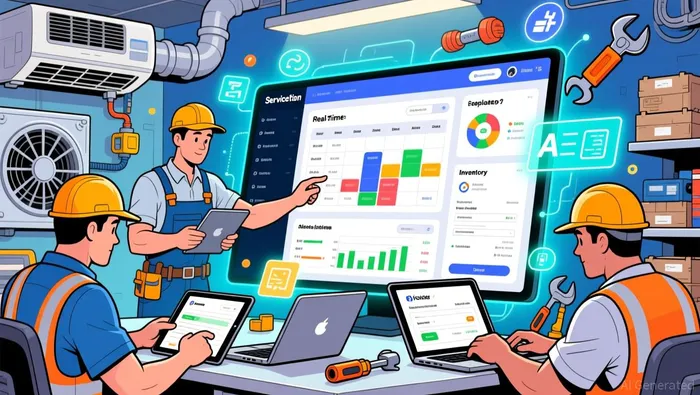 That said, key metrics like customer acquisition cost (CAC) and the lifetime value to CAC ratio remain undisclosed in the latest reports. For SaaS companies, LTV/CAC is a vital indicator of unit economics; a ratio above 3:1 is generally considered healthy. While ServiceTitan's GTV growth and expanding user base imply strong customer retention and monetization potential, the absence of granular data leaves room for caution. Investors will need to await the December 4 earnings call for clarity on how the company is optimizing CAC and improving customer lifetime value.
Strategic Initiatives: AI, Automation, and the "Operating System for the Trades" Vision
ServiceTitan's long-term strategy hinges on three pillars: democratizing automation for tradespeople, expanding its AI capabilities, and building an integrated platform that serves as the "operating system for the trades." The launch of Titan Intelligence, an AI-powered tool for predictive scheduling and customer insights, has already driven adoption among users. This aligns with broader industry trends, as trades businesses increasingly seek digital solutions to streamline operations and compete with larger firms.
The company's focus on automation is particularly noteworthy. By reducing manual tasks for contractors-such as invoicing, scheduling, and inventory management-ServiceTitan is not only improving efficiency for its customers but also creating a flywheel effect: higher usage drives more data, which in turn enhances the AI tools, further deepening customer reliance on the platform. This virtuous cycle could position ServiceTitan as a dominant player in a market projected to grow significantly as small businesses digitize.
Long-Term Growth Potential: Market Leadership and Scalability
ServiceTitan's long-term outlook is anchored in its ambition to become the de facto platform for trades businesses. The company's full-year 2026 revenue guidance of $951–$953 million reflects confidence in its ability to maintain a 20%+ growth rate, even as it scales. This is no small feat in a sector historically characterized by low digital adoption.
The expansion of FinTech capabilities-such as embedded payment solutions and financing options-further diversifies ServiceTitan's revenue streams and strengthens customer stickiness. By addressing pain points beyond software, such as cash flow management for contractors, the company is broadening its value proposition and reducing churn.
However, risks remain. The SaaS trades sector is still nascent, and ServiceTitan faces competition from niche players and larger tech firms entering the space. Additionally, its heavy investment in R&D and sales could strain margins if customer acquisition costs rise faster than anticipated.
Conclusion: A Promising but Evolving Story
ServiceTitan's Q3 2026 earnings and strategic initiatives paint a picture of a company in transition. While revenue growth and operational improvements are encouraging, the lack of transparency around CAC and LTV/CAC metrics means investors must rely on indirect indicators like GTV and free cash flow to assess efficiency. The company's AI-driven automation and platform vision, however, offer a compelling long-term narrative.
As ServiceTitan hosts its December 4 earnings call, stakeholders should pay close attention to how management addresses these operational metrics and outlines its roadmap for profitability. For now, the company's ability to balance growth with margin expansion-and its clear leadership in a high-potential sector-makes it a stock worth watching in 2026 and beyond.







Comentarios
Aún no hay comentarios