
Serco's Strategic Position in U.S. Navy Defense Tech: A Long-Term Growth Catalyst
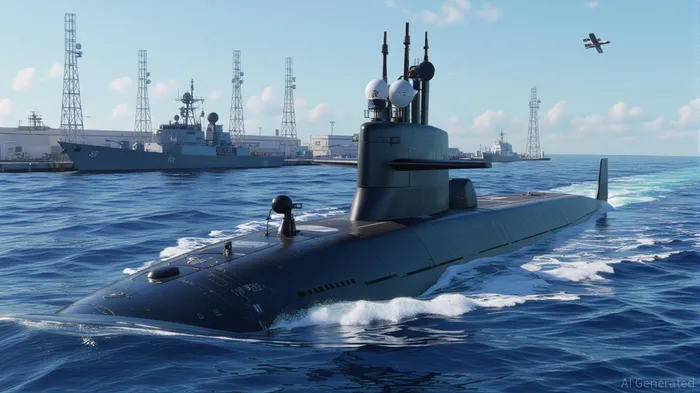
The U.S. Navy's 2025 modernization agenda is anchored on maintaining technological superiority in an era of escalating geopolitical tensions. At the heart of this effort lies Serco Inc.'s $97 million Indefinite-Delivery/Indefinite-Quantity (IDIQ) contract to support the Submarine High Data Rate (SubHDR) antenna systems—a 10-year agreement with a five-year base period and five optional years[1]. This renewal, following two decades of collaboration with the Navy, underscores Serco's critical role in ensuring secure, high-capacity communication for the submarine fleet. For investors, the contract represents not just a milestone for Serco but a testament to the resilience of the defense sector and the enduring value of long-term, high-margin partnerships.
SubHDR: A Cornerstone of Naval Information Superiority
The SubHDR system is a linchpin of the Navy's ability to conduct mission-critical operations. It enables the transmission of voice, data, imagery, and video traffic at high speeds, ensuring real-time coordination in contested environments[2]. According to a report by Future Market Insights, the global tactical communications market—encompassing systems like SubHDR—is projected to grow at a 5.9% CAGR, reaching $39.6 billion by 2035[3]. This growth is driven by the need for interoperable, secure networks that can withstand cyber threats and jamming. Serco's deep expertise in maintaining and modernizing these systems positions it as an indispensable partner for the Navy, which prioritizes continuity in its defense infrastructure.
The 20-year partnership between Serco and the Navy highlights the company's ability to align with the service's long-term strategic goals. As stated by Serco in its press release, the contract will be executed from facilities in Massachusetts and Virginia, with additional support in Rhode Island[1]. This localized infrastructure ensures rapid response times and technical agility—critical factors in maintaining operational readiness.
Defense Sector Resilience: Budget Trends and Technological Shifts
The U.S. defense budget for 2025 is expected to reach $886 billion, with a significant portion allocated to communication systems and satellite technologies[4]. Government and military satellite communications (Satcom) spending alone is forecast to grow at 7–10% annually, hitting $64 billion by 2030[5]. This surge reflects the Navy's reliance on resilient, low-latency networks for coordinating drones, surveillance assets, and global operations. Serco's involvement in such systems—coupled with its recent acquisition of Northrop Grumman's mission training and satellite ground network communications software business—positions it to capitalize on these trends[6].
Moreover, the Pentagon's shift toward mission-based planning emphasizes resource efficiency and strategic prioritization[7]. Serco's high contract retention rates (90% in North America) and recurring revenue model align perfectly with this approach. As noted in Serco's H1 2025 earnings call, the company's North American defense services achieved a 10.6% operating margin, outperforming its overall group margin of 6%[8]. This margin resilience, combined with organic growth of 9% in the region, highlights the financial durability of defense contracts.
Financial Strength and Recurring Revenue Potential
Serco's financial performance reinforces its appeal as a long-term investment. In H1 2025, defense contracts accounted for over 80% of the company's £3.2 billion order intake[8]. The acquisition of Northrop Grumman's MT&S business is expected to generate $300 million in annual revenue, further solidifying Serco's North American footprint[9]. With full-year 2025 guidance projecting a 1% revenue increase and a £50 million share buyback program[10], the company demonstrates confidence in its ability to sustain growth.
The SubHDR contract, in particular, exemplifies Serco's recurring revenue potential. Its 10-year structure—with optional extensions—provides predictable cash flows, while the Navy's emphasis on secure, high-data-rate systems ensures demand for Serco's services remains robust. As the global defense sector pivots toward AI-integrated communication systems and autonomous maritime platforms[11], Serco's technical expertise and customer loyalty will likely drive further contract wins.
Conclusion: A Compelling Long-Term Investment
Serco's strategic alignment with the U.S. Navy's modernization priorities, combined with its proven ability to deliver high-margin, recurring revenue, makes it a standout player in the defense sector. The SubHDR contract renewal not only validates Serco's technical capabilities but also underscores the Navy's trust in its long-term partnership. As defense budgets expand and technological demands evolve, Serco's position as a key enabler of naval communication superiority will likely translate into sustained growth for investors.







Comentarios
Aún no hay comentarios