
How September's PCE Data Could Influence Fed Policy in Q4 2025
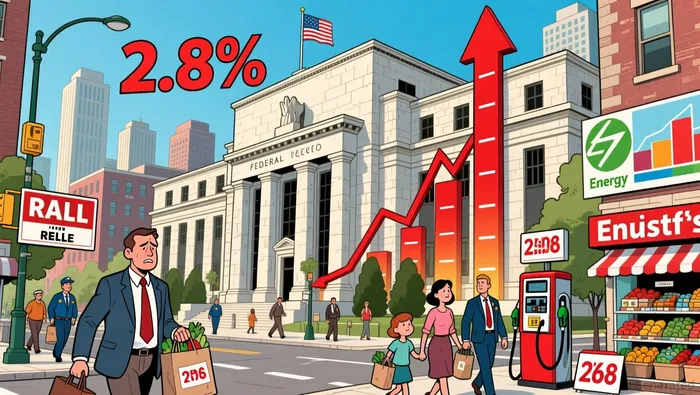
The September 2025 U.S. Personal Consumption Expenditures (PCE) inflation data, released on December 5, 2025, underscored the persistent challenge of inflation stickiness. The PCE price index rose 0.3% monthly and 2.8% year-over-year, while core PCE inflation-excluding food and energy-increased 0.2% monthly and 2.8% annually according to data. These figures, aligned with economists' expectations, highlight a critical juncture for the Federal Reserve as it navigates the delicate balance between curbing inflation and supporting a labor market showing signs of strain.
Inflation Stickiness: Structural Constraints and Fiscal Realities
The Federal Reserve's 2% inflation target remains elusive, with core PCE inflation stubbornly hovering above this threshold. Structural factors are amplifying this stickiness. Labor market constraints, including historically low labor force participation rates and an aging population, are driving wage pressures. Meanwhile, housing shortages-nearly 5 million units below demand-and energy bottlenecks, exacerbated by surging electricity demand from artificial intelligence and data centers, are locking in upward price momentum.
 Fiscal constraints further complicate the Fed's toolkit. With federal debt nearing 120% of GDP and deficits approaching 7% of GDP, the government's capacity to offset tighter monetary policy through fiscal stimulus is limited. This environment forces the Fed to tread carefully, as aggressive rate hikes could exacerbate fiscal vulnerabilities without resolving structural inflationary pressures.
Fed Policy: Cautious Rate Cuts and Dovish Signals
In response to these dynamics, the Federal Reserve initiated a rate-cutting cycle in October 2025, reducing the federal funds rate by 25 basis points. This decision reflected a shift toward accommodative policy, driven by weakening labor market indicators and the Fed's acknowledgment that inflation has not accelerated as previously feared, despite rising tariffs.
However, Fed Chair Jerome Powell has emphasized the need for vigilance. While the September PCE data showed a slight moderation in core inflation, the 2.8% annual rate remains above target, and the Fed's dual mandate of price stability and maximum employment continues to weigh heavily. As a result, the central bank is likely to adopt a measured approach in Q4 2025, with further rate cuts expected in 2026 but only if inflation shows sustained progress toward 2%.
Bond Market Implications: Yield Curves and Investor Sentiment
The September PCE data has already influenced bond markets. Short-term Treasury yields rallied as investors priced in the likelihood of near-term rate cuts, while long-term yields rose due to persistent inflation concerns and worries about the sustainability of U.S. debt levels. This divergence has led to a steepening yield curve, with nominal Treasury yields falling 20–40 basis points over the intermeeting period.
Investor sentiment in bond markets has improved, with the Bloomberg U.S. Aggregate Bond Index posting a 1.20% gain in August 2025. Corporate bond spreads have also tightened, reflecting strong credit market confidence. However, the Fed's pause in balance sheet reduction-a signal to stabilize liquidity-suggests that term premiums and inflation expectations will remain elevated, keeping long-duration bonds vulnerable to volatility.
Equity Valuations: Dovish Policy and Portfolio Rebalancing
The Fed's dovish stance has provided a tailwind for equities. The S&P 500 reached all-time highs in Q3 2025, supported by expectations of accommodative monetary policy and corporate earnings resilience. However, the stickiness of inflation has reshaped portfolio strategies. Investors are increasingly favoring companies with pricing power and real assets such as commodities and infrastructure, which offer inflation hedging according to Morgan Stanley analysis.
Conversely, long-duration equities and bonds face headwinds in a higher-for-longer inflation environment. The focus on "quality" and defensive sectors reflects a recalibration of risk-return profiles, as investors seek to mitigate the drag of persistent inflation on nominal returns according to Morgan Stanley research.
Conclusion: Navigating a Complex Policy Landscape
The September PCE data reinforces the Fed's challenging path in Q4 2025. While structural inflationary pressures and fiscal constraints limit the central bank's flexibility, the recent rate cuts signal a recognition of labor market vulnerabilities. For investors, the key lies in balancing the risks of inflation persistence with the opportunities created by dovish policy. Bond markets will remain sensitive to inflation expectations, while equities will continue to reflect a tug-of-war between accommodative monetary policy and structural economic headwinds.
As the Fed calibrates its approach, market participants must stay attuned to evolving data and policy signals, ensuring portfolios are resilient to both inflationary shocks and shifting monetary conditions.







Comentarios
Aún no hay comentarios