
Seoul Semiconductor's Trusted Supply & LED Innovations: A Strategic Edge in a Volatile Semiconductor Landscape
The global semiconductor industry faces a perfect storm of geopolitical tensions, supply chain fragility, and rapid technological evolution. Against this backdrop, Seoul Semiconductor’s (KOSDAQ: 046890) unveiling of its Trusted Supply system and three world-first LED technologies at LightFair International 2025 (LFI 2025) positions it as a critical player in the race for supply chain resilience and innovation. This analysis explores how the company’s strategic moves could translate into investment opportunities—and risks—in a high-stakes market.
The Trusted Supply System: Anchoring Reliability in Chaos
Seoul Semiconductor’s Trusted Supply framework is built on a global production network spanning the U.S., South Korea, China, and Vietnam. This decentralized setup ensures 100% on-time delivery even amid disruptions like the 2020 pandemic or 2024’s Hurricane Helene, which temporarily halted U.S. quartzQSEAU-- mining. For North American customers, this reliability is a lifeline in an era of tariff wars and supply chain nationalism.
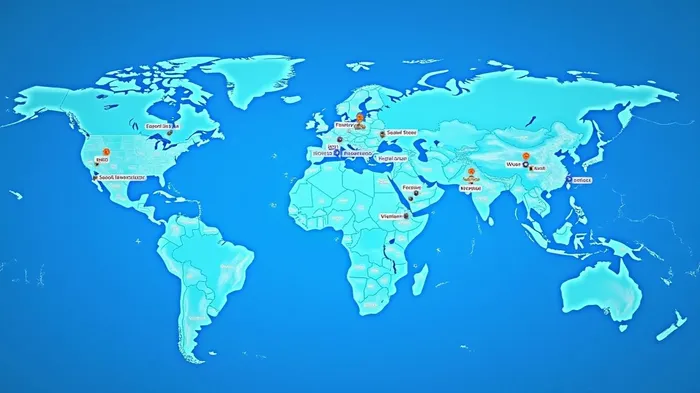
The system directly addresses two 2025 industry trends:
1. Onshoring/Reshoring Demand: U.S. firms are prioritizing local suppliers to avoid Asian dependency. Seoul’s U.S. facilities and tariff-mitigation strategies align with this push.
2. Climate Risks: Natural disasters threaten critical materials (e.g., quartz for semiconductors). Seoul’s diversified network reduces exposure to such disruptions.
Three World-First Technologies: Redefining LED Applications
At LFI 2025, Seoul showcased three breakthroughs:
- SunLike: A natural-spectrum LED mimicking sunlight to improve circadian rhythms and eye health. With global sleep disorders costing $30 billion annually in healthcare, this tech targets smart lighting, healthcare, and automotive interiors.
- WICOP: A compact, wire-free LED offering 20% higher energy efficiency than rivals. Ideal for IoT devices, where low-power consumption is critical.
- Acrich: A high-voltage LED eliminating the need for DC converters, simplifying designs for smart home and industrial lighting.
These innovations are underpinned by 18,000+ patents and a 10% R&D-to-revenue ratio—far exceeding the 6-8% average for semiconductor firms.
Competitive Advantages: Patents, Legal Strength, and ESG Alignment
Seoul Semiconductor’s legal moat includes over 100 patent litigation victories across 8 countries in 20 years, deterring infringement. Its subsidiary, Seoul Viosys, extends leadership in UV sterilization (via Violeds) and MicroLEDs, critical for healthcare and next-gen displays.
Moreover, its technologies align with ESG trends:
- SunLike reduces blue-light emissions, addressing health concerns.
- WICOP’s energy efficiency supports corporate sustainability goals.
Market Opportunities: Riding IoT and AI Growth
The semiconductor industry’s 13% annual IoT device growth (to 18.8B units by end-2024) and 19% revenue growth in AI chips in 2024 create tailwinds:
- WICOP could dominate low-power IoT edge devices, where cost efficiency is paramount.
- SunLike targets health tech, with sleep-related LED lighting expected to grow at 8-10% CAGR through 2030.
Risks: Geopolitical Crosshairs and Talent Shortages
- Trade Restrictions: U.S.-China tensions could disrupt Seoul’s China-based facilities. The company’s U.S. and Vietnam operations may mitigate this but require sustained investment.
- Talent Gaps: A global shortage of semiconductor engineers could slow R&D. Seoul’s focus on agentic AI (AI-driven design tools) may offset this, but execution remains key.
- Supply Chain Volatility: While Trusted Supply reduces risks, climate disasters (e.g., hurricanes) or geopolitical conflicts (e.g., Korea-Japan tensions) could still disrupt production.
Conclusion: A Strategic Bet with High Upside—But Watch the Horizon
Seoul Semiconductor’s Trusted Supply and LED innovations position it to capitalize on $1.24B annual smartphone sales, 273M PC shipments, and $30B+ IoT budgets in North America. Its R&D intensity, patent portfolio, and supply chain resilience form a robust foundation for growth.
However, investors must monitor:
1. Geopolitical Developments: U.S. export controls or trade agreements could disrupt supply networks.
2. Market Adoption: SunLike’s penetration in health tech and WICOP’s scalability for IoT.
With a 34-year industry cycle history of frequent contractions, agility remains critical. Yet, Seoul’s 18,000 patents and 10% R&D spend suggest it’s prepared to navigate turbulence. For investors seeking exposure to a resilient, innovation-driven semiconductor firm, Seoul Semiconductor’s Trusted Supply strategy—and its world-first LEDs—could be a bright spot in a dimming sector.
Final Take: A Hold to Buy recommendation for investors prioritizing long-term R&D-driven growth, tempered by geopolitical vigilance.







Comentarios
Aún no hay comentarios