
Senator Warren Proposes Tough Crypto Regulations Opposing Republican Framework
Senator Elizabeth Warren (D-Mass.) has introduced a stringent set of principles for regulating the cryptocurrency industry, positioning herself as a formidable opponent to the proposals put forth by Republican lawmakers. As the top Democrat on the Senate Banking Committee and a vocal critic of digital assets, Warren is advocating for robust regulations to safeguard the financial system from the perceived risks associated with the crypto space.
Warren's initiative is a direct response to the framework proposed by Senate Banking Chair Tim Scott (R-S.C.) and Senators Cynthia Lummis (R-Wyo.), Thom Tillis (R-N.C.), and Bill Hagerty (R-Tenn.). The Republican framework, introduced in late June, emphasizes innovation and lighter regulation, which Warren strongly opposes. She argues that this approach could undermine securities laws and pose risks to the traditional financial system. Warren insists that crypto should adhere to the same regulatory standards as the rest of the financial world, rather than receiving special treatment.
Warren's regulatory framework is built around four key objectives: protecting the financial system from instability, enforcing anti-money laundering (AML) laws, ensuring investor safety, and preventing public officials from using crypto for personal gain. She also highlights concerns over "presidential crypto corruption," citing President Donald Trump’s and his family’s involvement in stablecoins, meme coins, and bitcoinBTC-- mining. Warren argues that any regulatory framework for crypto must also address the potential for political corruption.
Republican lawmakers, on the other hand, are prioritizing innovation. Their framework advocates for updated regulations that are "targeted" and "pro-innovation," suggesting that financial agencies should be receptive to the growth of crypto. Warren, however, believes this approach prioritizes industry interests over investor protections, potentially leading to future financial issues.
The Senate is gearing up for a legislative battle as both parties push competing crypto bills. Following the passage of the GENIUS Act, which focuses on stablecoin regulation, the Senate is set to introduce a broader crypto market structure bill. This bill will address the division of oversight between the Securities and Exchange Commission (SEC) and the Commodity Futures Trading Commission (CFTC). Senators Scott and Lummis have set a new deadline of the end of September for passing the full bill, slightly later than their original August timeline.
Warren's proposed framework represents a tougher stance on crypto regulation, contrasting sharply with the Republican vision. The upcoming legislative battle will determine the future regulatory landscape for the cryptocurrency industry in the United States. 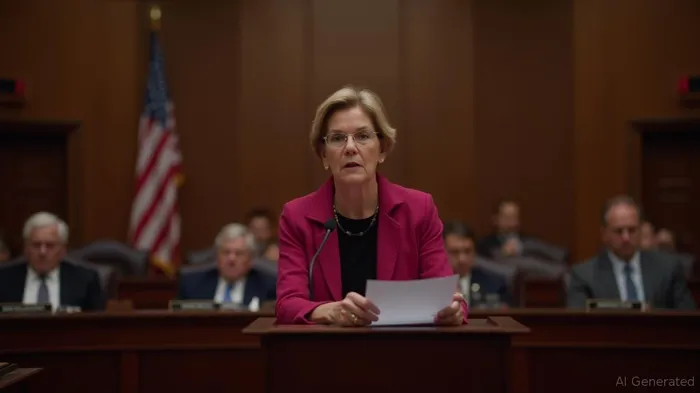






Comentarios
Aún no hay comentarios