
Semtech's Convertible Notes Offering and Strategic Debt Refinancing: A Path to Capital Structure Optimization
Semtech's Convertible Notes Offering and Strategic Debt Refinancing: A Path to Capital Structure Optimization
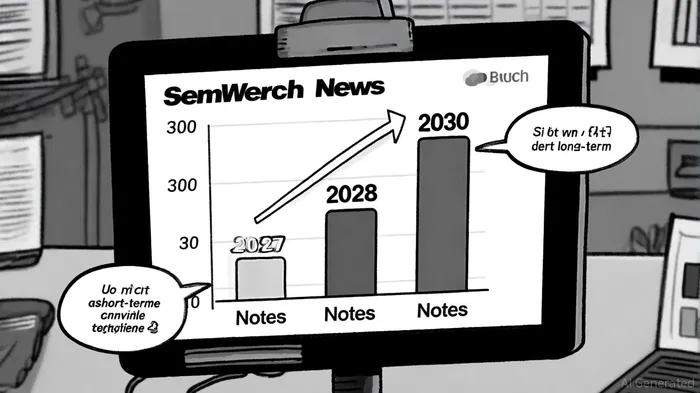
In the ever-evolving landscape of corporate finance, strategic debt management is a critical lever for optimizing capital structures and enhancing shareholder value. SemtechSMTC-- Corporation's recent $350 million convertible notes offering-alongside its refinancing of existing obligations-exemplifies a nuanced approach to balancing liquidity, cost efficiency, and growth potential. By extending maturity profiles, reducing interest burdens, and mitigating equity dilution risks, Semtech's actions reflect a disciplined strategy to align its financial architecture with long-term operational goals.
A Shift in Maturity and Cost Dynamics
Semtech's new 0% convertible senior notes due 2030, as detailed in Semtech's proposed private offering, replace portions of its 2027 and 2028 convertible notes, which carried interest rates of 1.625% and 4.00%, respectively, according to the pricing announcement. While the 2027 notes offered a modest yield, their 2028 counterparts imposed a significant cost burden. By refinancing these obligations with zero-coupon instruments, Semtech eliminates approximately $21.9 million in annual interest expenses (assuming full replacement of the 2028 notes). This shift not only reduces near-term cash outflows but also extends the maturity timeline, deferring refinancing pressures to a period when market conditions may be more favorable, according to Semtech's closing announcement.
The new notes' conversion price of $101.05 per share-42.5% above the stock price at issuance-further underscores Semtech's focus on cost optimization. This premium, higher than the 27.5% premiums embedded in the 2027 and 2028 notes reported earlier, ensures that conversions, if they occur, will not immediately dilute existing shareholders. Additionally, the company's capped call transactions, which limit potential dilution to a cap price of $141.82 per share, are described in the pricing release and provide a buffer against volatile equity movements. These measures collectively demonstrate a proactive stance in managing the trade-off between debt flexibility and equity preservation.
Strategic Implications for Shareholder Value
The refinancing also addresses liquidity constraints. By allocating $220.6 million of the offering proceeds to repay term loans under its senior credit facilities, Semtech reduces leverage and strengthens its balance sheet. This action lowers financial risk, potentially improving credit metrics and reducing the cost of future borrowings. For shareholders, this translates to a more resilient capital structure that can withstand macroeconomic headwinds while preserving capacity for strategic investments.
However, the success of this strategy hinges on the performance of Semtech's stock. If the share price appreciates beyond the conversion cap, the capped calls will limit dilution but may also constrain upside for shareholders. Conversely, if the stock underperforms, the company's reliance on equity-linked instruments could amplify downside risks. Bloomberg analysts have noted that such hybrid instruments require careful monitoring to ensure they align with evolving market dynamics.
Future Growth and Capital Allocation
Semtech's decision to prioritize long-term debt over short-term obligations reflects a broader commitment to sustainable growth. By extending its debt maturity profile, the company gains greater flexibility to allocate capital toward innovation and market expansion. This is particularly relevant in Semtech's core sectors-wireless infrastructure and industrial IoT-where technological advancements demand sustained R&D investment.
Moreover, the use of proceeds to exchange existing convertible notes (rather than outright repayment) suggests a preference for maintaining debt flexibility. This approach allows Semtech to retain liquidity while managing its debt-servicing obligations. As highlighted in a report by Reuters, such tactical refinancing is increasingly common among technology firms seeking to navigate interest rate volatility without compromising operational agility.
Conclusion
Semtech's convertible notes offering and debt refinancing strategy exemplify the delicate art of capital structure optimization. By reducing interest costs, extending maturities, and hedging equity risks, the company positions itself to navigate near-term uncertainties while preserving resources for long-term innovation. For investors, this signals a management team that prioritizes fiscal discipline and strategic foresight-qualities that are indispensable in today's unpredictable markets.





Comentarios
Aún no hay comentarios