
Sempra Energy: Strategic Positioning in the Clean Energy Transition
The U.S. energy transition is accelerating, driven by legislative tailwinds and shifting market dynamics. SempraSRE-- Energy, a major player in regulated infrastructure and clean energy, is navigating this transformation with a dual focus on decarbonization and long-term growth. As the company unveils a $56 billion capital expenditure plan for 2025–2029[1], its strategic alignment with the Inflation Reduction Act (IRA) and state-level regulatory frameworks positions it to capitalize on decarbonization-driven demand while addressing the financial realities of a rapidly evolving sector.
Regulated Infrastructure as a Growth Engine
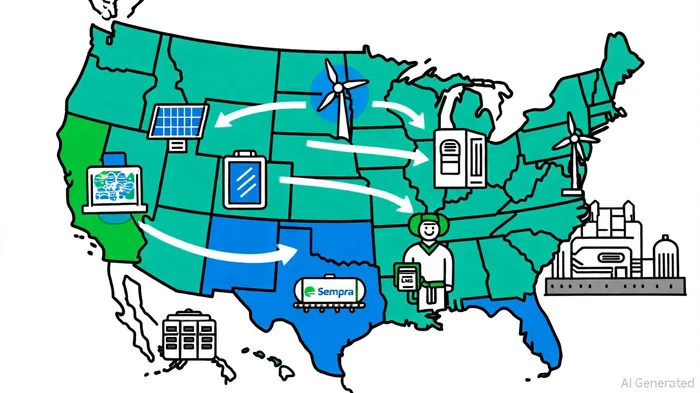
Sempra's strategy hinges on its regulated utility operations in California and Texas, which account for over 90% of its capital investments[2]. These regions are pivotal for the company's ability to modernize energy systems and meet decarbonization targets. In California, Sempra's utilities—San Diego Gas & Electric (SDGE) and Southern California Gas (SoCalGas)—are advancing projects such as battery storage expansion and renewable natural gas (RNG) procurement[3]. For instance, SDGE's Westside Canal Battery Energy Storage facility and SoCalGas's RNG contracts underscore the company's commitment to reducing emissions while maintaining grid reliability[3].
In Texas, Oncor Electric Delivery, Sempra's subsidiary, is leveraging regulatory reforms like House Bill 5247 to improve returns on infrastructure investments[4]. The state's growing electricity demand, driven by industrial activity and population growth, further amplifies the potential for Oncor's expansion. With approximately 95% of Sempra's future earnings projected to come from regulated utilities[5], the company's focus on these markets aligns with the stable cash flows typical of utility operations.
Strategic Transactions and Financial Resilience
Sempra's recent decision to sell a 45% stake in Sempra Infrastructure Partners to a KKR-led consortium for $10 billion[6] highlights its efforts to strengthen financial flexibility. This transaction, expected to close in 2026, will fund the 2025–2029 capital plan without requiring equity issuance[6], a critical advantage in a capital-intensive industry. The proceeds also allow Sempra to divest non-core assets, such as Ecogas México, and sharpen its focus on U.S. utility operations[4].
The company's Infrastructure Partners division is also advancing high-impact projects like the $14 billion Port Arthur LNG Phase 2, which will add 13 million tonnes per annum of U.S.-produced LNG capacity[6]. With commercial operations slated for 2030–2031, this project aligns with global demand for cleaner-burning fuels and positions Sempra to benefit from long-term LNG export contracts.
Regulatory Tailwinds and Challenges
Regulatory approvals remain a linchpin for Sempra's success. In California, the California Public Utilities Commission (CPUC) has authorized revenue requirements through 2027, supporting wildfire mitigation and clean energy initiatives[2]. Meanwhile, Oncor's early rate case filing in Texas aims to secure cost recovery for infrastructure upgrades[2]. These regulatory milestones are essential for maintaining the company's investment-grade credit profile and ensuring alignment with decarbonization goals.
However, Sempra faces near-term financial headwinds. Its 2024 results showed a -21.14% year-over-year revenue decline and a -7.14% drop in net income[4], reflecting broader challenges in the energy sector, including inflation and interest rate pressures. Despite these pressures, the company reaffirmed its long-term adjusted EPS growth guidance of 7–9% for 2025–2029[4], underscoring confidence in its regulated infrastructure model.
Investment Implications
Sempra's strategic positioning offers a compelling case for investors seeking exposure to the energy transition. Its capital-intensive projects, regulatory tailwinds, and focus on decarbonization-driven demand align with macroeconomic trends. The recent stake sale and value creation initiatives[5] also mitigate financial risks, providing a buffer against sector-wide volatility.
Historical data on earnings call performance provides additional context for investors. A backtest of SRE's stock price reactions to earnings announcements from 2022 to 2025 reveals a 30-day cumulative return of approximately 1.0% versus 0.9% for the benchmark, a small and statistically insignificant edge[4]. While the win rate after the first trading month hovers around 60%, short-term (1–5 day) drift remains flat, and day-to-day t-tests show no significant abnormal performance. These findings suggest that earnings-day reactions in SRESRE-- are largely priced in, offering no reliable alpha without additional filters such as surprise magnitude or macro regime analysis[4].
Conclusion
Sempra Energy is poised to benefit from the confluence of regulatory support, decarbonization mandates, and infrastructure demand. While short-term financial challenges persist, the company's long-term strategy—centered on regulated utilities, strategic divestitures, and high-impact projects—positions it to deliver sustainable growth. For investors, Sempra represents a bridge between traditional utility stability and the opportunities of a cleaner energy future.







Comentarios
Aún no hay comentarios