
SemiLEDs' Revenue Surge Masks Margin Woes, But Tech Breakthroughs Signal Buy Opportunity
SemiLEDs Corporation (LEDS) reported a dramatic 62% quarterly revenue jump in Q3 2025, climbing from $10.9 million to $17.7 million. This surge, however, was accompanied by a 42.5% drop in net income to $223,000—a stark reminder that growth alone doesn't guarantee profitability. The company's financials reveal a classic trade-off: aggressive revenue expansion is clashing with margin pressures, but its strategic bets on healthcare and wearable tech innovations could position it for long-term dominance. Here's why investors should look past the near-term pain.
The Revenue Rocket and the Margin Drag
SemiLEDs' revenue trajectory has been nothing short of explosive. After a dismal $1.3 million in Q1, the company surged to $10.9 million in Q2 and then to $17.7 million in Q3—a 13-fold increase from the year's start. This growth isn't just about volume; it reflects a shift toward higher-margin markets like healthcare sensors. Yet, profitability has faltered. Gross margins collapsed from 9% in Q2 to 5% in Q3, while operating margins turned negative.
What's driving this? Likely a mix of factors. The company may be prioritizing market share over short-term profits in its push into new sectors. Additionally, rising costs for materials or logistics could be squeezing margins. The good news? Cash reserves remain steady at $2.4 million, and equity grew slightly, suggesting SemiLEDsLEDS-- isn't in immediate distress.
The PPG Sensor: A Game-Changer in the Making
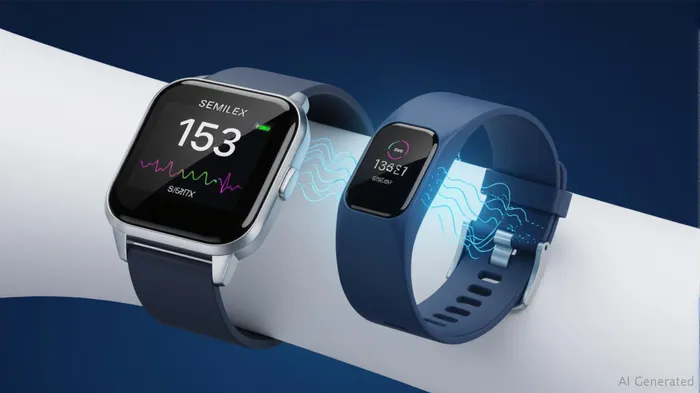
The real story lies in SemiLEDs' partnership with SCIVAX to develop the world's smallest PPG (photoplethysmogram) sensor head. PPG sensors are critical for wearable health monitors, enabling non-invasive tracking of heart rate, blood oxygen levels, and more. The smaller size of SemiLEDs' sensor could make it ideal for next-gen smartwatches, fitness trackers, and even medical devices in hospitals.
While this innovation hasn't yet translated to financial results, the implications are vast. The global wearable tech market is projected to hit $90 billion by 2027, with healthcare applications driving growth. SemiLEDs' technology could carve out a niche here—especially as competitors like AppleAAPL-- and Fitbit scramble to improve health monitoring features.
Valuation: A $20M Market Cap vs. $17.7M in Revenue
SemiLEDs' market cap sits at a minuscule $0.02 billion ($20 million), with shares trading around $2.32. To put this in perspective, its revenue in Q3 alone was $17.7 million—nearly 90% of its entire valuation. This suggests the market is pricing the company as if it's a fleeting flash in the pan, ignoring both its growth trajectory and the potential of its PPG tech.
Critics will point to the margin erosion and the stock's predicted decline. But consider this: if SemiLEDs can stabilize margins at 6-7% (a modest goal given its 9% Q2 margin), its Q3 run rate would imply a net income of ~$1.2 million annually—far higher than current expectations. At that level, a $20 million market cap would imply a P/E of ~16x, which is reasonable for a high-growth tech firm.
The Investment Case: Buy the Dip, But Mind the Risks
This is a high-risk, high-reward call. The near-term challenges are clear: margins must improve, and the PPG sensor's adoption hinges on partnerships like SCIVAX gaining traction. Yet, the upside is enormous. If SemiLEDs can secure a handful of major clients in healthcare or wearables, its valuation could skyrocket.
The stock's current price—near the lower end of its $2.05-$2.81 forecast range—offers a margin of safety. With its tiny market cap and outsized growth in revenue, SemiLEDs looks like a classic “turnaround” play. Investors with a 2-3 year horizon, willing to tolerate volatility, should consider a position here.
Final Take: SemiLEDs is at a pivotal juncture. The revenue surge proves its ability to execute, while its PPG innovation points to a promising future. Despite near-term margin struggles, the stock's valuation is too cheap to ignore. Buy on dips below $2.50—but keep a close watch on Q4 margin trends and PPG adoption metrics.





Comentarios
Aún no hay comentarios