
The Selloff Hasn't Gone Far Enough: Why Strategic Buying Opportunities Exist in a Tariff-Driven Downturn
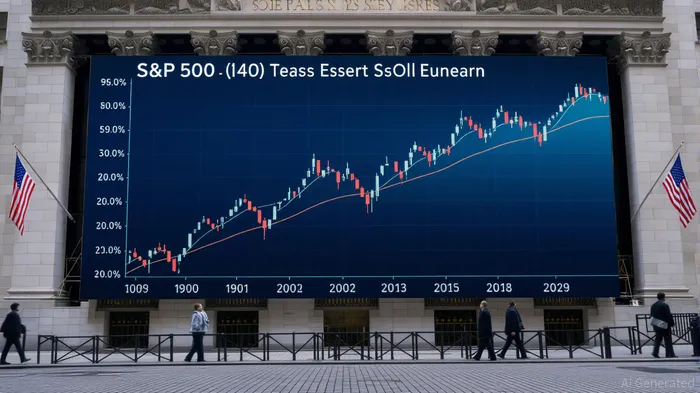
The current selloff, driven by escalating U.S. tariffs under President Trump's 2025 “Liberation Day” policies, has rattled global markets. The S&P 500 has fallen over 15%, while the Nasdaq entered a bear market, reflecting fears of stagflation, disrupted supply chains, and geopolitical fragmentation [3]. Yet, history suggests this downturn may not have gone far enough for contrarian investors. By analyzing historical recovery patterns, contrarian indicators, and tactical rebalancing strategies, the case for strategic buying emerges as compelling.
Historical Precedents: Tariffs and Market Resilience
Tariff-driven downturns have historically been followed by robust recoveries, albeit with varying timelines. The Smoot-Hawley Tariff Act of 1930, which raised U.S. tariffs to 66% of pre-Depression levels, exacerbated the Great Depression and led to a 66% collapse in global trade. The S&P 500 lost over half its value, but the market eventually rebounded as trade policies normalized and fiscal stimulus took hold [5]. Similarly, the 2002 Bush steel tariffs, which imposed 30% import duties, backfired by raising domestic steel prices and costing an estimated 200,000 jobs. Global equities fell 26% in Q4 2002, but the market recovered as tariffs were phased out and economic fundamentals improved [2].
The 2018–2019 U.S.-China trade war, marked by mutual tariffs on $450 billion in goods, caused a 30% peak-to-trough decline in international equities. However, the U.S. economy's strong growth backdrop and eventual trade deal enabled a recovery, albeit slower in China [2]. These examples underscore a critical insight: while tariffs create short-term volatility, markets often rebound when trade tensions ease or economic fundamentals stabilize.
Contrarian Indicators: Sentiment and Volatility as Buy Signals
The current selloff has triggered extreme bearish sentiment, a classic contrarian indicator. According to the American Association of Individual Investors (AAII), bearish sentiment exceeded 50% for weeks in early 2025—a level historically associated with market bottoms. For instance, when bearish sentiment last surpassed 50% in 2023, the S&P 500 returned 32% over the following year [2]. Similarly, the CBOE Volatility Index (VIX) surged above 60 in April 2025, the highest level since the 2020 pandemic crash, signaling acute fear [3]. Yet, the S&P 500 set new record highs by July 2025, illustrating the disconnection between sentiment and fundamentals.
Institutional and retail investor behavior further highlights contrarian opportunities. While institutions have reduced U.S. equity exposure, retail investors have aggressively bought dips, particularly in tech stocks [3]. This divergence mirrors 2008, where retail optimism often preceded institutional capitulation.
Tactical Rebalancing: Sector Rotations and Asset Allocation Shifts
Tactical rebalancing during tariff-driven downturns requires a nuanced approach. Defensive sectors like utilities, healthcare, and consumer staples have historically outperformed during economic uncertainty. For example, during the 2025 selloff, the InvescoIVZ-- QQQ Low Volatility ETF (QQLV) gained 6.29% year-to-date, outperforming the broader Nasdaq-100 [1]. Similarly, Treasury Inflation-Protected Securities (TIPS) and gold have gained traction as inflation-protected assets amid tariff-driven price pressures [1].
Sector rotations also present opportunities. Cyclical sectors like industrials and consumer discretionary, which were hit hardest by tariffs, may lead the recovery if trade negotiations progress. Conversely, defensive sectors like utilities and real estate remain undervalued, offering stability [1]. For instance, the U.S. auto and semiconductor industries lost nearly a third of their value in 2025 due to supply chain disruptions, but these sectors could rebound if tariffs ease [1].
Asset allocation shifts further enhance resilience. Diversifying across regions and asset classes mitigates U.S.-centric risks. European equities, for example, are seen as beneficiaries of fiscal stimulus and supply chain realignments [1]. Meanwhile, commodities like copper and oil have surged as inflationary pressures persist [1].
The Case for Strategic Buying
Despite the current selloff, the S&P 500's valuation (P/E ratio of 26.9) remains elevated compared to historical crises like 1987 and 2008 [3]. However, this does not negate the potential for a rebound. The Federal Reserve's cautious stance—keeping rates steady at 4.25%-4.50%—and the absence of panic selling suggest a path to recovery. Moreover, the market's 7% year-to-date gain as of July 2025 indicates resilience [3].
For contrarian investors, the key lies in balancing risk and reward. Overweighting defensive sectors, allocating to low-volatility ETFs, and diversifying globally can position portfolios to capitalize on the inevitable post-tariff normalization. As Warren Buffett and Howard Marks have long argued, buying during turmoil is the hallmark of a contrarian strategy.
Conclusion
The current tariff-driven selloff, while severe, has not yet reached the depths seen in historical downturns. Contrarian indicators like extreme bearish sentiment and VIX spikes, combined with tactical rebalancing strategies, present a compelling case for strategic buying. By learning from past recoveries and adapting to the evolving trade landscape, investors can navigate uncertainty and position themselves for long-term gains.







Comentarios
Aún no hay comentarios